Foyer Entryway Decor Ideas That Work in Tight, High-Traffic Spaces
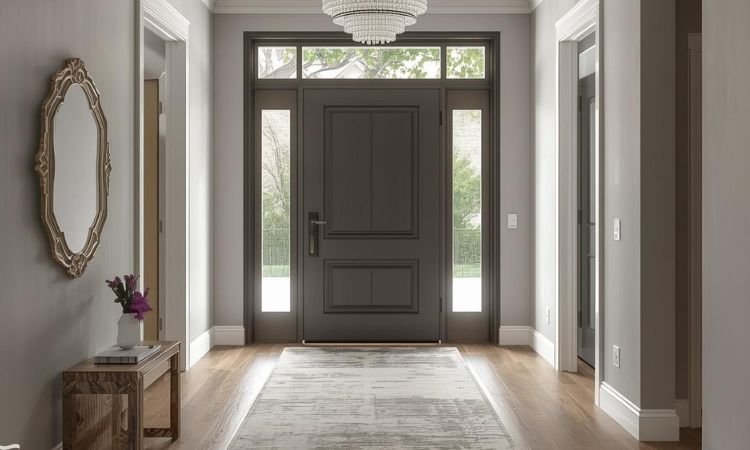
Most residential foyers are compact—typically 48 to 72 inches wide and 60 to 96 inches deep—yet handle coats, shoes, mail, and guest arrivals daily. Over-decorating turns them chaotic; under-planning leaves them empty and unwelcoming.
These 10 ideas focus on balance: defining the space without blocking flow, offering function without clutter, and using only pieces that fit standard entry dimensions. Every suggestion works in areas as small as 4 ft x 5 ft.
Why Practicality Matters in Foyers
First 10 seconds count: Guests form an impression within moments—clutter reads as disorganization, emptiness as neglect.
Traffic flow is non-negotiable: Leave at least 36 inches of clear walking path from door to interior. Anything less feels cramped.
Vertical space is key: With limited floor area, walls and tall furniture do the heavy lifting.
Daily use demands durability: Surfaces must handle wet shoes, dropped keys, and seasonal gear without constant upkeep.
10 Foyer Entryway Decor Ideas That Work in Tight, High-Traffic Spaces
All concepts assume a standard front entry with one door, no closet, and hard flooring.
1. Slim Console Table (14″–18″ Deep)
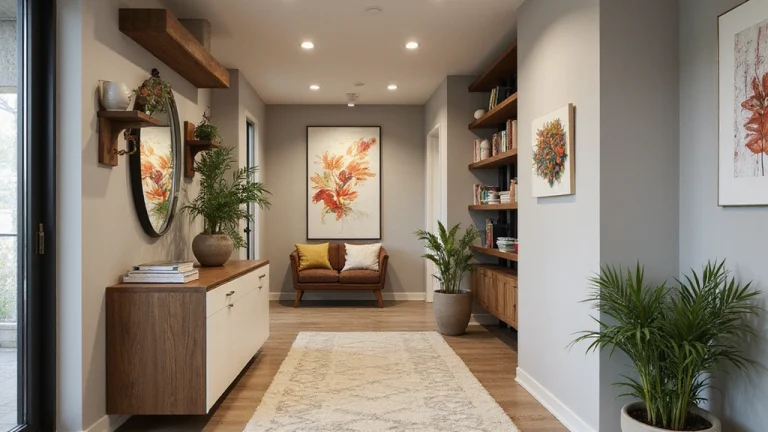
Place a narrow console against the wall opposite or beside the door. Depth should not exceed 18 inches to preserve walkway clearance. Top with a tray, lamp, and one small object.
Standard console height is 30″–36″—ideal for setting down bags. Choose solid wood or metal base for stability; avoid glass tops in high-use zones.
2. Full-Length Mirror on Wall
Mount a vertical mirror (minimum 24″ wide x 60″ tall) to visually double the space and check outfits. Place it where it reflects light—not the front door directly.
A mirror this size fits most standard walls (8’–9′ ceilings). Use frameless or slim black/wood frame to avoid visual weight.
3. Bench with Closed Storage (Under 20″ Deep)
Add a bench 16″–20″ deep with lift-up seat or front drawers for shoes, leashes, or umbrellas. Seat height should be 18″–20″ for easy sitting/standing.
Leave at least 36″ of open floor in front of the bench. Store only daily-use items—seasonal gear goes elsewhere.
4. Wall-Mounted Coat Hooks (Not a Rack)
Install three to five hooks 48″–60″ above floor on a side wall. Space them 8″ apart to prevent crowding. Use simple metal or wood—no bulky knobs.
Hooks take up zero floor space. Ideal for homes without closets. Limit to lightweight outerwear—no heavy winter coats unless reinforced.
5. Defined Rug Zone (5’x8′ Max)
Lay a low-pile rug (5’x8′ or smaller) to anchor the space. It should sit fully inside the foyer—not extend into hallways. Natural fibers like jute or flat-weave cotton resist dirt.
In a 6’x6′ foyer, a 4’x6′ rug leaves 12″ border on all sides—enough to define the zone without overwhelming.
6. Single Statement Light Fixture
Hang one pendant or semi-flush fixture centered over the entry zone. Diameter should be ⅓ the width of the space (e.g., 18″ wide fixture in a 54″-wide foyer).
Mount at 7’–7’6″ above floor for head clearance. Use warm-white bulbs (2700K–3000K) for welcoming glow.
7. Vertical Art Above Console or Bench
Hang one large piece of art or mirror 6″–8″ above furniture. Art should be ⅔ the width of the console below (e.g., 36″-wide art over a 54″-wide table).
Avoid gallery walls—they fragment small spaces. Choose calm imagery: abstract, landscape, or monochrome photography.
8. Lidded Basket for Seasonal Items
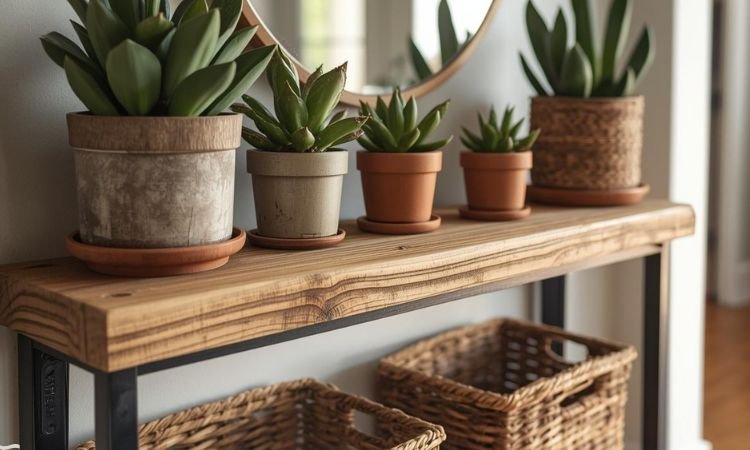
Place one covered basket (12″–15″ diameter) beside or under the bench for gloves, hats, or dog waste bags. Use woven seagrass or felt—nothing flimsy.
Keep the lid on to hide contents. Only store items used weekly; everything else goes in a closet.
9. Simple Table Lamp or Plug-In Sconce
Add soft ambient light with a 12″–16″ tall lamp on the console or a plug-in sconce on the wall. Avoid overhead-only lighting—it creates harsh shadows.
Use fabric shades to diffuse light. Cord should run neatly along the back of the table or through a raceway.
10. Monochromatic Color Scheme
Stick to two core colors for all elements: e.g., black + white, oak + cream, or gray + brass. This ties disparate pieces together in tight quarters.
If walls are beige, choose furniture and accessories in warm neutrals—not bright reds, blues, or multi-patterned textiles.
Common Mistakes and Fixes
Blocking the main path
Fix: Measure your walking route first. Keep the center 36″ clear at all times—no furniture or rugs in the direct line from door to interior.
Using too many small decor items
Fix: Limit tabletop objects to three: lamp, tray, and one accent. Remove anything not touched weekly.
Ignoring scale
Fix: In a small foyer, oversized mirrors or benches dominate. Stick to proportional pieces—nothing wider than the door frame.
Skipping the “landing zone”
Fix: Designate one spot (tray, bowl, shelf) for keys and mail. Without it, items scatter across surfaces.
Final Note
A well-set foyer doesn’t need grand gestures. It needs clarity: a place to sit, a spot for coats, a surface for essentials, and enough breathing room to move through comfortably. Start with function—add style only where it supports use.
Which of these 10 ideas fits your foyer’s dimensions? Measure your space first—most work in areas as small as 4 ft x 5 ft.