Small Ensuite Shower Room Ideas That Feel Bigger Than They Are
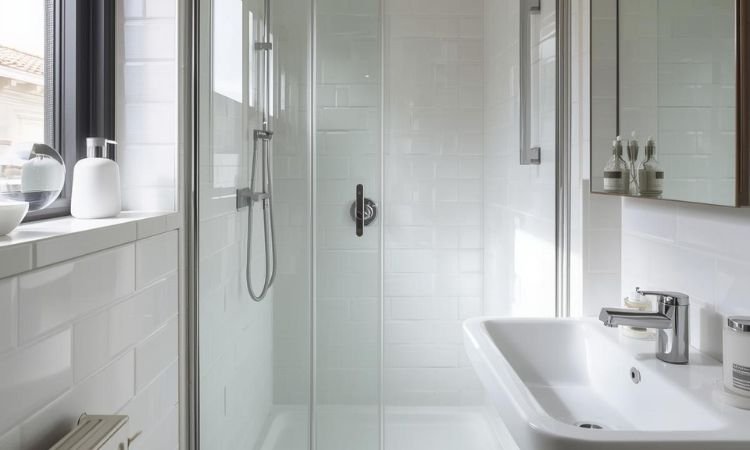
Your ensuite is maybe 5×6 feet with just enough room for a shower, toilet, and tiny sink. You’re trying to figure out how to make it actually functional versus just technically having a bathroom attached to your bedroom. Every design idea you see assumes you have space for a vanity, separate shower and tub, maybe even a window—none of which applies to your closet-sized ensuite.
Small ensuite shower rooms need different strategies than regular bathrooms. You’re working with tight quarters where every inch counts, limited storage, probably no natural light, and the reality that this bathroom gets daily use despite barely fitting one person. The challenge is making it work functionally while not feeling like a cramped afterthought.
Here’s what actually helps small ensuites. Forget trying to replicate full bathroom layouts—you don’t have the space. Instead focus on smart storage, proper lighting, and design choices making tight quarters feel less claustrophobic. The realistic approach accepts limitations while maximizing what’s actually possible in genuinely tiny bathrooms.
I’m covering 10 small ensuite shower room ideas designed for real space constraints. You’ll see what fits in truly tiny bathrooms, how to add storage without crowding, which design choices make small feel bigger, and the specific solutions making cramped ensuites actually functional instead of frustrating.
Making Tiny Ensuites Actually Work
- Walk-In Showers Beat Enclosed: Frameless glass or no door at all makes small bathrooms feel larger than curtains or framed enclosures. It’s like removing visual barriers where transparency creates spaciousness. The open feeling prevents claustrophobic sensation.
- Wall-Mounted Everything Saves Space: Floating vanities, wall-hung toilets, and mounted storage keep floors clear making rooms feel less crowded. It’s like furniture legs where visible floor creates space perception. The elevated fixtures provide cleaning access too.
- Light Colors Reflect Light: White, cream, or pale tiles bounce light around making small spaces brighter and larger-feeling. It’s like wearing light colors where brightness expands. The reflective surfaces compensate for limited square footage.
- Large Tiles Look Less Busy: Bigger tiles mean fewer grout lines preventing busy cluttered appearance. It’s like large-format flooring where scale affects perception. The simplified surfaces make small rooms feel calmer and more spacious.
Small Ensuite Shower Room Ideas
Create functional comfortable ensuites with these space-maximizing solutions designed for genuinely tiny bathrooms.
Frameless Glass Walk-In Shower
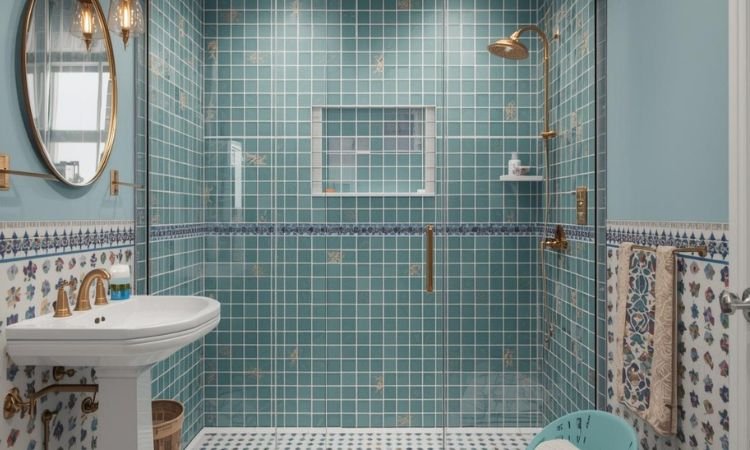
Install walk-in shower with frameless glass panel creating open feeling. The transparent barrier provides splash protection without visual obstruction. I’ve found this makes biggest difference in tiny ensuites—suddenly the whole room feels bigger.
Use single glass panel or L-shaped corner configuration depending on layout. Costs $800-2,000 installed. The frameless design lets eyes travel through space versus stopping at shower curtain or framed door. Works best with proper floor slope directing water to drain.
Corner Shower Fitting Diagonal
Position corner shower unit diagonally maximizing floor space in tight quarters. The angled placement uses corner efficiently while opening central area. And honestly, every inch matters in 5×6 bathrooms—diagonal placement gains usable space.
Install corner shower kit 32-36 inches ($400-1,200). The diagonal orientation leaves more central floor space for movement versus square placement. Works especially well in true square small ensuites where corners otherwise create dead zones.
Wall-Hung Toilet Saving Floor Space
Mount wall-hung toilet freeing floor space and creating sleeker appearance. The floating fixture makes bathroom feel less crowded while simplifying cleaning. Sound familiar to European bathrooms? They use these constantly in small spaces.
Install wall-mounted toilet with concealed tank ($600-1,500 total with installation). The visible floor space makes bathroom feel substantially larger despite same square footage. Modern streamlined appearance adds sophistication too.
Narrow Floating Vanity
Use slim wall-mounted vanity 16-18 inches deep versus standard 21-24 inches. The shallow profile saves precious inches while providing necessary sink and minimal storage. I mean, those few inches make real difference when you barely fit in the room.
Install floating vanity 24-36 inches wide, 16-18 inches deep ($200-800). The wall-mounted design shows floor creating space illusion while narrow depth prevents bathroom feeling impossibly tight. Choose integrated sink maximizing usable counter space.
Floor-to-Ceiling Tile
Tile walls completely from floor to ceiling creating seamless appearance. The continuous surface makes walls recede visually versus stopping tile partway creating horizontal line emphasizing small dimensions. This works better than you’d expect.
Tile entire bathroom in large-format tiles (12×24 or larger). Costs $1,500-4,000 depending on tile choice and square footage. The unbroken surface makes room feel taller and more cohesive versus chopped-up appearance of partial tiling.
Recessed Shower Shelving
Build recessed niches in shower walls storing products without protruding shelves eating space. The built-in storage keeps necessities accessible while maintaining clean lines. And honestly, corner caddies and hanging organizers just make small showers feel more cluttered.
Create 12×24 inch recessed niche during tile work ($150-400 addition to tile job). The integrated storage provides necessary space without invading shower area. Much cleaner than aftermarket shelving units.
Large Format Light Tiles
Use 12×24 or 24×24 inch tiles in light colors creating clean spacious appearance. The oversized tiles mean fewer grout lines while light colors reflect available light. Sound familiar? This is like small-space design 101 but it genuinely works.
Choose white, cream, or light gray large-format tiles. Costs $3-8 per square foot for decent porcelain tiles. The combination of size and color makes biggest visual impact in expanding small space perception.
Pocket Door Entrance
Install sliding pocket door disappearing into wall versus hinged door requiring clearance space. The space-saving entry leaves more usable bathroom area. I’ve found pocket doors make surprising difference in how tiny bathrooms actually function.
Install pocket door hardware and frame ($200-600 for materials, $300-800 for installation). The sliding door eliminates swing space required by hinged doors gaining functional area in tiny bathroom. Works especially well when door opens into bedroom.
Curbless Shower Entry
Create zero-threshold shower with floor sloping to drain versus raised curb. The level entry makes bathroom feel more open while improving accessibility. And honestly, not stepping over curb matters more than you’d think in cramped spaces.
Build curbless shower with proper floor pitch and waterproofing ($500-1,500 additional cost). The continuous floor plane makes bathroom feel substantially larger despite same size. Requires proper planning for drainage and waterproofing.
Vertical Storage Shelving
Install narrow floor-to-ceiling shelving unit providing storage without eating floor space. The vertical approach uses height versus width. I mean, you barely have width in tiny ensuites—going up is only option.
Use narrow shelving unit 8-12 inches deep, 72+ inches tall ($80-300). Store towels, products, and supplies vertically using wall space. The slim profile provides necessary storage without crowding limited floor area.
Designing Small Ensuites Successfully
- Prioritize Function Over Aesthetics: Working plumbing and adequate storage matter more than design magazine looks. It’s like tiny apartment living where practical trumps pretty. The functional approach creates usable bathrooms versus beautiful but frustrating spaces.
- Use Every Inch Thoughtfully: Corners, vertical space, recessed areas—everything becomes potential storage or function. It’s like puzzle solving where creativity maximizes limited resources. The comprehensive approach prevents wasting any available space.
- Invest in Quality Fixtures: Small spaces show everything—cheap fixtures look worse in tight quarters. It’s like small apartments where quality matters more. The better materials create polish despite limited square footage.
- Plan Lighting Carefully: Multiple light sources make small bathrooms feel less cave-like. It’s like basement lighting where illumination affects perception. The proper lighting prevents claustrophobic dark feeling.
Frequently Asked Questions About Small Ensuite Showers
What’s Minimum Size for Ensuite?
Absolute minimum is roughly 3×6 feet for toilet and shower only. Comfortable minimum runs 5×6 or 4×7 feet allowing toilet, shower, and small sink. Below 18-20 square feet total becomes genuinely challenging meeting building codes.
Smaller than code minimums technically violates regulations though existing small ensuites may be grandfathered. Check local requirements before renovating.
Can You Fit Sink in Tiny Ensuite?
Yes using narrow wall-mounted or corner sinks. Pedestal sinks save space but provide zero storage. Wall-hung vanities 18-24 inches wide with integrated sinks work in tight spaces providing minimal storage.
Corner sinks work too though accessing them feels awkward. Weigh having sink versus larger shower—sometimes skipping sink makes more sense.
How Do You Ventilate Small Ensuite?
Install quality exhaust fan rated for bathroom size (minimum 50 CFM for small ensuite). Without windows, mechanical ventilation prevents mold and moisture problems. The proper fan is non-negotiable in windowless bathrooms.
Run fan during and 20 minutes after showers removing moisture. Clean regularly maintaining function. Poor ventilation ruins small bathrooms quickly.
What About Storage?
Use recessed niches, wall-mounted cabinets, over-toilet shelving, and narrow vertical units. Every surface becomes potential storage. Medicine cabinets, shower niches, and floating vanities with storage all help.
Accept limited storage reality—keep only essentials in ensuite, store bulk items elsewhere. The edited approach matches actual available space.
Should You DIY or Hire Out?
Small bathroom renovation costs $5,000-15,000 professionally done. DIY saves labor but plumbing, tiling, and waterproofing require skill. Mistakes in bathrooms create expensive water damage.
If handy, tackle cosmetic updates—paint, fixtures, lighting. Hire plumbers for moving pipes, tile professionals for waterproofing and installation. The hybrid approach balances savings with quality.
Making Small Ensuites Livable
Small ensuite shower room ideas show that genuinely tiny bathrooms work with smart planning and appropriate expectations. The space-saving fixtures, open designs, and vertical storage create functional bathrooms despite limited square footage. And honestly, having any ensuite beats sharing bathroom—even cramped private bathroom provides real value.
Start by measuring exactly what you have—draw layout noting dimensions. Determine priorities—storage, larger shower, sink necessity. Choose fixtures proportional to actual space. Plan lighting and ventilation properly. The realistic approach creates functional ensuites instead of beautiful but unusable tight spaces.
What’s your exact ensuite dimensions and current layout? Tell me specific measurements and main frustrations and I’ll help figure out realistic improvements that actually fit your particular tiny bathroom!