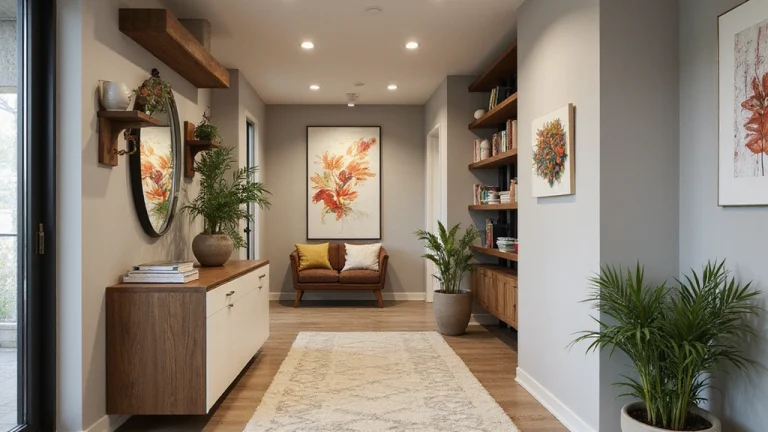
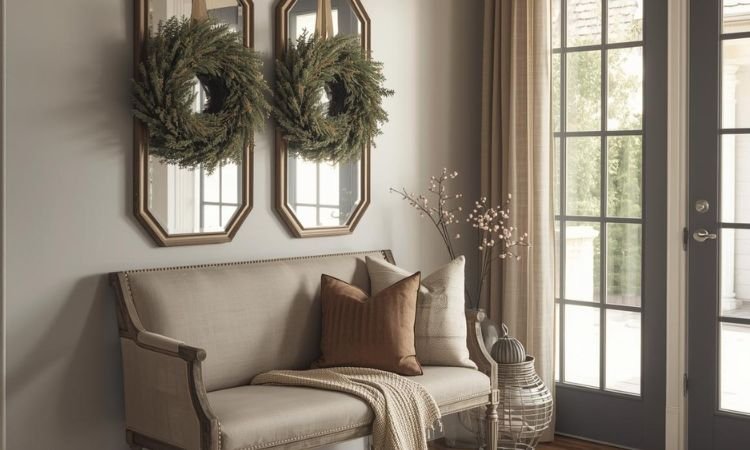
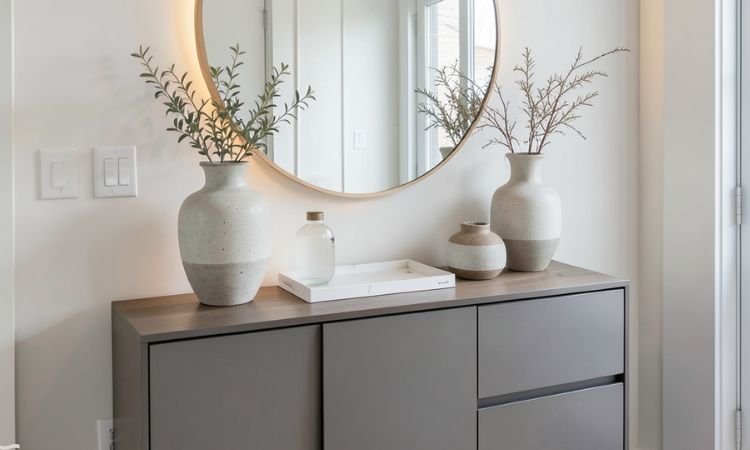
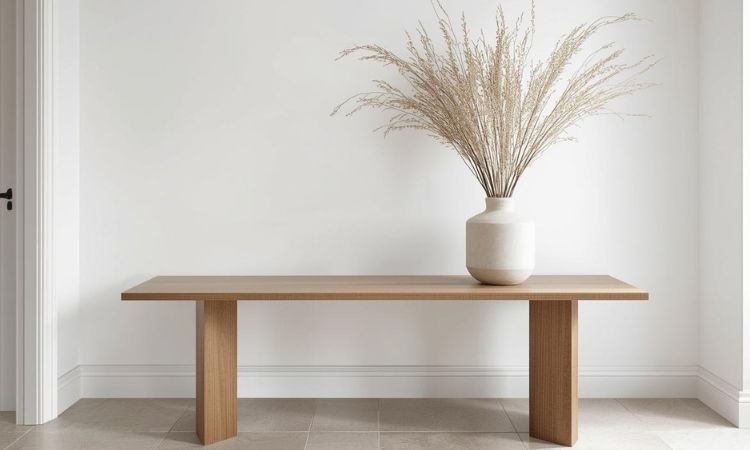
Entryway Decor Ideas for Small Spaces That Maximize Function Without Crowding

Most small entryways measure 36 to 60 inches wide and 48 to 72 inches deep—barely enough room to open the front door without hitting a wall.
Yet this zone must handle shoes, coats, mail, keys, and guest arrivals daily. The right setup uses every inch without blocking flow.
These 11 ideas focus on vertical storage, multi-use furniture, and layouts that preserve a minimum 32-inch clear path—the smallest comfortable walking width in residential design.
Why Every Inch Counts
No wasted space: In entries under 30 sq ft, even a 6-inch-deep shelf must earn its place.
Traffic dictates layout: Furniture deeper than 18″ cuts into walkway clearance.
Daily friction points: If it’s hard to drop keys or hang a coat, items end up on the floor.
Visual calm = perceived space: Fewer objects and consistent materials make tight zones feel larger.
11 Entryway Decor Ideas for Small Spaces That Maximize Function Without Crowding
All solutions fit entries as narrow as 3 ft wide and work with standard 8-ft ceilings. Lets see.
1. Wall-Mounted Drop Shelf (10″ Deep)
Install a single floating shelf 10 inches deep at 42″ height to hold keys, mail, or a small plant. Mount above a radiator, door frame, or narrow wall section where no furniture fits.
Use brackets secured into studs. Keep length under 24 inches so it doesn’t jut into the path. Ideal for apartments or row homes with zero floor space.
2. Over-the-Door Organizer
Hang a slim organizer (fits doors up to 1.75″ thick) on the back of the entry door. Use pockets for masks, gloves, leashes, or outgoing mail. Takes zero floor or wall space.
Choose fabric or mesh—avoid rigid plastic that blocks door swing. Holds up to 5 lbs total; best for lightweight daily items.
3. Slim Bench with Wall Hooks Above
Pair a bench 14″–16″ deep with three wall hooks mounted 54″ above floor directly above it. Sit to remove shoes, hang coat overhead—all within a 24″-deep footprint.
Leave 32″ of clear floor in front. Bench seat height: 18″. Hooks spaced 6″ apart prevent crowding. Total depth used: 16″ + 32″ = 48″, fitting most small entries.
4. Vertical Shoe Rack (Under Bench or Door)
Use a narrow tower rack (12″ W x 6″ D x 36″ H) that holds 6–8 pairs vertically. Place under a console, beside the door, or in a corner. Avoid wide floor models—they eat walkway space.
Open-front designs allow quick access. Store only daily shoes; seasonal pairs go elsewhere.
5. Mirror That Doubles as Storage
Mount a framed mirror with a shallow ledge (2″–3″ deep) along the bottom. Use the ledge for sunglasses or a small tray. The mirror expands space visually while adding function.
Size: 20″–24″ wide x 36″ tall. Hang at eye level (center at 58″). Works on walls as narrow as 24″.
6. Pegboard Panel for Daily Gear
Mount a 24″x36″ pegboard on one wall. Add hooks, bins, and clips for headphones, dog leashes, umbrellas, and notepads. Everything stays visible and off the floor.
Paint it matte white or match your trim. Keeps small items organized without drawers or cabinets.
7. Fold-Down Wall Desk (Entry Workstation)
Install a drop-leaf desk (24″ W x 18″ D) that folds flat when not in use. Use it for signing packages, writing notes, or quick laptop tasks. Swings down in seconds, tucks away flush.
Mount at 30″ height for seated use. Requires wall studs for support. Perfect for remote workers in studio apartments.
8. Narrow Console with Open Base
Choose a console 12″–14″ deep with open legs or a metal base. Allows shoes or bins to slide underneath while keeping the top clear. Top surface holds only essentials.
Standard height: 30″–34″. Length should be ⅔ the wall width (e.g., 36″ console on a 54″-wide wall). Keeps sightlines open.
9. Recessed Niche with Shelf
If building or renovating, carve a shallow niche (6″–8″ deep) into a wall. Add one shelf at 48″ height for decor or daily items. No protrusion = full walkway preserved.
Line with paint, tile, or wood. Even in rentals, removable peel-and-stick panels can mimic this look on flat walls.
10. Single Floor Lamp in Corner
Place a slim arc or tripod lamp in the far corner to add warm ambient light without overhead fixtures. Shade should sit 48″–54″ above floor for balanced glow.
Use LED bulbs (2700K, 600–800 lumens). Cords run along baseboards. Better than ceiling lights in entries under 6 ft wide.
11. Monochrome Accessory Palette
Limit all visible items to two colors: e.g., black + white, oak + cream, or gray + brass. This reduces visual noise in tight sightlines.
If your shelf is walnut, choose containers in black ceramic or natural fiber—not multicolored plastic or patterned textiles.
Common Pitfalls and Fixes
Furniture too deep
Fix: Never exceed 18″ depth for any piece. Measure from wall to front edge—include knobs or handles.
Blocking door swing
Fix: Ensure 10″ clearance beyond the door’s open arc. Test with tape on the floor before buying furniture.
Ignoring vertical space
Fix: Use walls above 48″ for mirrors, art, or shallow shelves. Floor space is premium; walls are free.
Skipping the “drop zone”
Fix: Designate one spot—a tray, bowl, or shelf—for keys and mail. Without it, clutter spreads instantly.
Final Note
A small entryway works best when it solves three problems: a place to sit, a spot to stash daily items, and a clear path through.
Skip anything that doesn’t serve one of those needs. Start with a hook, a shelf, and a 32-inch walkway—then add only what proves useful.
Which of these 11 ideas fits your entry’s exact dimensions? Measure first—most work in spaces as narrow as 36 inches wide.