10 Narrow Hallway Entry Ideas That Make Spaces Feel Bigger
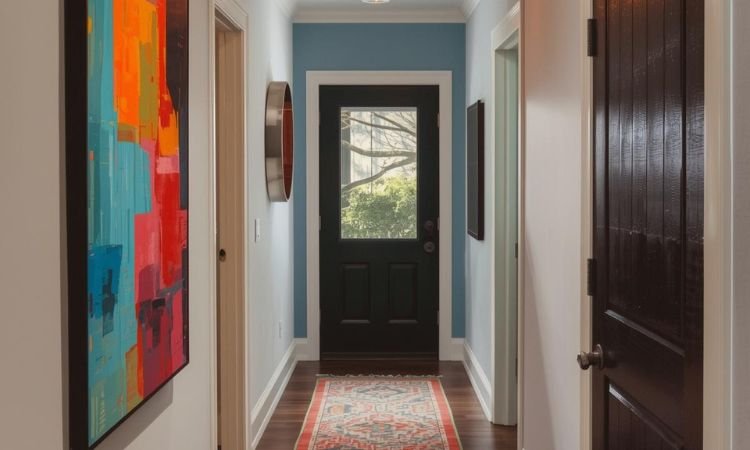
Your narrow entry hallway feels tight and unwelcoming—more like a chute than a greeting space. Clutter, poor lighting, and dark walls only make it worse.
The right design choices can transform this pinch point into a bright, functional transition. With smart color, layout, and styling tricks, even the slimmest entry can feel open and intentional.
Lets explore!
Why Entry Hallways Need Special Attention
First Impressions Matter: Your entry sets the tone for your entire home. A cramped, chaotic start undermines even the most beautiful interiors.
High-Traffic Functional Zone: Coats, shoes, keys, and mail converge here. Without thoughtful planning, narrow entries quickly become clutter traps that feel even smaller.
Limited Square Footage: Unlike living areas, entry halls rarely have room for furniture or decor—so every inch and surface must work harder.
Light Challenges: Many entryways lack windows or overhead light, deepening the tunnel effect. Strategic illumination is non-negotiable.
10 Narrow Hallway Entry Ideas That Make Spaces Feel Bigger
Refresh your front approach with these space-enhancing solutions designed for tight, high-use entry zones.
1. Light Monochromatic Walls
Paint walls, trim, and ceiling in the same soft neutral—like warm white or pale greige. This seamless look removes visual stops, making the space feel longer and airier.
Use eggshell or satin sheen for durability and subtle reflectivity. This narrow hallway entry idea creates instant calm and continuity.
2. Full-Length Wall Mirror
Mount a tall, frameless mirror on one wall to double perceived width and bounce natural light deeper inside. Position it opposite the front door or a light source for maximum effect.
This narrow hallway entry idea turns limitation into illusion without taking up floor space.
3. Slim Vertical Console
Choose a console table no deeper than 10 inches with open legs or a floating design.
Top it with a small tray for keys and a single vase—never overcrowd. Keep the base clear for visual flow. This narrow hallway entry idea adds function without bulk.
4. Recessed or Wall-Wash Lighting
Install recessed ceiling lights or upward-facing wall sconces to eliminate shadows and create ambient glow.
Avoid pendant drops that hang low in tight vertical space. Warm-white LEDs (2700K–3000K) feel inviting. This narrow hallway entry idea brightens without intrusion.
5. Continuous Flooring
Extend the same flooring from outdoors (or foyer) through the hallway into adjacent rooms.
No transitions, no rugs blocking flow. Large-format tiles or wide-plank wood enhance linearity. This narrow hallway entry idea visually expands the path forward.
6. Tone-on-Tone Horizontal Stripes
Apply subtle horizontal stripes in two shades of the same color family at eye level.
Even faint lines guide the eye sideways, creating optical width. Use matte finishes to keep focus on form, not shine. This narrow hallway entry idea uses pattern as perspective.
7. Open Hook System
Skip bulky coat closets. Install a row of minimalist wall hooks in matching finish for coats, bags, and hats.
Keep items limited and coordinated. Mount above a slim bench or directly on the wall. This narrow hallway entry idea keeps essentials accessible yet tidy.
8. Ceiling Color Lift
Paint the ceiling a soft, unexpected hue—like sky blue or warm white with a hint of blush—to draw eyes upward.
In dim entries, this reduces the “tube” effect and adds quiet personality. This narrow hallway entry idea redefines the overlooked fifth wall.
9. Low-Profile Runner
Lay a narrow, flat-weave runner (max 24″ wide) in a light neutral or subtle pattern. It defines the path, muffles sound, and adds warmth—but never blocks movement.
Choose washable materials for high-traffic durability. This narrow hallway entry idea softens without crowding.
10. Unified Door & Trim Finish
Paint all doors and trim in a consistent bright white or light neutral. Match hardware throughout for visual rhythm.
Avoid contrasting colors that chop up the space at every threshold. This narrow hallway entry idea creates seamless transitions from entry to interior.
Common Entry Hallway Mistakes And Fixes
Overloading with furniture or decor
Fix: Limit to one functional piece (e.g., slim console or bench) and one decorative element (mirror or art). Less is more in tight entries.
Using dark or cool-toned paint
Fix: Stick to light, warm neutrals that reflect available light and feel welcoming—not clinical or cave-like.
Ignoring vertical storage
Fix: Go up, not out. Use tall, narrow shelving or hooks above eye level to keep floors clear.
Blocking natural light sources
Fix: Never place tall furniture or heavy curtains in front of windows or glass doors in the entry zone.
Skipping the “landing zone”
Fix: Designate a small area (even just a tray on a console) for daily essentials—keys, mail, sunglasses—to prevent clutter sprawl.
Frequently Asked Questions About Narrow Hallway Entries
What’s the best paint color for a narrow entry hallway?
Soft whites, warm greiges, or pale beiges with warm undertones work best.
They reflect light, feel inviting, and avoid the sterility of cool grays or stark whites. Always test samples in morning and evening light.
Should I use a rug in a narrow entry?
Yes—but choose a low-profile, narrow runner (18–24″ wide) that doesn’t obstruct traffic flow.
Natural fibers like jute or flat-weave cotton are durable and easy to clean. Avoid thick piles or oversized rugs.
Can I add a mirror if there’s no wall space?
Use an over-the-door mirror or lean a tall, narrow floor mirror against the wall if mounting isn’t possible. Even temporary reflective surfaces help widen perception.
How do I keep a narrow entry from looking cluttered?
Edit ruthlessly. Only display what’s used daily. Store seasonal items elsewhere. Use closed baskets or trays to corral small items. Visual calm = perceived space.
Welcome With Intention
A narrow entry hallway doesn’t have to feel like a bottleneck. With light colors, reflective surfaces, vertical thinking, and disciplined editing, you can create a first impression that feels open, organized, and genuinely welcoming.
Which of these ideas will you try in your entry? Share your plan below!