Narrow Shower Room Ideas That Work With Limited Width
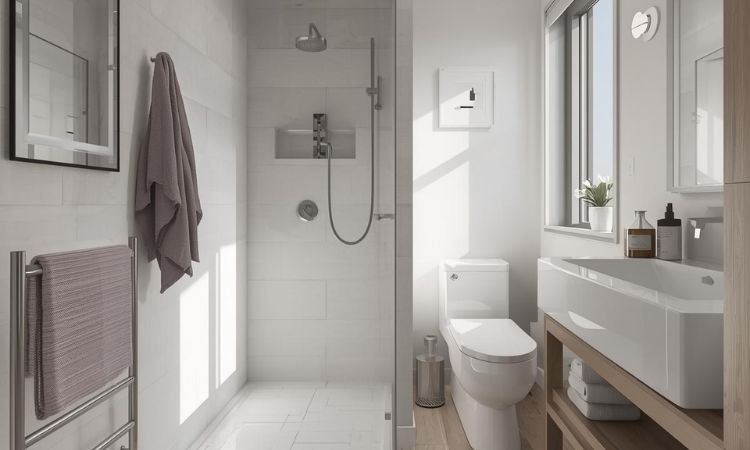
Your shower room is long and skinny—maybe 3 feet wide and 8 feet long—and you’re trying to figure out how to make it work without feeling like a hallway with plumbing. Every time you shower you’re bumping elbows on walls, and there’s zero room for storage or even hanging a towel. You’re wondering if narrow bathrooms can ever feel comfortable or if you’re stuck with awkward forever.
Narrow shower rooms create unique challenges different from small square bathrooms. You’ve got length but no width, making standard layouts impossible. Toilets, sinks, and showers that fit fine in normal bathrooms feel cramped in narrow configurations. The galley-style space needs specific solutions working with limited width instead of fighting it.
Here’s what helps narrow bathrooms. Positioning fixtures strategically down the length, using space-saving slim fixtures, and creating visual tricks making width feel less constrictive. The smart approach works with the narrow footprint instead of trying to widen what you can’t change. You need solutions designed specifically for tight-width situations versus generic small bathroom advice.
Walking through 10 narrow shower room ideas designed for genuinely skinny spaces. You’ll see which fixture arrangements work in tight widths, how to add storage without crowding, what makes narrow feel less tunnel-like, and the specific layouts creating functional bathrooms in long skinny spaces.
Working With Narrow Bathroom Reality
- Linear Fixture Placement Works Best: Arranging toilet, sink, and shower along one wall or alternating sides creates clear pathway. It’s like train cars where sequential arrangement uses length efficiently. The linear layout prevents cramped jumbled feeling.
- Slim-Profile Fixtures Are Essential: Narrow-depth sinks, compact toilets, and shallow storage designed for tight spaces prevent overwhelming limited width. It’s like choosing apartment-size appliances where proportional fixtures matter. The scaled-down pieces actually fit properly.
- Continuous Materials Stretch Space: Running same tile floor-to-ceiling and throughout space creates unbroken visual flow. It’s like horizontal stripes where uninterrupted lines widen perception. The consistent materials prevent chopping narrow space into segments.
- Strategic Lighting Matters More: Proper illumination prevents narrow spaces feeling like dark tunnels. It’s like hallway lighting where brightness affects comfort. The adequate light makes narrow bathrooms more pleasant and functional.
Narrow Shower Room Ideas
Make long skinny bathrooms actually work with these fixture arrangements and design strategies for tight-width spaces.
Walk-In Shower at Far End
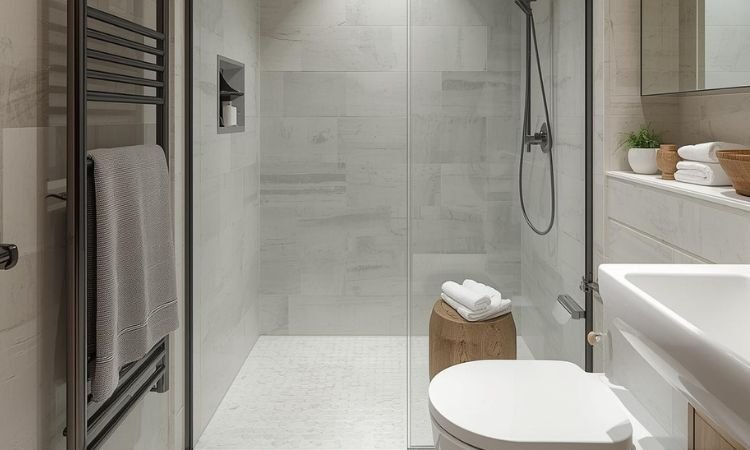
Position doorless walk-in shower at bathroom’s end creating open wet room feeling. The barrier-free design uses full width preventing shower enclosure eating precious inches. I’ve found this works better than trying to squeeze shower stall into narrow width.
Install linear drain and slope floor toward end creating wet room shower. Costs $2,000-5,000 depending on waterproofing and tile. The open shower uses entire end section without adding walls or doors consuming width. Requires proper waterproofing throughout.
Wall-Hung Toilet and Sink
Use wall-mounted fixtures creating streamlined appearance and visible floor space. The floating pieces make narrow bathroom feel less crowded while simplifying cleaning. And honestly, showing more floor really helps narrow spaces feel less tight.
Install wall-hung toilet ($600-1,500) and wall-mounted sink or narrow vanity ($300-1,200). The exposed floor creates openness despite same footprint. Choose fixtures 18-20 inches wide maximum for narrow bathrooms.
Pocket Door Entry
Install sliding pocket door disappearing into wall versus hinged door requiring swing space. The space-saving entry prevents door eating bathroom width. Sound familiar? This solves the eternal narrow bathroom problem of doors hitting fixtures.
Install pocket door hardware ($200-600 materials, $300-800 installation). The sliding mechanism gains 24-30 inches of usable bathroom width otherwise consumed by door swing. Works especially well in very narrow bathrooms under 36 inches wide.
Narrow Linear Shower Base
Use slim shower base 30-32 inches wide running length of bathroom. The rectangular footprint fits narrow width while providing adequate shower space. I mean, you barely have 36 inches total width—shower needs using space efficiently.
Install narrow rectangular shower base 30×60 inches or custom size ($300-800). The linear shape fits narrow configuration while providing functional shower space. Pair with glass panel or waterproof wall treatment versus full enclosure.
Recessed Medicine Cabinet Storage
Build recessed medicine cabinet into wall providing storage without protruding into limited width. The flush storage keeps necessities accessible while preserving every inch of width. This is non-negotiable in narrow bathrooms—you literally can’t afford protruding cabinets.
Install recessed medicine cabinet 14-24 inches wide ($80-400). The built-in storage provides necessary space without consuming precious width. Choose mirrored door reflecting light and creating depth illusion.
Vertical Stripe Tile Pattern
Run tiles vertically creating visual height drawing eyes up versus emphasizing narrow width. The vertical pattern makes space feel taller and less tunnel-like. And honestly, this cheap trick genuinely helps perception in skinny bathrooms.
Use subway tiles or rectangular tiles running vertically instead of traditional horizontal. Adds no cost versus standard installation. The vertical lines create height illusion making narrow feel less claustrophobic. Works especially well with light-colored tiles.
Corner Sink Maximizing Width
Position small corner sink utilizing otherwise wasted corner space. The angled placement preserves central width for movement while providing necessary sink function. I’ve found corner sinks work surprisingly well in narrow configurations.
Install corner wall-mount sink 12-18 inches per side ($100-400). The diagonal placement uses corner efficiently leaving central pathway clear. Works best near bathroom entrance where corner sink doesn’t impede shower access.
Continuous Light Tile Throughout
Use same large light-colored tile on floors and walls creating seamless bright surface. The unbroken material makes narrow space feel more cohesive and open. Sound familiar to modern design? They use material continuity expanding small spaces.
Choose 12×24 or 24×24 inch tiles in white, cream, or light gray. Costs $4-10 per square foot. Run same tile floor-to-ceiling on all surfaces. The unified appearance prevents visual breaks emphasizing limited width.
Narrow Floating Shelf Storage
Mount slim floating shelves 8-10 inches deep providing storage without floor obstruction. The wall-mounted storage uses vertical space preserving limited floor area. This beats freestanding units eating precious width.
Install floating shelves above toilet or along empty wall sections ($20-60 per shelf). Keep depth under 10 inches preventing protruding into pathway. The vertical storage provides necessary space without cramping narrow bathroom.
Linear LED Lighting
Install linear LED strips providing even illumination throughout narrow space. The continuous lighting prevents dark tunnel feeling while modern fixtures suit contemporary bathrooms. I mean, single overhead fixture creates shadows in narrow spaces—you need distributed light.
Use LED strip lighting along ceiling length or behind mirror ($80-200 installed). The even illumination makes narrow bathroom feel brighter and more open. Add dimmer controlling ambiance. The proper lighting makes biggest comfort difference.
Making Narrow Bathrooms Functional
- Keep Central Pathway Clear: Maintain 24+ inches clear width down bathroom center allowing comfortable movement. It’s like hallway clearance where width determines usability. The open path prevents constant fixture contact.
- Use Every Wall Strategically: Narrow bathrooms have wall space—use it for storage, fixtures, and function. It’s like small apartments where walls become primary storage. The comprehensive wall use maximizes limited options.
- Choose Fixtures Carefully: Every inch matters—select smallest functional fixtures versus standard sizes. It’s like boat galleys where compact versions exist for tight spaces. The properly scaled pieces actually fit.
- Test Layout Before Building: Physically mark or tape out fixture placements ensuring everything fits with adequate clearances. It’s like furniture layout where seeing prevents mistakes. The real-scale testing catches problems before construction.
Frequently Asked Questions About Narrow Shower Rooms
What’s Minimum Width for Functional Bathroom?
Building codes typically require 30 inches minimum width though 36 inches provides more comfortable use. Below 30 inches becomes genuinely challenging meeting accessibility requirements and comfortable function. Narrow but functional runs 36-42 inches wide.
Check local building codes before renovating—requirements vary by jurisdiction. Some grandfathered narrow bathrooms exist below current minimums.
Can You Fit Shower AND Bathtub?
In very narrow bathrooms, no—choose one or other. Standard tubs require 30+ inches width leaving inadequate space for toilet and sink. Shower-only designs work better in narrow configurations providing necessary fixtures comfortably.
If tub is non-negotiable, consider tub-shower combo positioned at end maximizing remaining width for other fixtures. The combination uses space more efficiently than separate installations.
How Do You Make Narrow Not Feel Like Tunnel?
Use light colors, proper lighting, and vertical design elements. Avoid dark colors or horizontal patterns emphasizing narrowness. Include mirror reflecting light. Add window or skylight if possible introducing natural light.
The perception improvements help but narrow bathrooms always feel somewhat tunnel-like—accept inherent limitations working within them versus fighting reality.
What Fixture Arrangement Works Best?
Linear arrangement along one wall works well—toilet, sink, shower in sequence. Or alternate sides—toilet one wall, sink opposite, shower at end. Avoid clustering all fixtures one end leaving long empty section.
Test arrangements on paper ensuring adequate clearances between fixtures. Building codes specify minimum distances—typically 15-18 inches from toilet centerline to walls or fixtures.
Should You Hire Professional for Layout?
For narrow bathroom renovation, yes—professional designers understand code requirements and space-saving solutions. The specialized knowledge prevents expensive mistakes in challenging layouts. DIY works for cosmetic updates, hire professionals for layout and plumbing moves.
Narrow bathrooms offer limited options—getting layout wrong means expensive do-overs. Professional expertise worth cost in tight configurations.
Making Narrow Bathrooms Work
Narrow shower room ideas prove that long skinny bathrooms function with proper fixture selection and strategic arrangements. The slim fixtures, smart layouts, and visual tricks create usable bathrooms despite limited width. And honestly, narrow is challenging but totally workable—you just need accepting the footprint and choosing solutions designed for tight widths.
Start by measuring exact dimensions noting any obstructions. Determine fixture priorities based on needs—shower over tub, sink size, storage necessities. Plan layout testing clearances. Choose slim-profile fixtures designed for narrow spaces. The careful planning creates functional bathrooms in skinny footprints.
What’s your narrow bathroom’s exact dimensions and current layout frustrations? Tell me specific width measurements and what’s not working and I’ll help figure out realistic arrangements that actually fit your particular narrow space!