11 Stone Farmhouse Exterior Ideas That Celebrate Natural Texture and Timeless Craft
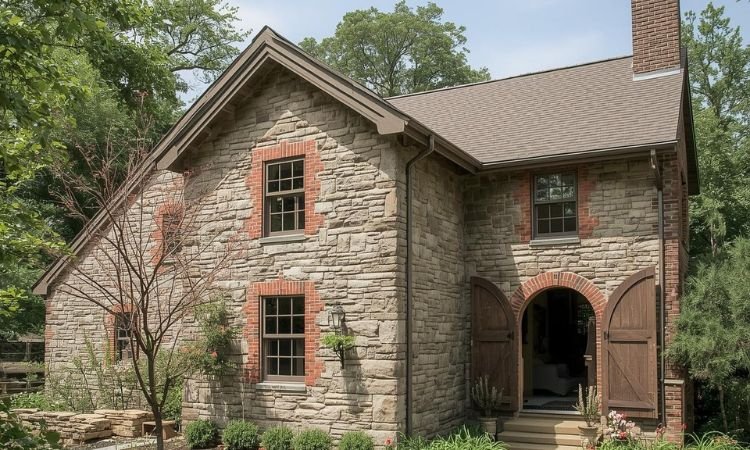
A stone farmhouse exterior draws from centuries of rural building—using local fieldstone, limestone, or river rock to create walls that age with dignity.
Unlike faux veneers or painted siding, real or high-quality stone offers unmatched depth, durability, and thermal mass. Most homes range from 2,000 to 3,500 sq ft, with steep roofs, deep eaves, and asymmetrical layouts that respond to function, not fashion.
Forget uniform gray blocks or plastic “stacked stone.” Authentic stone farmhouses feature irregular shapes, varied tones, and mortar joints that show handwork.
These 11 ideas focus on honest materials, regional character, and practical detailing that work in both historic renovations and new builds.
Why Stone Defines the Farmhouse Spirit
Local sourcing matters: Fieldstone, limestone, or sandstone was often gathered from the property itself.
Irregularity adds soul: No two stones are alike—variation in size, color, and texture creates visual richness.
Durability is built-in: Properly laid stone lasts centuries with minimal maintenance.
Thermal performance: Thick stone walls buffer indoor temperatures in both summer and winter.
11 Stone Farmhouse Exterior Ideas That Celebrate Natural Texture and Timeless Craft
All concepts work on standard residential lots and suit rural or suburban settings.
1. Full-Height Fieldstone Walls with Lime Mortar
Use locally sourced fieldstone laid in a random rubble pattern with breathable lime mortar for full exterior cladding.
This traditional method allows moisture to escape, prevents cracking in freeze-thaw zones, and develops a soft, weathered patina over time.
2. Stone Skirt with Wood or Stucco Upper
Install a 2’–3′ tall dry-stack or mortared stone base around the perimeter, then finish upper walls in white stucco or vertical board-and-batten.
The stone anchors the home visually and protects against splash-back, while the lighter upper section keeps the massing from feeling heavy.
3. Stone Chimney as Focal Point
Build a prominent stone chimney using the same material as the foundation or skirt, extending from ground to roofline.
Even if gas-powered, a masonry chimney adds authenticity and serves as a vertical anchor that ties the roof to the earth.
4. Stone Entry Porch with Timber Beams.
Construct a covered entry porch with stone piers or full stone columns supporting exposed timber beams overhead.
This combination of rugged stone and warm wood creates a welcoming threshold that feels both sturdy and inviting.
5. Random Ashlar Pattern in Limestone
Lay cut limestone blocks in a random ashlar pattern—varying widths but consistent height—for a refined yet rustic look.
Ideal for homes in regions like the Midwest or Mid-Atlantic, this style bridges farmhouse simplicity and classical proportion.
6. Dry-Stack Stone Garden Walls
Extend the farmhouse aesthetic into the landscape with low dry-stack stone walls (18″–24″ high) defining planting beds or pathways.
No mortar means easy repair and natural drainage, while the rough texture complements the main house’s stonework.
7. Stone Window and Door Quoins
Accent corners and openings with stone quoins—larger blocks at wall edges and around windows or doors—to add structural emphasis.
This traditional detail reinforces the building’s geometry without ornamentation, drawing the eye to key architectural features.
8. Mixed Stone and Shingle Siding
Combine stone on the lower third of the house with cedar shingles above, especially on gable ends or second stories.
The contrast between rugged stone and soft, weathering shingles adds texture and breaks up large wall surfaces naturally.
9. Reclaimed Barn Stone for Accent Walls
Use salvaged stone from old barns or fences for a single accent wall—often the entry facade or gable end—to add history and character.
Clean and repoint carefully; the irregular shapes and aged surfaces tell a story no new material can replicate.
10. Stone Steps and Landings at Entry
Build entry steps and landings from the same stone used on the house, set in a gentle, wide tread pattern for safety and ease.
Avoid concrete pads; stone steps unify the transition from yard to home and improve curb appeal through craftsmanship.
11. Minimal Landscaping to Highlight Stone
Keep plantings simple: gravel paths, low boxwood hedges, and a few ornamental grasses that won’t obscure the stonework.
Let the stone be the star—overgrown shrubs or colorful flowers distract from its quiet, enduring beauty.
Common Mistakes and Fixes
- Using faux stone veneer
Fix: Invest in real stone or high-quality manufactured stone with depth and variation. Thin panels look flat and fake in sunlight. - Over-smoothing mortar joints
Fix: Use struck or tooled joints—not flush or troweled smooth—to add shadow and handcrafted character. - Ignoring regional stone types
Fix: Choose stone native to your area—limestone in Texas, fieldstone in New England, sandstone in the Southwest—for authenticity. - Skipping proper drainage behind walls
Fix: Install weep holes and gravel backfill behind stone veneer to prevent moisture buildup and spalling. - Pairing stone with incompatible materials
Fix: Avoid vinyl windows, fake shutters, or glossy paint. Stone belongs with wood, metal, and matte finishes.
Build to Last, Not to Impress
A true stone farmhouse doesn’t shout—it settles. It respects the land it sits on and the hands that built it. Skip the shortcuts. Choose real stone, honor its irregularity, and let time do the rest.
Have you used stone on your farmhouse exterior? Did you go full-height, partial skirt, or just a chimney?
Share your experience in the comments—we’d love to hear how you’ve brought enduring stone into your home’s story.