Red Brick Farmhouse Exterior Ideas That Blend Rustic Warmth and Timeless Craft
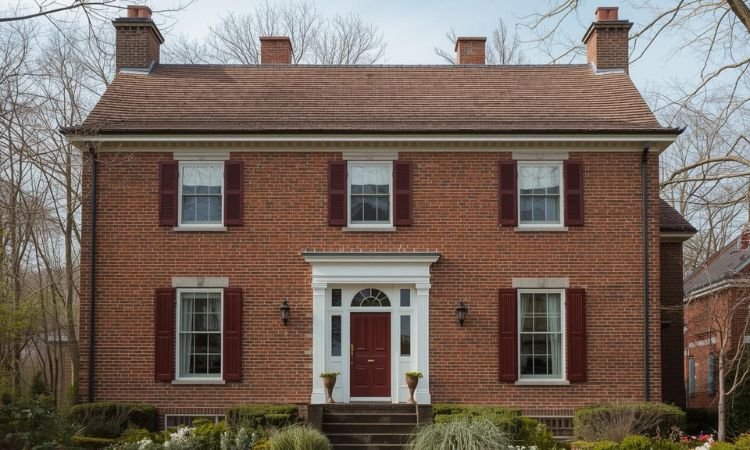
A red brick farmhouse exterior draws from early American and rural European traditions—where brick was made on-site from local clay and laid by hand.
Most homes range from 2,000 to 3,200 sq ft, with porches 6’–10′ deep and roof pitches of 8:12 to 10:12, designed for function over fashion.
Forget uniform “builder brick” or fake veneers. Authentic red brick farmhouses feature varied tones—rust, terracotta, and deep red—with subtle mortar joints and asymmetrical layouts that feel lived-in, not staged.
These 10 ideas focus on honest materials, balanced contrast, and practical detailing that honor the craft of brickwork.
Why Red Brick Stands the Test of Time
Local and durable: Brick withstands weather, fire, and time with minimal upkeep.
Warmth in every tone: Natural variation in red, rust, and brown creates visual richness.
Pairs beautifully with wood and metal: Porch columns, shutters, and roofs add contrast without competing.
Ages gracefully: Patina from rain and sun only enhances its character—no repainting needed.
10 Red Brick Farmhouse Exterior Ideas That Blend Rustic Warmth and Timeless Craft
All concepts work on standard residential lots and suit both historic and new builds.
1. Full-Height Common Bond Brick with White Mortar
Use traditional common bond brickwork (alternating rows of stretchers and headers) in warm red brick with white or light gray mortar for subtle contrast.
This classic pattern adds rhythm and depth, while the mortar highlights the handmade variation in each brick’s color and texture.
2. Wrap-Around Porch with Square Wood Columns
Build a full or partial wrap-around porch supported by simple square wood columns on brick piers that match the house foundation.
Paint columns and railings in crisp white or soft black to create contrast against the warm brick without overwhelming its texture.
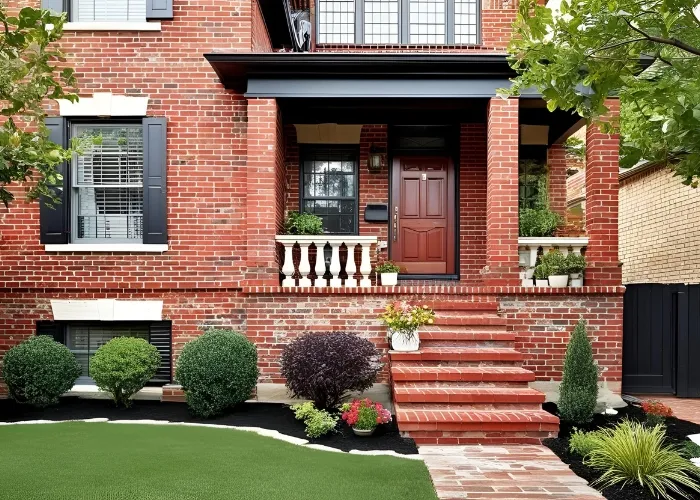
3. Black Windows and Shutters for Bold Contrast
Install double-hung windows with matte black frames and add functional louvered shutters in the same finish.
The strong contrast makes windows pop against red brick, adding definition and shadow without ornate detailing.
4. Stone or Concrete Foundation Skirt
Anchor the home with a visible foundation of limestone, fieldstone, or board-formed concrete that complements—but doesn’t match—the brick.
This base adds grounding weight and protects lower walls from splash-back, especially in rainy climates.
5. Charcoal Standing-Seam Metal Roof
Top the home with a charcoal or dark gray standing-seam metal roof to balance the warmth of red brick with cool, clean lines.
The smooth surface contrasts nicely with brick’s texture, and metal sheds snow and rain more efficiently than shingles.
6. Asymmetrical Facade with Off-Center Entry
Place the front door where it serves circulation—not forced symmetry—and flank it with mismatched window groupings or a climbing vine.
This relaxed layout honors the farmhouse tradition of building for life, not curb appeal, and keeps the brickwork as the true focal point.
7. Brick Chimney as Architectural Anchor
Extend a full-height brick chimney from ground to roofline, using the same brick as the house but with slightly tighter joints.
Even if gas-powered, a masonry chimney adds vertical emphasis and ties the roof to the earth in a way vents never can.
8. Minimal Trim in Crisp White or Matte Black
Add simple corner boards, window casings, and crown molding in either pure white or matte black—never beige or brown.
Keep profiles clean and narrow (2″–3″) to frame openings without distracting from the brick’s natural beauty.
9. Gravel or Flagstone Path with Native Plantings
Landscape with a straight gravel or flagstone path to the front door, flanked by low native grasses, lavender, or boxwood.
Avoid flower beds or mulch islands; let the brick speak by keeping plantings restrained and structural.
10. Carriage-Style Garage Doors in Stained Wood
Choose vertical tongue-and-groove garage doors in stained oak or cedar—not painted—to complement brick with natural warmth.
Add wrought iron strap hinges and handles for detail, and position the garage to the side or rear to preserve the main facade’s integrity.
Common Mistakes and Fixes
- Using thin brick veneer
Fix: Opt for full-depth brick or high-quality manufactured brick with real texture. Thin panels look flat and fake in direct sun. - Matching mortar too closely to brick
Fix: Use white, light gray, or tan mortar to highlight brick variation. Matching mortar makes walls look monolithic and dull. - Adding excessive ornamentation
Fix: Skip corbels, brackets, and decorative shingles. Brick farmhouses were plain by necessity and taste. - Pairing with vinyl windows or fake shutters
Fix: Use real wood or fiberglass windows with true divided lights, and install functional shutters that can close over the glass. - Ignoring roof pitch and material
Fix: Stick to moderate pitches (8:12–10:12) and durable roofing like metal or cedar. Asphalt shingles can look cheap next to real brick.
Build with Brick, Not Around It
A true red brick farmhouse lets the material lead. There’s no need for paint, plastic, or pretense. Honor the craft, embrace the variation, and let time deepen what’s already beautiful.
Have you used red brick on your farmhouse? Did you go full-height, add a wrap-around porch, or pair it with black windows?
Share your experience in the comments—we’d love to hear how you’ve built a home that’s meant to last.