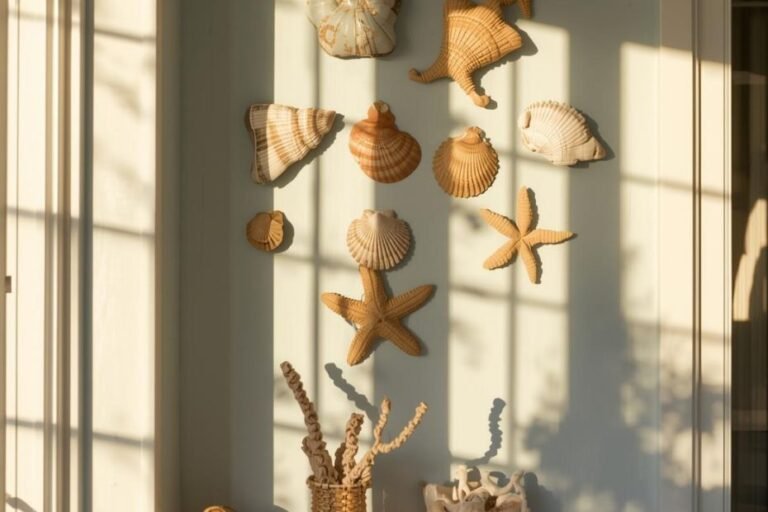
Beach Cottage Decor Ideas That Capture Coastal Ease—Without the Clichés
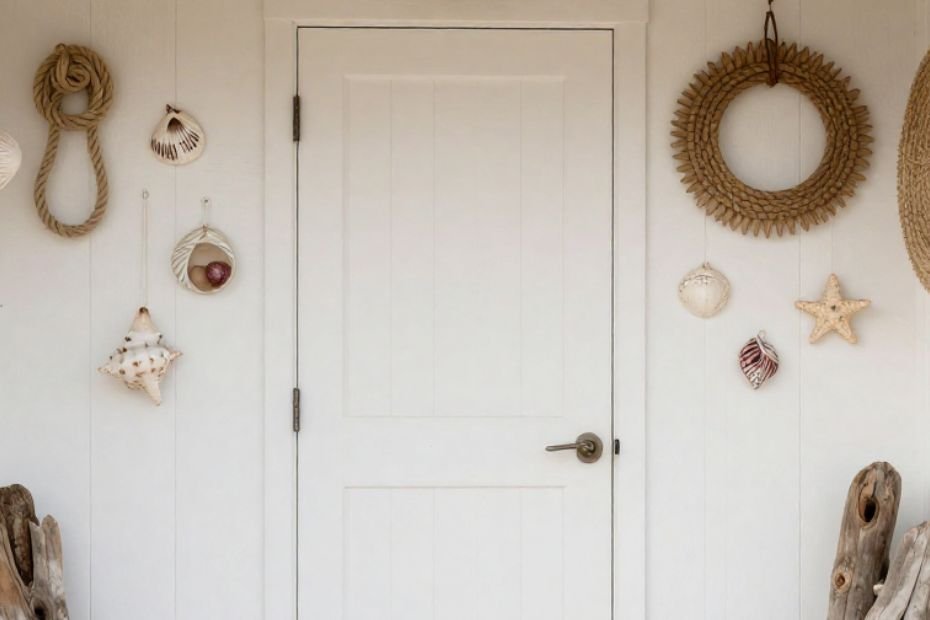
Beach cottage decor isn’t about anchors, ship wheels, or seashell collections. It’s the quiet calm of sun-bleached wood, linen curtains moving in the breeze, and a palette drawn from sand, sea foam, and driftwood.
Rooted in real coastal homes—from Maine to the Outer Banks—this style thrives on simplicity, texture, and light. In a typical room of 12’x14′, the goal is airiness, not theme.
Forget “nautical” kitsch or blue-and-white everything. Authentic beach cottage style uses natural materials, neutral tones, and functional furniture that weathers gracefully.
Why This Style Feels So Calm
Light dominates: White walls, sheer curtains, and reflective surfaces amplify daylight.
Natural fibers breathe: Jute, linen, cotton, and rattan handle humidity better than synthetics.
Color is subtle: Think sand, oat, fog gray—not turquoise or coral.
Imperfection is welcome: Faded finishes, frayed edges, and sun-bleached wood add character.
11 Beach Cottage Decor Ideas That Capture Coastal Ease—Without the Clichés
All concepts work in small to medium rooms and suit both seaside homes and inland escapes.
1. Whitewashed or Painted Wood Walls
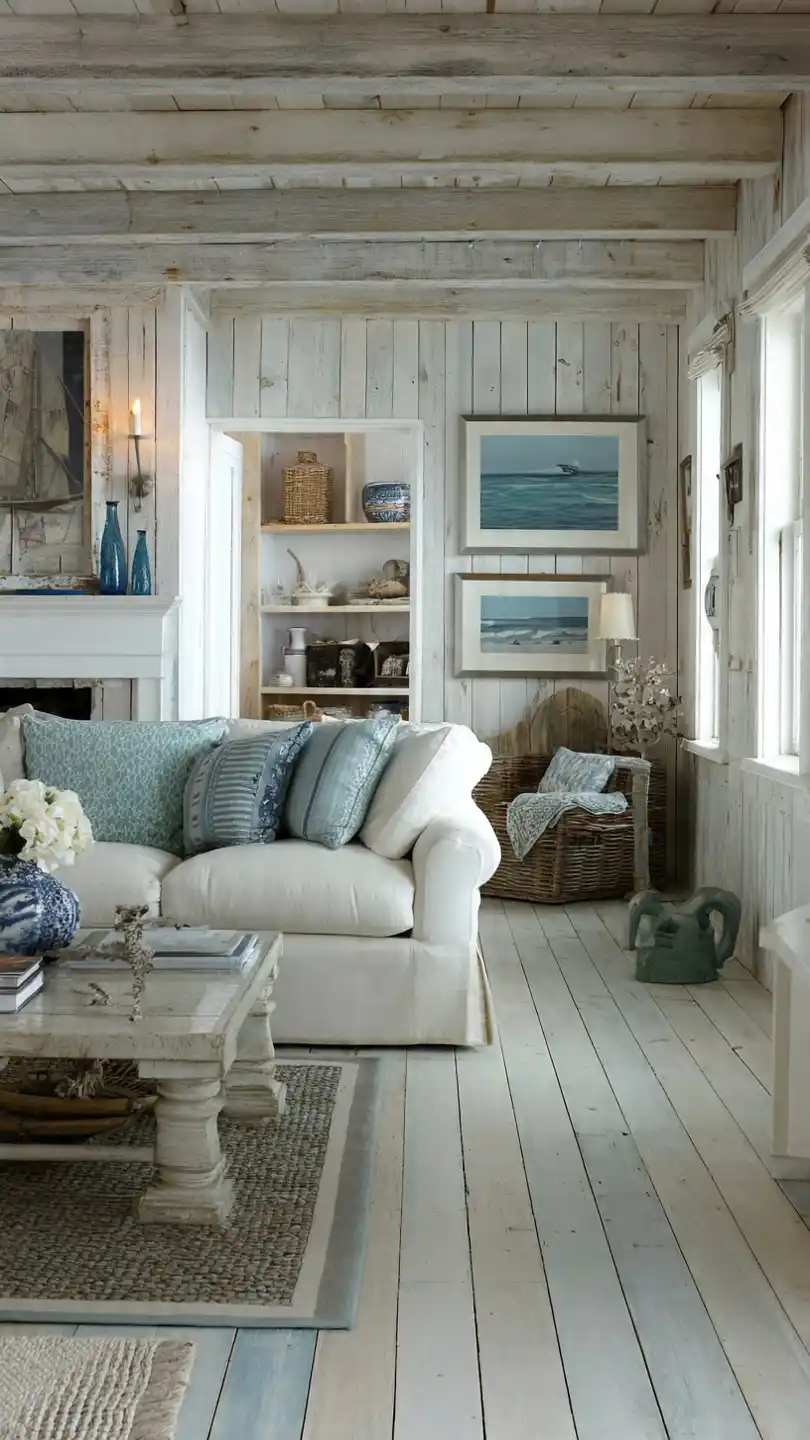
Use shiplap, beadboard, or tongue-and-groove paneling painted in warm white or soft gray to reflect light and create a breezy backdrop.
Avoid cool whites; choose Sherwin-Williams Alabaster or Benjamin Moore White Dove for warmth that doesn’t feel sterile.
2. Slipcovered Sofa in Washed Linen
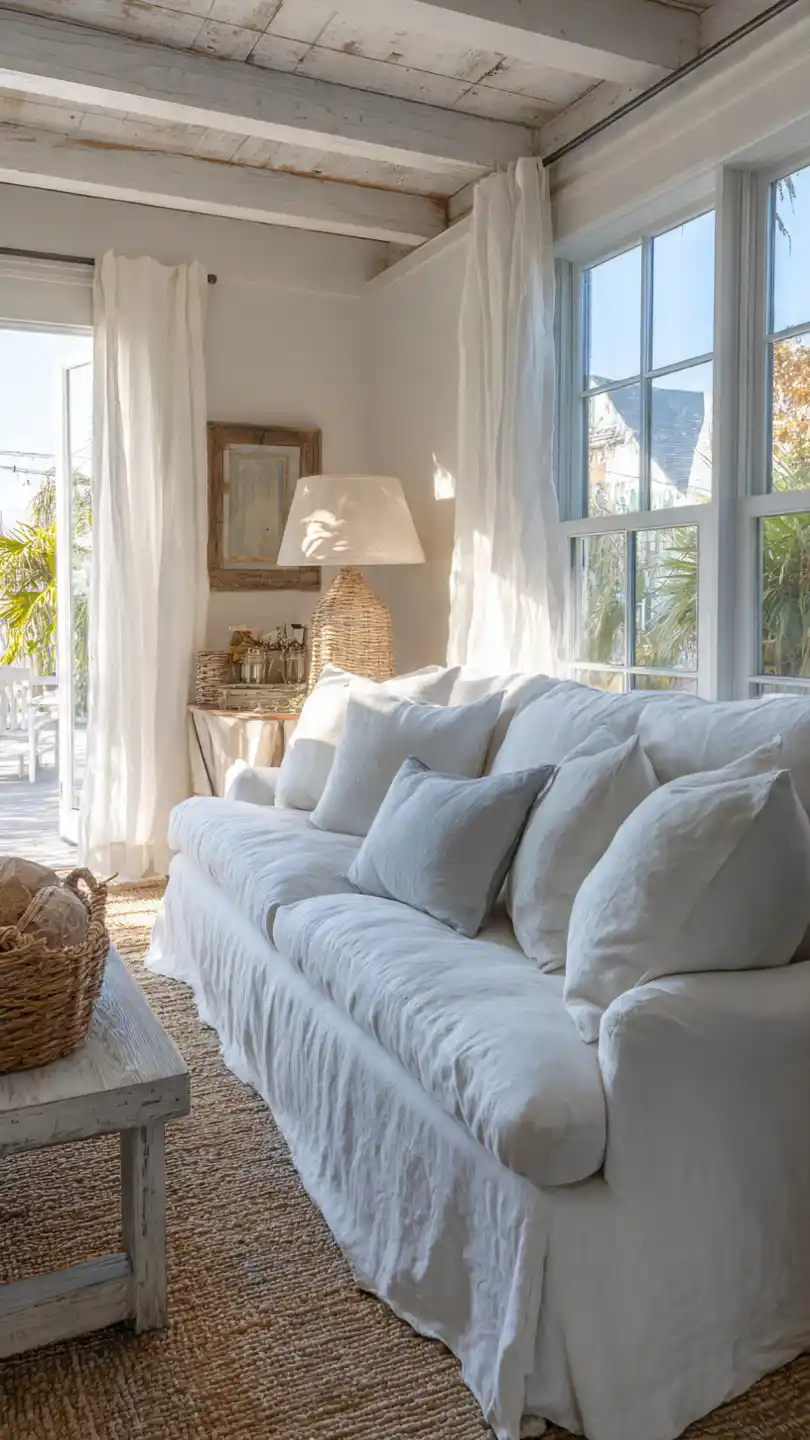
Choose a simple sofa with loose, washable linen slipcovers in oat, cream, or pale gray that can be removed and laundered seasonally.
The relaxed fit and natural fiber soften the space while resisting salt air and sandy feet better than upholstery.
3. Light Oak or Bleached Wood Floors
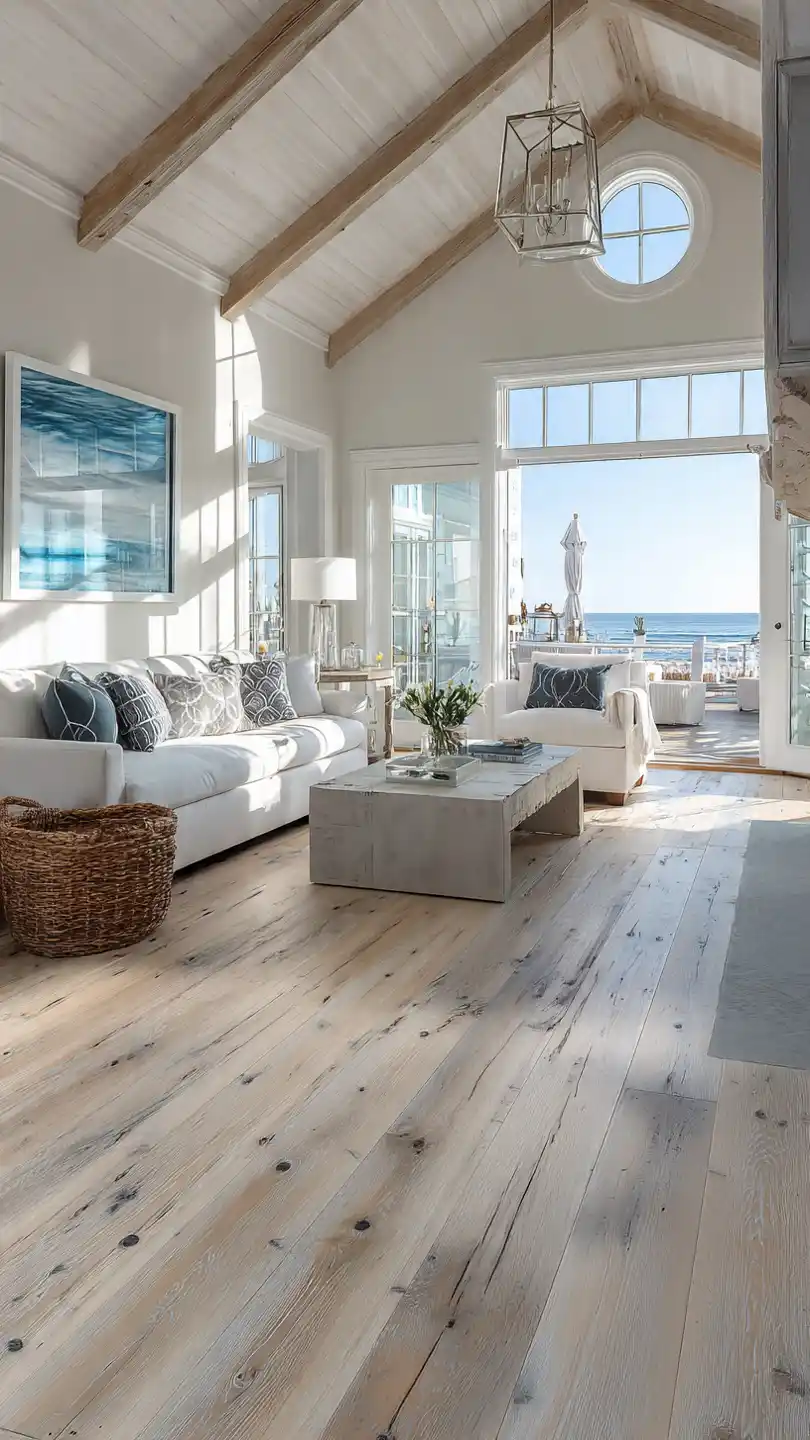
Install wide-plank oak floors with a matte finish or whitewashed pine that mimics driftwood—never dark stains or glossy sealants.
These light floors bounce light around the room and hide fine sand better than carpet or dark wood.
4. Woven Seagrass or Jute Rug
Lay a flat-weave jute or seagrass rug in a neutral tone to add texture underfoot without trapping sand or moisture.
Avoid thick pile rugs; low-profile natural fibers are easier to shake out and won’t mildew in humid air.
5. Open Shelving with Simple Dishware
Mount floating shelves or a vintage hutch to display everyday white or cream dishware, glass jars, and ceramic pitchers—no matching sets required.
Keep styling minimal: function first, form second. A chipped bowl tells a better story than a perfect stack.
6. Sheer Linen Curtains on Iron Rods
Hang floor-length linen curtains in undyed oat or white on simple black iron rods to filter light and move gently in ocean breezes.
Skip heavy drapes or valances; let air and light flow freely through the room for true coastal ease.
7. Driftwood or Weathered Wood Accents
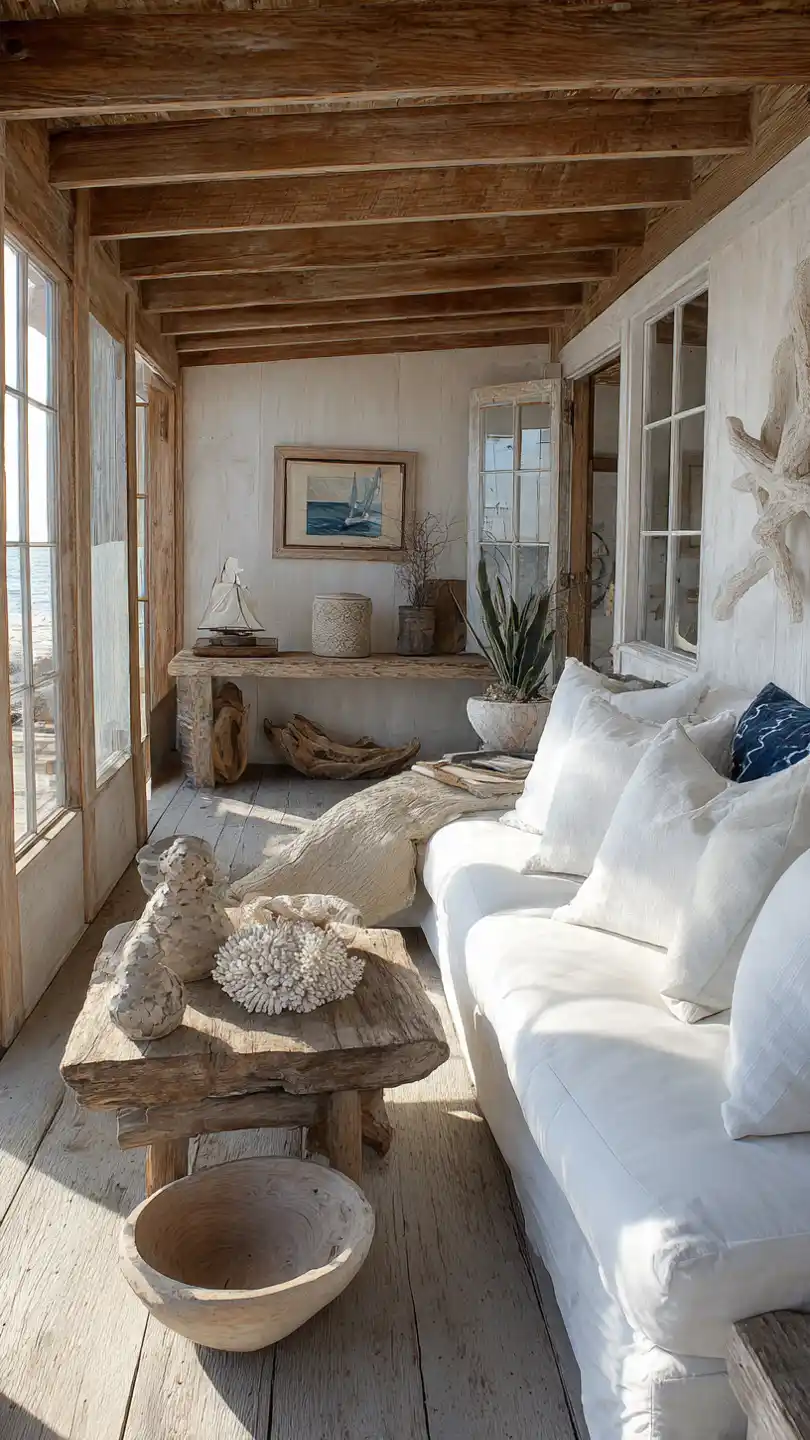
Place a single piece of driftwood on a mantel, use a reclaimed wood tray on a coffee table, or hang a framed piece as art.
Real driftwood (not resin replicas) adds organic shape and quiet color—never arrange it in “waves” or clusters.
8. Neutral Textiles with Subtle Texture
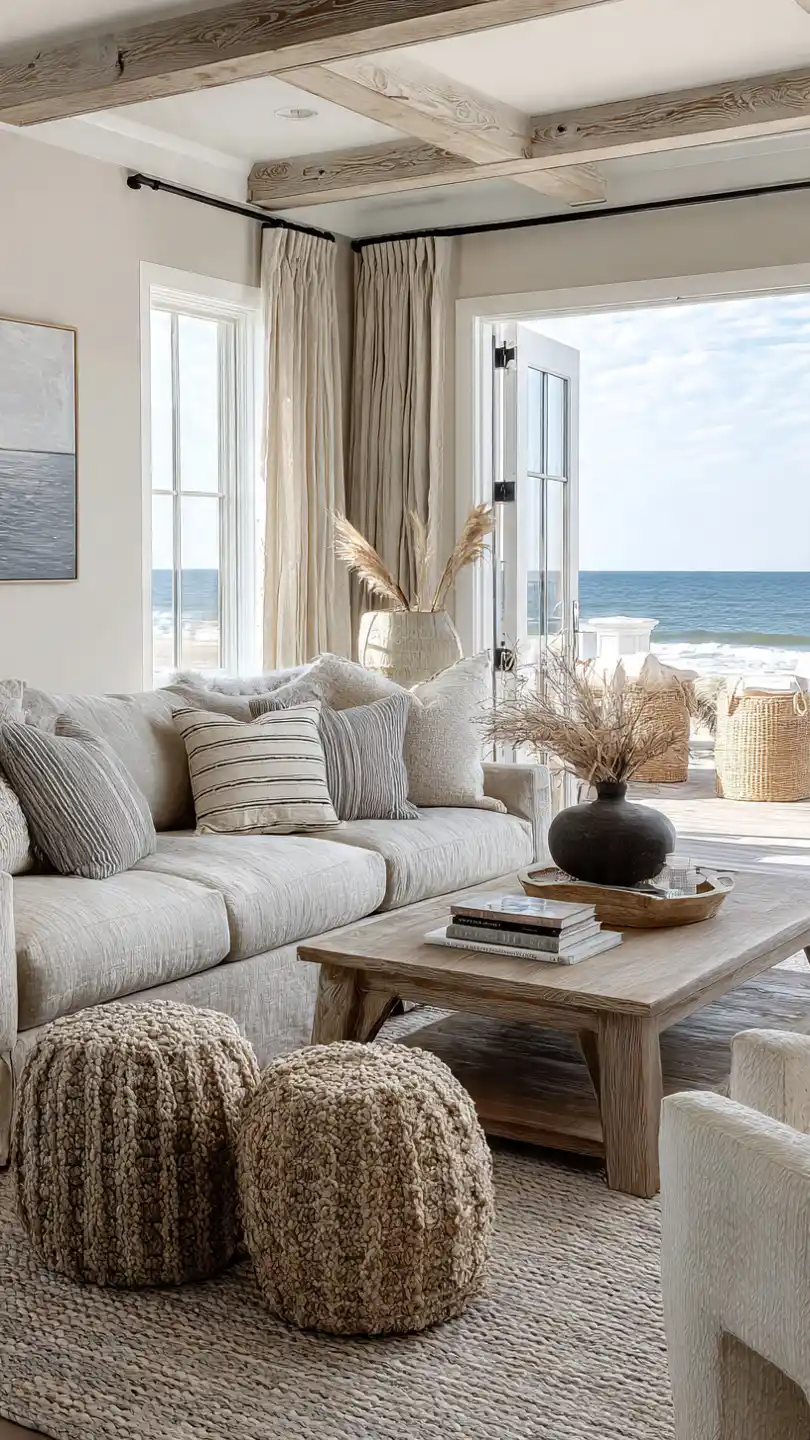
Layer throw pillows and blankets in linen, cotton, or wool blends in sand, fog gray, or soft white—never bright blues or stripes.
Add depth through weave (bouclé, waffle, slub) rather than pattern; texture reads as richer than color in coastal light.
9. Simple Wooden Furniture with Clean Lines
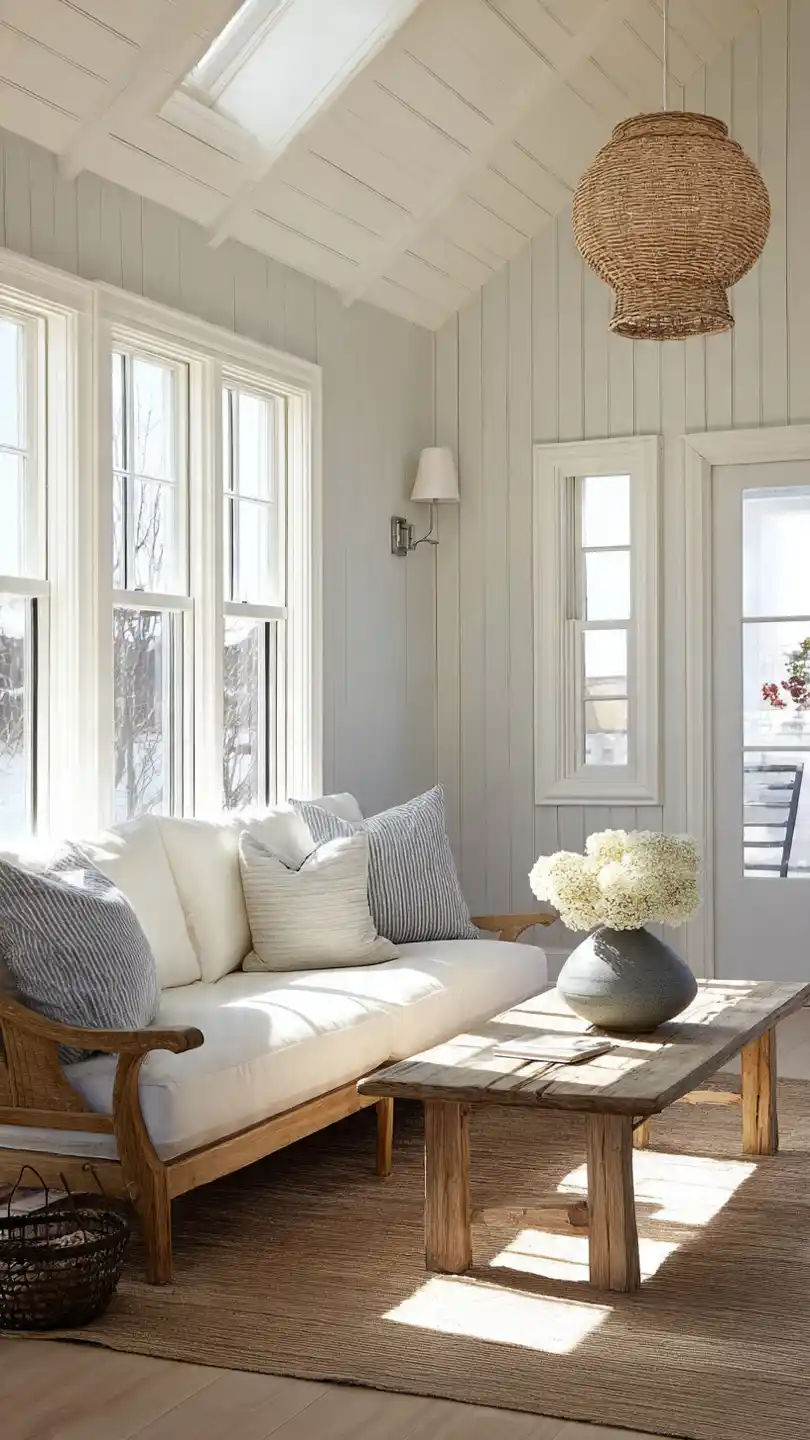
Use light oak, ash, or painted wood furniture with unadorned lines—trestle tables, ladder-back chairs, or spindle stools.
Avoid ornate carvings or dark finishes; beach cottages favor pieces that feel light, airy, and easy to move.
10. Fresh Greenery Instead of Flowers
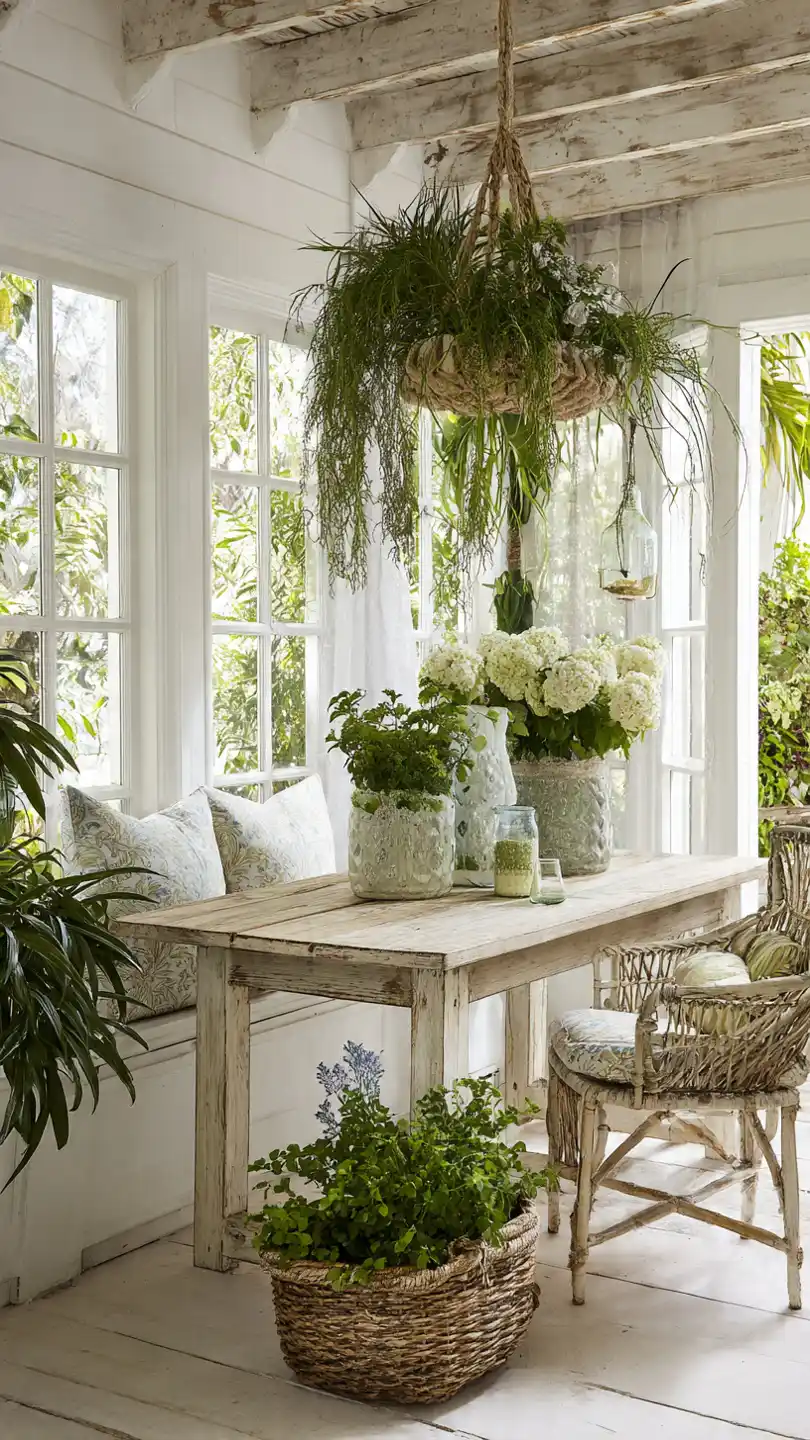
Place potted olive trees, eucalyptus, or ferns in simple terracotta or concrete pots rather than cut flowers that wilt quickly in salty air.
Greenery lasts longer, requires less upkeep, and echoes the dune grasses and shrubs outside.
11. Minimal Wall Art: One Coastal Print or Map

Hang a single framed vintage nautical chart, botanical print, or black-and-white seascape in a thin black or natural wood frame.
Avoid gallery walls or multiple seascapes; one quiet image is enough to nod to place without overdoing it.
Common Mistakes and Fixes
- Using nautical decor (ropes, anchors, buoys)
Fix: Skip all literal coastal symbols. Let light, texture, and material create the mood—not theme. - Choosing bright blues or aqua accents
Fix: Stick to neutrals. Real beach houses use color sparingly—mostly through nature, not paint or pillows. - Adding synthetic fabrics
Fix: Use only natural fibers. Polyester traps heat and smells; linen and cotton breathe in humid air. - Over-accessorizing shelves
Fix: If you don’t use it weekly, store it. Beach cottages are working homes, not display cases. - Ignoring airflow and light
Fix: Keep windows unobstructed, use light-filtering curtains, and avoid heavy furniture that blocks movement.
Live Like the Tide
A true beach cottage isn’t decorated—it’s inhabited. It smells of salt and sun, feels worn but cared for, and welcomes bare feet without fuss.
You don’t need a view of the ocean to capture this spirit. Just open the windows, let in the light, and keep only what brings calm.
Have you brought beach cottage style into your home? Did you go for slipcovers, woven rugs, or whitewashed walls? Share your approach in the comments.