12 English Cottage Decor Ideas That Celebrate Cozy Imperfection and Time-Worn Charm
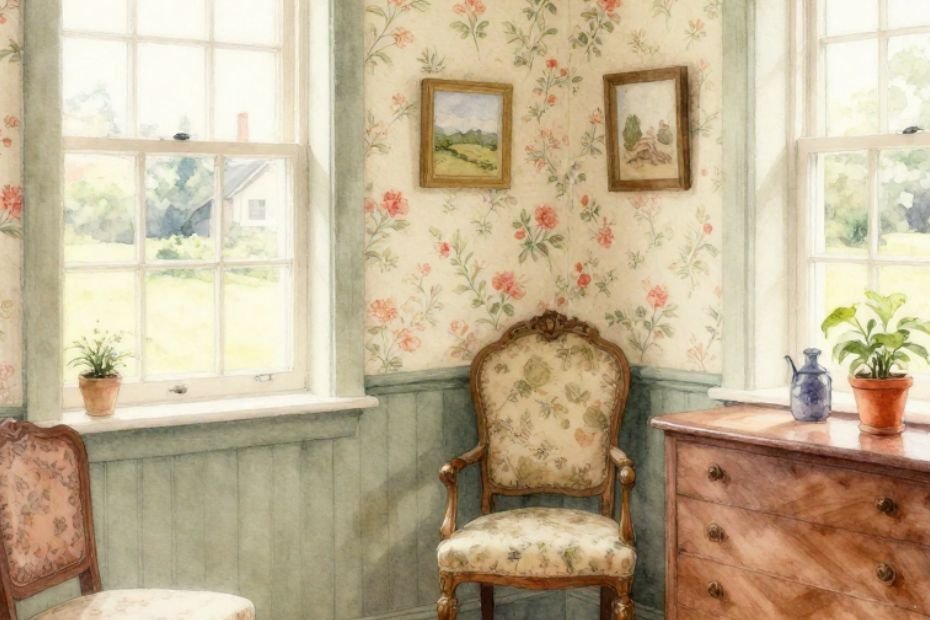
English cottage decor isn’t about matching floral sofas or tea sets on lace doilies. It’s the warmth of a well-used armchair, the scent of old books, and the quiet beauty of mismatched china in an open hutch.
Rooted in rural homes across the Cotswolds, Yorkshire, and Devon, this style thrives on layers, patina, and comfort over polish. In a typical room of 12’x14′, every object feels collected—not curated—and nothing is too precious to use.
Forget “cottagecore” trends or themed wallpaper. Authentic English cottage style blends faded chintz, dark wood, wool throws, and garden-cut flowers in a way that feels deeply personal and gently worn.
These 12 ideas focus on texture, function, and soft color so your home feels like a refuge—not a stage set.
Why This Style Feels So Inviting
Layers create comfort: Throws, rugs, and curtains soften hard surfaces and absorb sound.
Dark wood grounds light walls: Oak, pine, and mahogany add weight without heaviness.
Florals are faded, not loud: Small-scale, muted botanical prints feel vintage, not dated.
Nature comes indoors: Fresh-cut branches, herbs, and garden blooms change weekly—no plastic allowed.
12 English Cottage Decor Ideas That Celebrate Cozy Imperfection and Time-Worn Charm
All concepts work in small to medium rooms and suit both city flats and country homes.
1. Faded Floral Upholstery on Classic Frames

Reupholster a wingback chair or sofa in a vintage-inspired floral fabric with a cream or oat background and soft green or rose accents.
Choose cotton-linen blends for durability, and don’t fear slight fading—it adds authenticity and keeps the look from feeling too “new.”
2. Dark Wood Furniture with Visible Grain
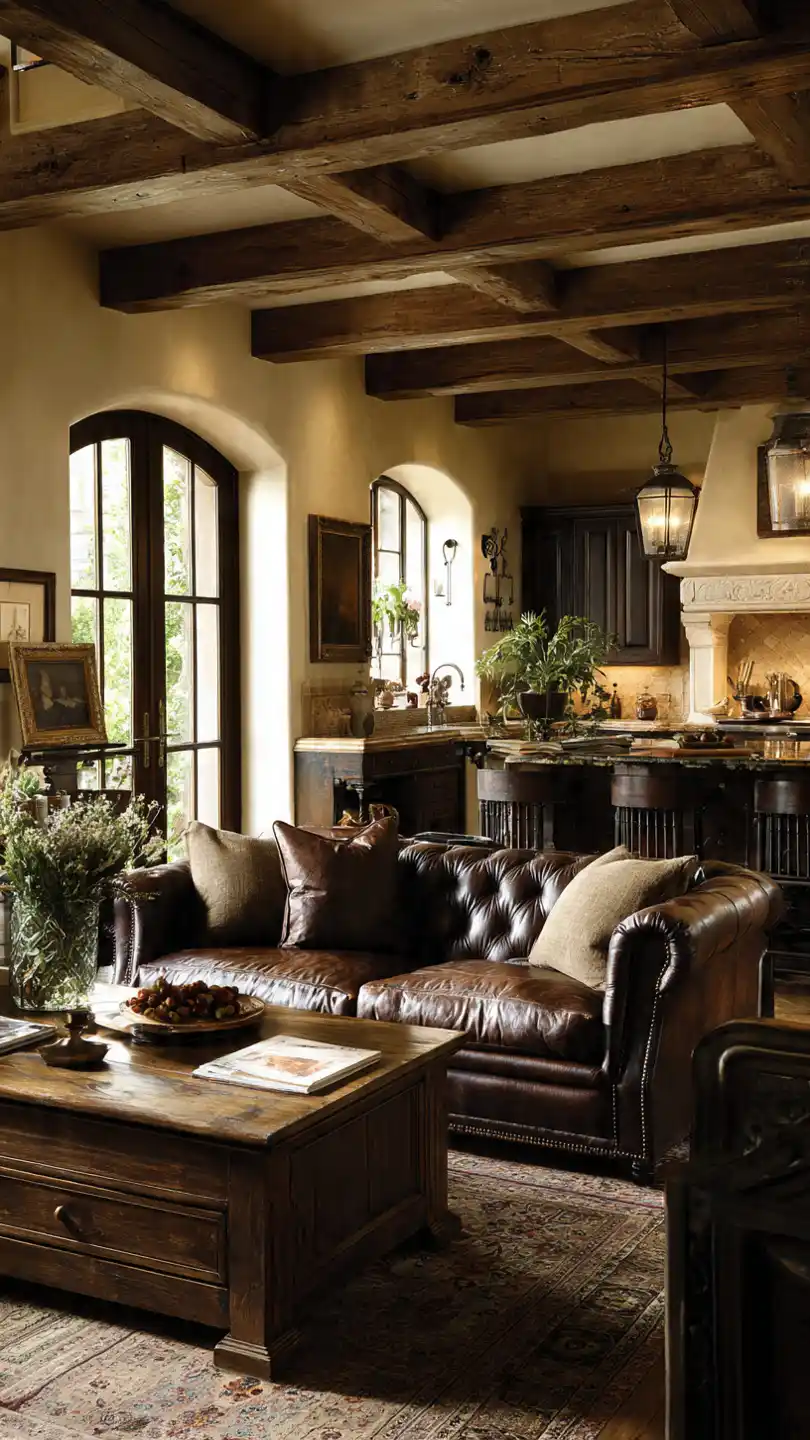
Use solid oak or pine tables, bookcases, and sideboards with visible grain and natural wax finish—never painted or glossy.
Look for pieces with simple lines: gate-leg tables, spindle-back chairs, or campaign-style chests that show honest wear but remain functional.
3. Layered Wool and Cotton Throws
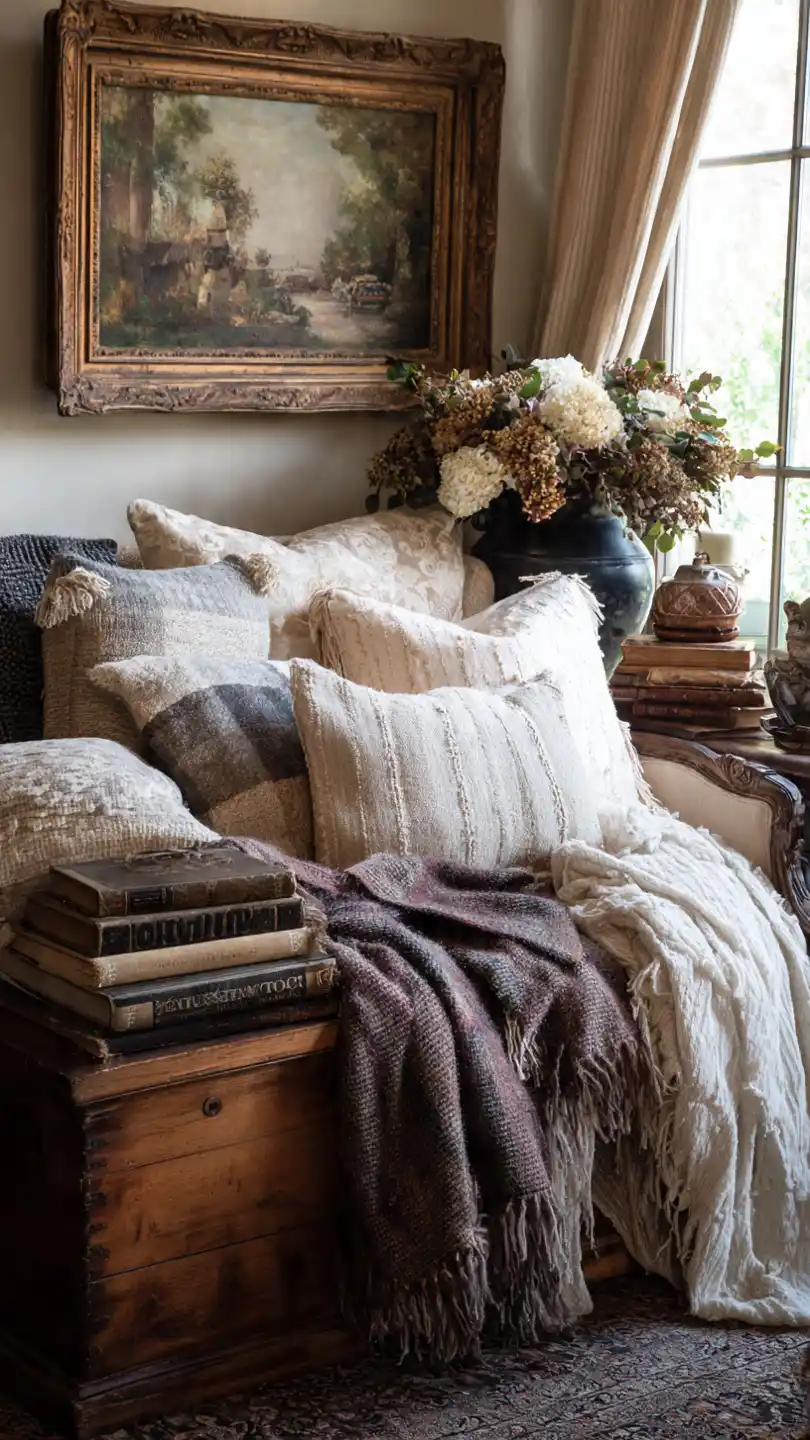
Drape thick wool blankets or cotton throws in muted red, olive, or navy over sofas and armchairs for instant coziness.
Fold them casually—never perfectly—and choose fabrics that soften with washing, not synthetic blends that pill or shine.
4. Open China Hutch with Mismatched Pieces
Display everyday teacups, serving bowls, and glassware in an open-front hutch or plate rack instead of closed cabinets.
Mix patterns and eras—Wedgwood with thrifted porcelain—and use what you own rather than buying matching sets.
5. Deep Window Seats with Cushions
Build or install a window seat (at least 20″ deep) beneath a bay or casement window and top it with two firm cushions and a bolster.
Cover in durable linen or cotton ticking, and add a small blanket for reading—this spot becomes the heart of a cottage room.
6. Garden-Cut Flowers in Simple Vases
Place freshly cut blooms—sweet peas, foxgloves, or hollyhocks—in mismatched pitchers, jam jars, or ceramic vases on tables and shelves.
Change them weekly; their impermanence is part of the charm, and they cost nothing if grown in your own patch.
7. Richly Patterned but Muted Rug
Lay a Persian, Turkish, or English Axminster rug with deep reds, blues, or greens—but in softened, aged tones that don’t overwhelm.
A slightly worn rug adds history and anchors seating areas without feeling too formal or pristine.
8. Bookshelves Overflowing with Reads
Fill floor-to-ceiling shelves with hardcover books turned spine-out, stacked sideways, or paired with small objects like brass candlesticks or pottery.
Avoid empty space; a full shelf feels lived-in, and books add instant warmth and color variation.
9. Wooden Ladder-Back or Spindle Chairs
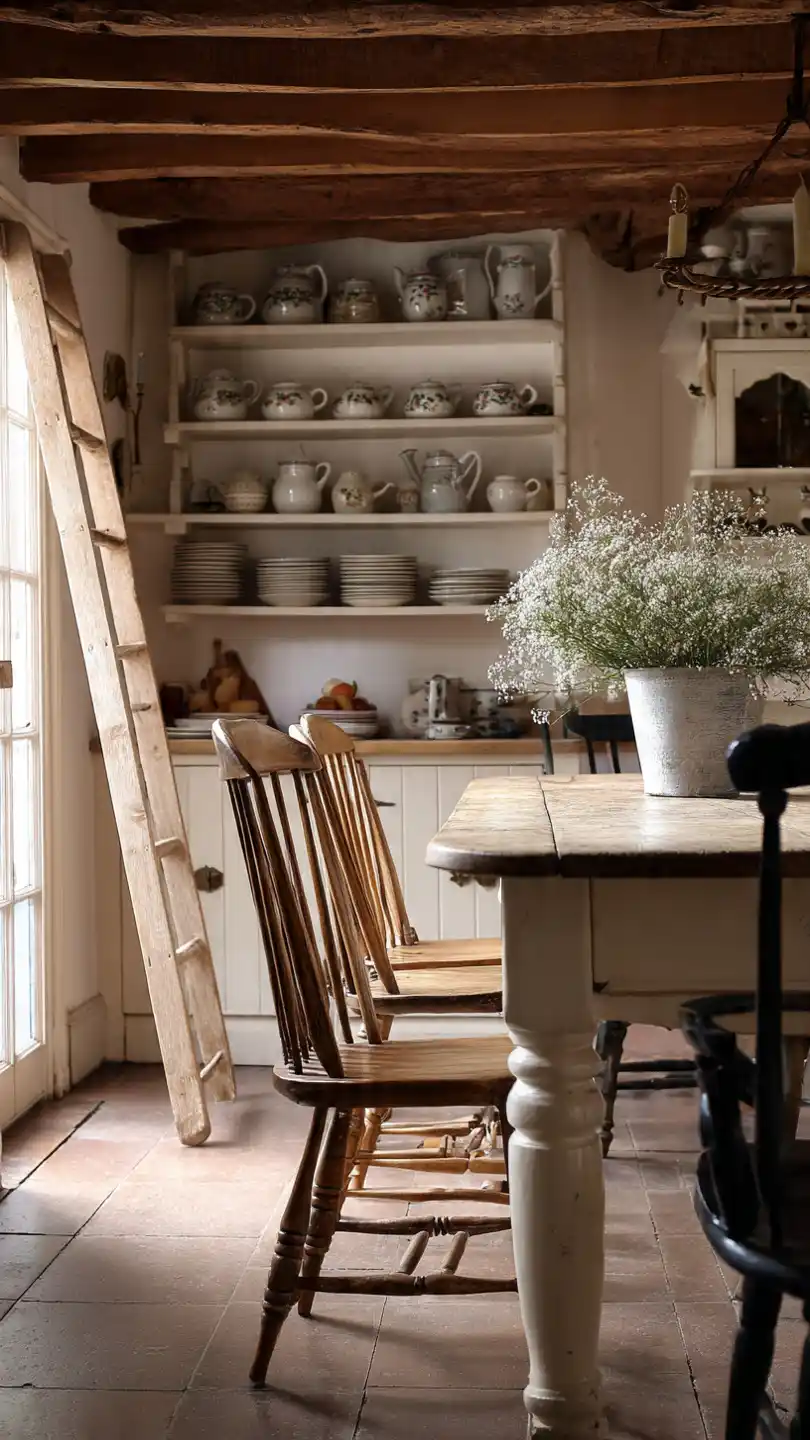
Use simple wooden chairs with rush or cane seats at the dining table or tucked into corners for extra seating.
Their light frames prevent visual clutter, and the natural materials blend seamlessly with darker furniture.
10. Heavy Linen or Cotton Curtains in Earth Tones
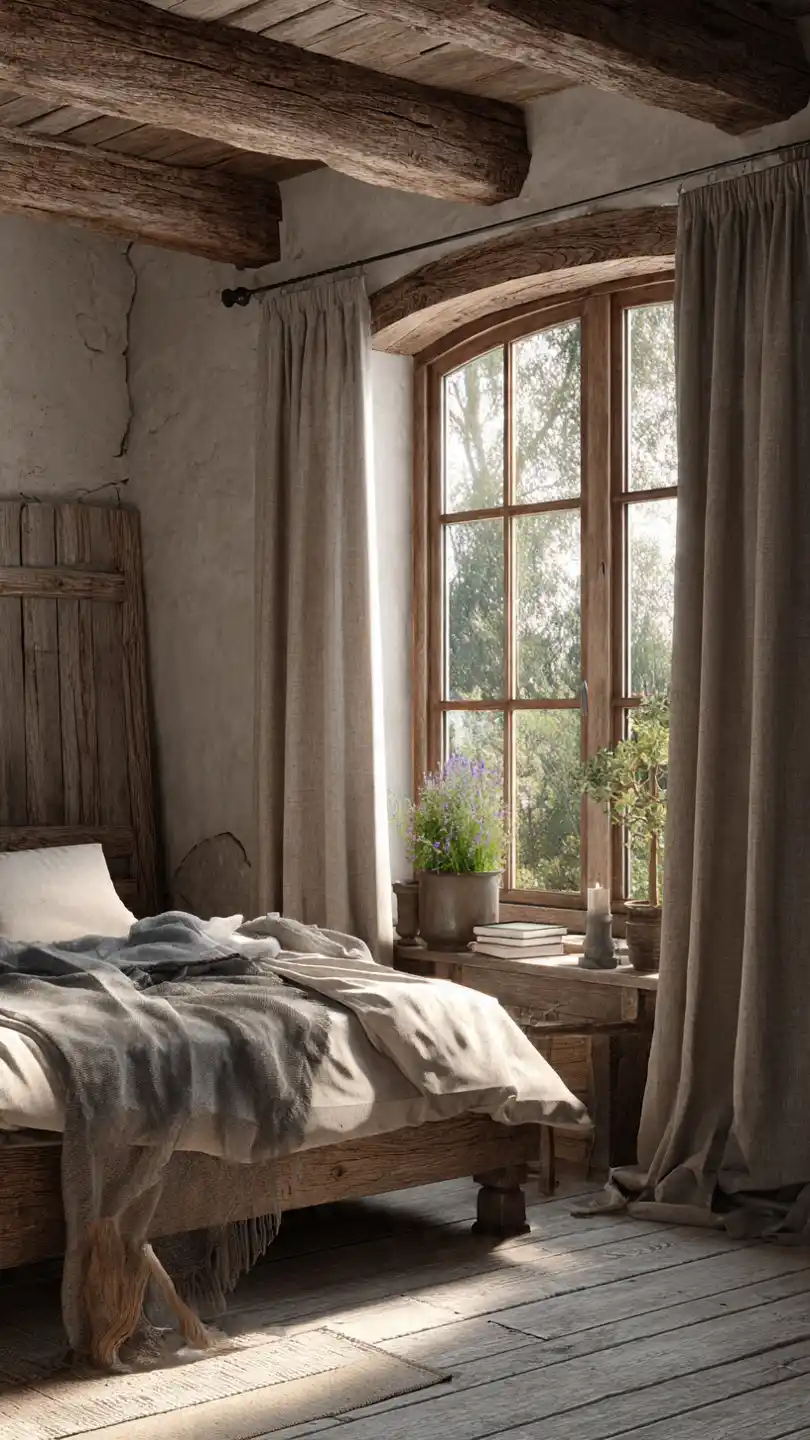
Hang floor-length curtains in unbleached linen, oat, or moss green on simple iron rods with rings or tie-backs.
They should puddle slightly on the floor and filter light softly—never sheer, never stiff, never polyester.
11. Stone or Brick Fireplace with Iron Tools

Keep the hearth simple: exposed brick or stone surround, cast-iron fire tools, and a low wooden mantel holding only a clock, candlesticks, or a single vase.
Even if unused, the fireplace remains the emotional center of the room—keep it uncluttered and functional.
12. Waxed Floorboards or Terracotta Tiles
Leave original floorboards bare or apply a matte beeswax finish to highlight grain and age; in kitchens, use irregular terracotta tiles.
Both surfaces develop a soft sheen over time and pair naturally with rugs, wood furniture, and wool textiles.
Common Mistakes and Fixes
- Using bright or modern florals
Fix: Choose small-scale, muted prints with cream backgrounds—not bold pinks or digital patterns. - Over-matching furniture
Fix: Mix wood tones and eras. A Victorian chair beside a Georgian table feels authentic, not chaotic. - Skipping layers
Fix: Add a rug, throw, and curtains even in small rooms. Bare floors and windows feel cold, not cottage-like. - Adding fake ivy or plastic greenery
Fix: Use real stems—even weeds from the garden. English cottages celebrate what grows nearby, not perfection. - Painting wood white
Fix: Leave wood natural or stained. Painted furniture belongs to coastal or French styles, not traditional English cottages.
Make It Yours—Not a Museum
An English cottage isn’t preserved—it’s lived in. There’s no rulebook, only rhythm: use what you love, keep what serves you, and let time soften the edges. Skip the trends.
Have you brought English cottage style into your home? Did you go for floral upholstery, a window seat, or an overflowing bookshelf?
Share your favorite element—or biggest lesson—in the comments. We’d love to hear how you’ve made cozy, imperfect beauty your own.