Scandinavian Farmhouse Exterior Ideas That Blend Nordic Simplicity and Rustic Warmth
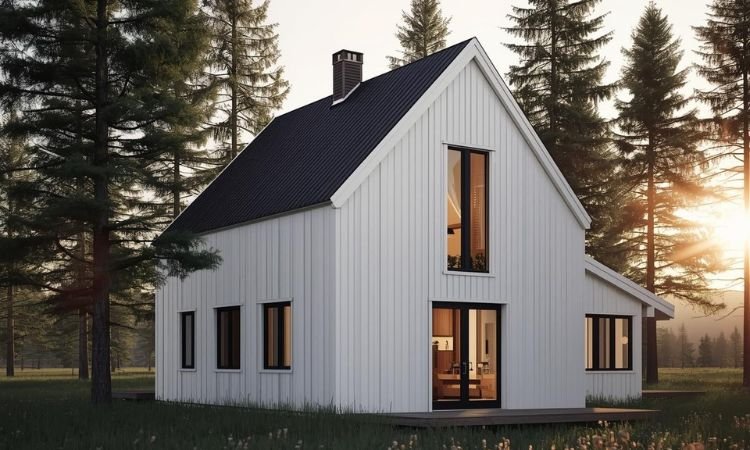
A Scandinavian farmhouse exterior merges the clean lines of Nordic design with the grounded warmth of rural architecture. Think white or pale wood siding, black-framed windows, and minimal ornamentation—but with texture, asymmetry, and natural materials that keep it from feeling sterile.
These homes often feature steep roofs (10:12+), charcoal accents, and untreated wood that silvers naturally in the sun. Most range from 1,800 to 2,800 sq ft, with an emphasis on light, function, and connection to landscape.
These 11 ideas focus on practical beauty, climate-responsive design, and restrained elegance that works in both snowy climates and temperate zones.
Why This Style Stands Apart
Light is central: Large windows and pale walls maximize daylight in low-sun regions.
Wood ages naturally: Untreated pine or cedar weathers to soft gray—no paint needed.
Black windows create focus: Matte black frames add definition without fuss.
Asymmetry feels intentional: Windows and doors are placed for view and function, not rigid balance.
11 Scandinavian Farmhouse Exterior Ideas That Blend Nordic Simplicity and Rustic Warmth
All concepts draw from real Nordic rural architecture and suit standard residential lots.
1. White-Painted Vertical Board-and-Batten Siding
Install vertical boards (6″–8″ wide) with narrow battens in crisp white paint to emphasize height and reflect northern light.
Use pine or spruce, and repaint every 7–10 years to maintain brightness while allowing subtle grain to show through the finish.
2. Matte Black Window Frames and Doors
Choose large, energy-efficient windows with matte black aluminum or wood-clad frames to create strong contrast against light walls.
Pair with a black front door in solid wood or steel, featuring simple hardware like unlacquered brass or matte black pulls.
3. Charcoal Standing-Seam Metal Roof
Install a steeply pitched roof (10:12 or higher) in charcoal or dark gray standing-seam metal for clean lines and snow shedding.
The smooth surface reflects little light, letting the walls and windows take center stage while offering decades of low maintenance.
4. Untreated Wood Accents That Weather Naturally
Add untreated pine or cedar on gable ends, porch ceilings, or entry soffits to introduce warm texture that will silver to soft gray over time.
Avoid sealing or staining—let the wood age honestly, creating a living patina that ties the home to its environment.
5. Asymmetrical Facade with Off-Center Entry
Place the front door where it makes sense for circulation, flanked by mismatched window groupings or a climbing vine.
This relaxed layout feels human-scaled and avoids the stiffness of forced symmetry, common in traditional American farmhouses.
6. Full-Height Stone or Concrete Skirt
Anchor the home with a 2’–3′ tall base of local stone, cast-in-place concrete, or board-formed concrete to ground the light upper walls.
This durable skirt protects against snowmelt and splash-back while adding textural contrast to smooth siding.
7. Minimal Porch with Clean Lines
Build a shallow porch (4’–6′ deep) with square black metal or stained wood posts and no railing—or a simple horizontal cable system.
Keep it functional for boots and coats, not oversized for seating; Nordic design prioritizes indoor comfort over outdoor lounging.
8. Integrated Carport Instead of Garage
Replace a bulky garage with a sleek, roof-matched carport attached to one side, using the same siding and black framing.
This reduces visual mass, cuts costs, and aligns with Scandinavian preference for simplicity over storage-heavy garages.
9. Large Picture Window with Black Frame
Install a single floor-to-ceiling picture window in the main living area, framed in matte black, to capture views and flood interiors with light.
Flank it with smaller double-hung or casement windows for ventilation, but let the main window serve as the focal point.
10. Gravel or Pavers Instead of Lawn
Forego grass for a low-maintenance approach: gravel, concrete pavers, or decomposed granite leading to the entry.
Add a single birch tree, sculptural grasses, or a blackened steel planter for subtle greenery that doesn’t require watering or mowing.
11. Monochromatic Exterior Palette
Limit visible colors to three: white (walls), charcoal (roof/doors), and natural wood (accents)—no brights, pastels, or earthy tones.
This restrained palette creates calm, lets architecture speak, and ensures the home feels cohesive in all seasons.
Common Mistakes and Fixes
- Using glossy black finishes
Fix: Always choose matte or satin black for windows and doors—gloss looks too modern and reflects harshly in snow. - Adding decorative trim or moldings
Fix: Skip crown molding, corbels, and shutters. Scandinavian design thrives on reduction, not embellishment. - Painting wood that should weather
Fix: Leave accent wood untreated if you want the natural silver-gray patina. Only paint structural siding for durability. - Over-landscaping with flowers
Fix: Focus on structure: gravel, grasses, and one or two trees. Flowers are rare in traditional Nordic farm settings. - Ignoring roof pitch
Fix: Go steep (10:12+) in snowy climates. A shallow roof reads as “not Scandinavian” and won’t shed snow effectively.
Quiet Strength, Not Loud Style
A true Scandinavian farmhouse doesn’t shout—it settles. It respects light, climate, and material truth. Skip the trends. Choose contrast, let wood age, and build for calm, not curb appeal.
Have you incorporated Scandinavian farmhouse elements into your home? Did you go for black windows, vertical siding, or a charcoal roof?
Share your experience in the comments—we’d love to hear how you’ve blended Nordic clarity with rustic warmth.