Modern Quadrant Shower Room Ideas to Save Space in Small Bathrooms

You’ve got a corner that’s too awkward for a standard shower but too valuable to waste. Maybe your bathroom’s oddly shaped, or you’re trying to squeeze a shower into a space that wasn’t designed for one. Traditional square showers just don’t fit, and you’re running out of options that actually work.
Quadrant showers solve this exact problem. The curved front design fits snugly into corners while the rounded entry creates more elbow room inside than you’d get from a square shower of the same size. They’re popular in the UK and gaining traction in the US because they genuinely work better in tight or awkward spaces.
I’m covering everything from different quadrant sizes and door styles to tile choices, fixture placement, and lighting strategies. You’ll see how to choose the right radius, what enclosure options work best, how to handle drainage, and ways to make these curved showers look intentional rather than like afterthoughts. These ideas work in real bathrooms where corners need maximizing and space comes at a premium.
What Makes Quadrant Showers Work
Curved Design Maximizes Corners: The rounded front fits into 90-degree corners while providing more interior space than square equivalents. It’s like geometry working in your favor where curves create efficiency. The shape optimization delivers surprising interior room.
Space-Efficient Footprint: Quadrant showers claim less floor space than rectangular showers while maintaining comfortable interior dimensions. It’s like getting more with less where smart design beats brute size. The efficient footprint leaves room for other fixtures.
Multiple Size Options: Available in various radii from 800mm to 1200mm letting you match your specific space constraints. It’s like tailored fit where customization meets needs. The size flexibility works with different bathroom dimensions.
Modern Aesthetic Appeal: The curved glass creates contemporary looks that feel intentional rather than compromise-driven. It’s like design feature where function becomes style. The sleek appearance elevates bathroom aesthetics.
Quadrant Shower Room Ideas That Maximize Corner Spaces
Make the most of corner installations with these quadrant shower room ideas featuring smart design strategies.
Offset Quadrant Placement
Use an offset quadrant shower where one side extends longer than the other fitting asymmetrical corners. The unequal dimensions work in bathrooms where walls aren’t the same length on both sides. It’s like custom geometry where irregular spaces get accommodated.
Offset quadrants typically come in combinations like 900x800mm or 1200x900mm. Position the longer side along the wall with more available space. This quadrant shower room solution handles awkward layouts standard quadrants can’t accommodate.
Frameless Glass Enclosure
Install a completely frameless quadrant enclosure with minimal hardware creating the cleanest possible look. The absence of chunky frames prevents visual clutter while showcasing the curved glass. It’s like transparency where simplicity expands perception.
Choose 10mm thick tempered glass for structural integrity without frames. Keep all hardware chrome or brushed nickel maintaining the minimal aesthetic. This quadrant shower room choice delivers maximum visual openness and contemporary style.
Low Profile Tray Installation
Use a low profile shower tray—40mm or less in height—creating easier entry and more accessible design. The minimal step-up improves safety while looking more modern than traditional raised trays. It’s like subtle transitions where less barrier means better flow.
Stone resin trays offer the slimmest profiles while maintaining durability. Match the tray color to your floor tiles for visual continuity. This quadrant shower room detail improves both accessibility and aesthetics.
Sliding Door Configuration
Choose sliding doors instead of hinged ones if your bathroom’s really tight on space. Sliding quadrant doors open along the curve rather than swinging outward saving clearance space. It’s like recovering square footage where door operation doesn’t steal room.
The curved track follows the quadrant arc creating smooth operation. This works especially well when toilets or sinks sit close to the shower entry. This quadrant shower room option solves clearance problems in cramped bathrooms.
Vertical Tile Pattern
Run wall tiles vertically inside and around the quadrant creating height perception. The upward lines draw eyes toward the ceiling making the space feel taller. It’s like vertical stripes where direction changes perception.
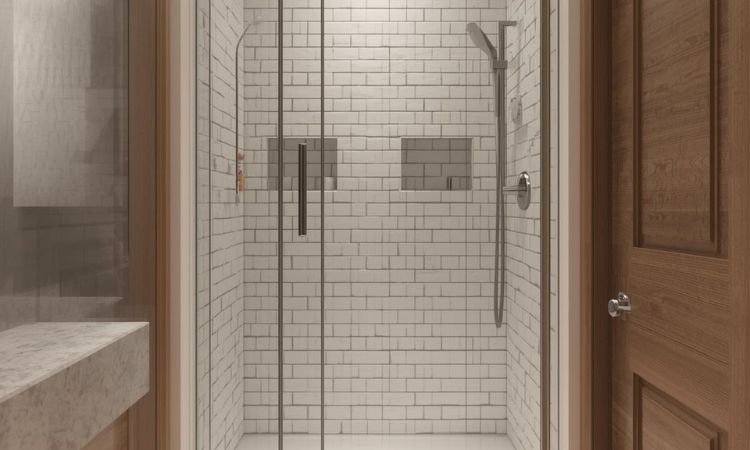
Use 12×24 tiles installed vertically or subway tiles in vertical stack bond. Avoid horizontal patterns that emphasize width in already tight spaces. This quadrant shower room technique adds perceived height without construction changes.
Built-In Corner Shelving
Add built-in corner shelves at multiple heights using the curved wall space efficiently. The integrated storage holds necessities without protruding awkwardly into the shower area. It’s like following curves where storage fits the space naturally.
Position one shelf at chest height for daily products and another lower for larger bottles. Tile the shelves matching your walls for cohesive looks. This quadrant shower room detail provides essential storage while working with the curved design.
Rainfall Showerhead Centered
Install a large rainfall showerhead centered in the curved space taking advantage of the generous overhead area. The positioning ensures even coverage throughout the quadrant. It’s like optimizing placement where curves actually help distribution.
An 8-10 inch rainfall head works well in most quadrants without overwhelming the space. Add a handheld on a slide bar for flexibility. This quadrant shower room upgrade delivers spa-like experiences in compact footprints.
Contrasting Floor Tile
Use different floor tiles inside the quadrant creating visual definition and improved slip resistance. The contrasting material or pattern distinguishes the wet area while adding design interest. It’s like zoning where different surfaces serve different purposes.
Smaller mosaic tiles work great for shower floors providing better traction than large format tiles. Choose colors complementing your main bathroom tiles rather than clashing. This quadrant shower room strategy combines safety with style.
LED Strip Lighting
Install LED strip lighting around the curved perimeter creating ambient glow and modern appeal. The subtle illumination highlights the quadrant’s shape while providing functional light. It’s like accent lighting where illumination becomes design feature.
Use waterproof LED strips rated for wet environments. Position them along the top edge of the enclosure or recessed into the ceiling above. This quadrant shower room detail adds contemporary flair while improving visibility.
Glass Treatment Options
Choose specific glass treatments matching your privacy and style needs—clear for openness, frosted for privacy, or patterned for visual interest. The glass choice affects both function and aesthetics significantly. It’s like customization where surface finish changes the whole vibe.
Clear glass makes small bathrooms feel most spacious by showing the full room. Partial frosting on lower portions balances privacy with openness. This quadrant shower room decision impacts daily experience more than most people realize.
Making Quadrant Showers Work In Your Space
Measure Corners Accurately: Verify your corner is actually 90 degrees since variations affect quadrant fit. It’s like precision checking where assumptions cause problems. The accurate measurement prevents expensive ordering mistakes.
Consider Door Swing Direction: Determine which way doors should open based on bathroom layout and fixture placement. It’s like traffic flow where entry direction affects functionality. The thoughtful planning prevents awkward door operations.
Plan Drainage Carefully: Ensure proper floor sloping toward drains preventing water pooling in curved areas. It’s like foundations where getting basics right prevents future issues. The correct drainage keeps quadrants functional long-term.
Match Your Bathroom Style: Choose quadrant finishes and features complementing your overall bathroom design. It’s like cohesion where the shower fits rather than fights the aesthetic. The coordinated approach creates intentional rather than mismatched looks.
Frequently Asked Questions About Quadrant Shower Rooms
What Sizes Do Quadrant Showers Come In?
Standard quadrant showers range from 800x800mm (roughly 32×32 inches) up to 1200x1200mm (roughly 48×48 inches). The most common sizes are 900x900mm and 1000x1000mm offering good balance between space efficiency and interior comfort. Offset quadrants come in unequal dimensions like 1200x900mm or 1000x800mm fitting asymmetrical corners.
The size you choose depends on available corner space and how much room you need inside. Smaller quadrants work in tight bathrooms while larger ones provide more luxurious showering space. Most manufacturers offer sizes in 100mm increments giving you flexibility to match your specific space.
Are Quadrant Showers More Expensive Than Square Ones?
Quadrant showers typically cost 10-30% more than equivalent square showers due to the curved glass and specialized hardware. A basic 900mm quadrant runs $400-800 while premium frameless versions cost $1,000-2,000 or more. The curved glass requires more complex manufacturing driving up costs compared to flat glass panels.
That said, the space efficiency often justifies the extra cost since quadrants let you fit showers where square ones won’t work. You’re paying for the design optimization and additional interior space the curved shape provides. The investment makes sense when corner placement is your best or only option.
How Much Space Do You Actually Need?
You need a true 90-degree corner plus the quadrant dimensions—so for a 900mm quadrant, you need 900mm of clear wall space on both sides of the corner. Add 600mm of clearance in front of the shower door for comfortable entry and exit per most building codes. Total footprint is roughly 900mm square plus the front clearance zone.
In imperial measurements, a 36-inch quadrant needs 36 inches of wall on each side plus about 24 inches of clearance in front. The curved design means less floor space gets consumed compared to rectangular showers requiring similar clearances. Measure your actual corner carefully since walls rarely meet at perfect 90-degree angles.
Can You Install Quadrant Showers Yourself?
DIY installation is possible if you’re handy and comfortable with basic plumbing, but the curved design makes it trickier than square showers. Getting the tray level and ensuring the curved enclosure seals properly requires precision. Most people hire professionals for at least the tray installation and plumbing connections.
The enclosure itself can be DIY-friendly if you follow instructions carefully and have a helper for handling glass panels. Budget $300-600 for professional installation if you’re not confident doing it yourself. Poor installation leads to leaks and damage costing far more than professional installation fees.
Do Quadrant Showers Work In Small Bathrooms?
Yes—quadrant showers actually work better than rectangular showers in small bathrooms because they maximize corner space efficiently. An 800mm or 900mm quadrant fits in tight corners while providing decent interior room. The curved design also feels less boxy and cramped than square enclosures in small spaces.
The key is choosing the right size for your specific bathroom and ensuring adequate clearance in front. Frameless glass makes quadrants feel even more open in small bathrooms by eliminating visual barriers. Many people find quadrants the perfect solution for bathrooms where space limitations rule out other shower options.
Creating Your Perfect Quadrant Shower Space
Quadrant shower room ideas prove that corner installations don’t mean compromising on comfort or style. The smart strategies maximize awkward spaces through efficient design and thoughtful details. I’ve found that well-planned quadrant showers often become favorite bathroom features because they genuinely solve space problems.
Start by measuring your corner accurately and choosing the right quadrant size for your space. Select frameless enclosures for maximum openness and modern appeal. Add smart storage, proper lighting, and quality fixtures creating a shower that works as well as it looks. The layered approach transforms corners into valuable bathroom real estate.
What’s your biggest concern about quadrant showers? Share your corner space challenges below!