19+ Narrow Entryway Ideas: Smart, Stylish Ways to Maximize a Small Entrance
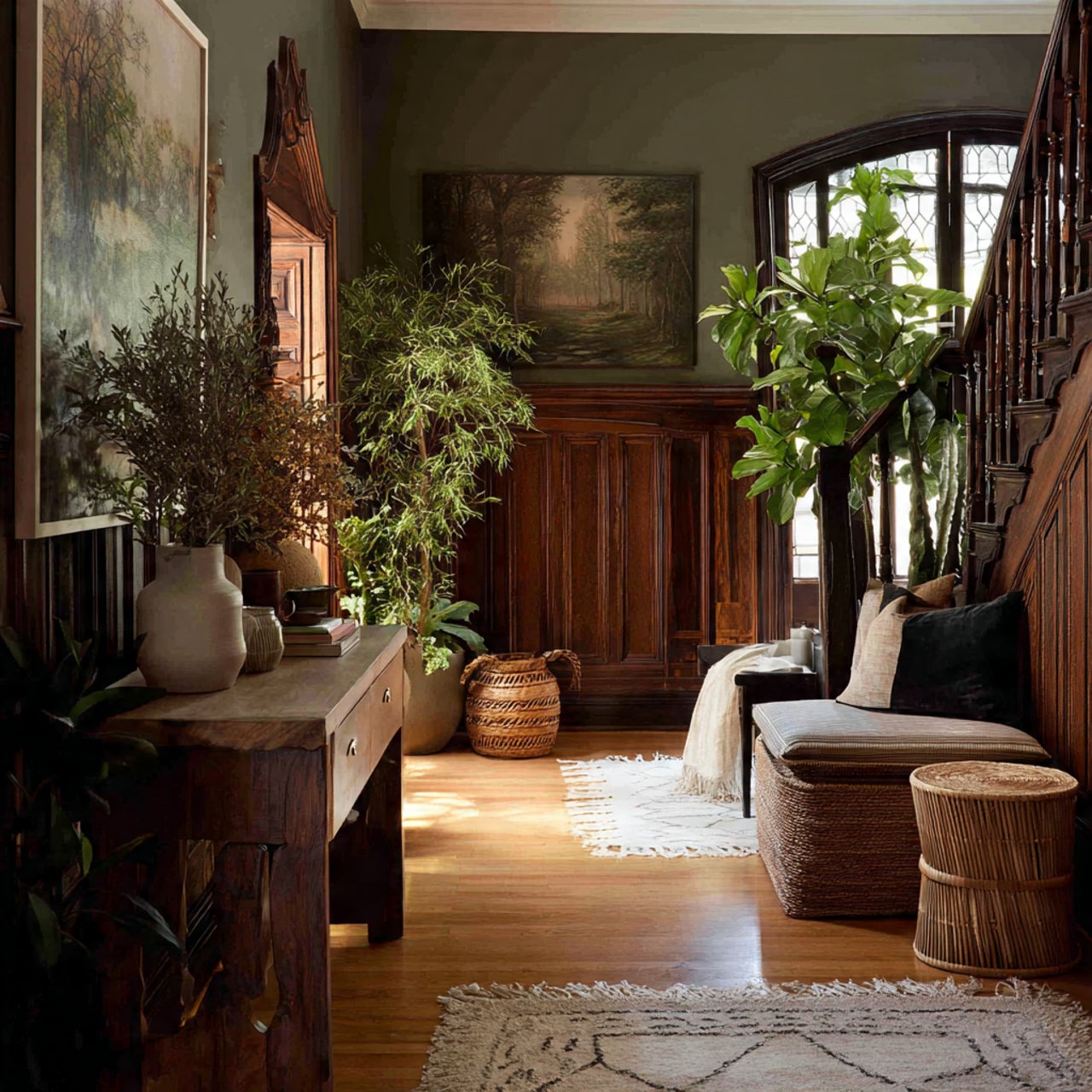
Your entryway is the handshake your home offers every visitor. It sets expectations for everything that follows—and narrow entryways carry an outsized responsibility in this department. While a grand foyer announces itself effortlessly, a slender entrance corridor demands strategic thinking to make that same powerful statement.
The truth is, optimizing a narrow entryway matters more than most homeowners realize. This transitional zone handles daily chaos: keys dropped in haste, coats flung after long days, shoes kicked off without ceremony. When the space is tight, every design decision either contributes to harmony or amplifies disorder. The good news? With the right approach, even the narrowest entrance can feel welcoming, organized, and surprisingly spacious.
1. Understanding the Limitations of Narrow Entryways
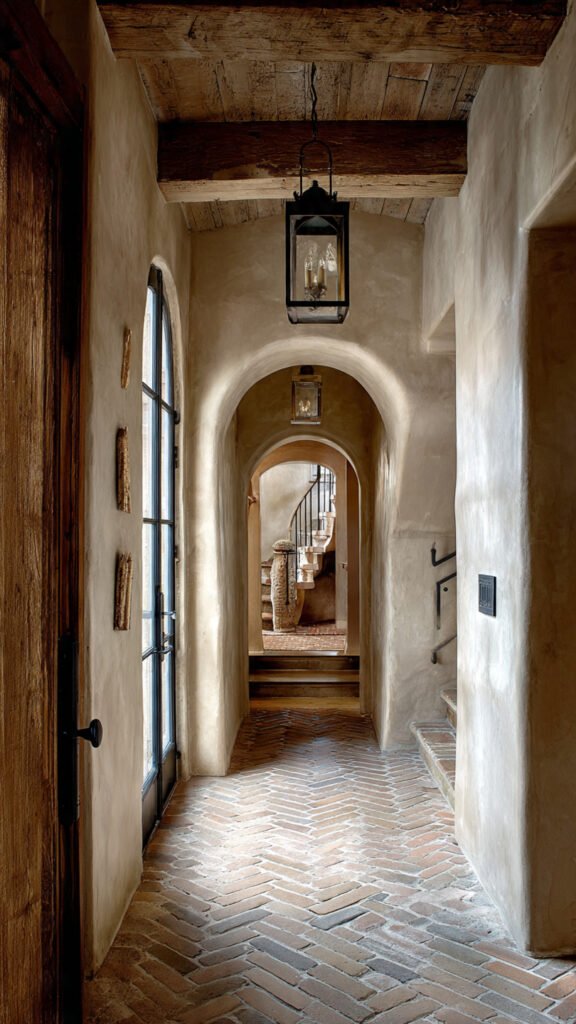
Before diving into solutions, acknowledge what you’re working with. Narrow entryways typically measure between 36 and 48 inches wide—barely enough for two people to pass comfortably. Traffic flow becomes the primary constraint; anything protruding too far into the walkway creates a daily obstacle course.
Architectural challenges compound spatial limitations. Load-bearing walls prevent expansion. Doors swing inward, eating precious floor space. Electrical panels, HVAC returns, or breaker boxes sometimes claim prime wall real estate. And in older homes, irregular angles and asymmetrical layouts throw standard solutions out the window. Understanding these fixed constraints prevents frustration and guides realistic expectations for what’s achievable.
2. Design Psychology: How the Eye Reads Narrow Spaces
Human perception operates on predictable principles that designers exploit to manipulate spatial feeling. In narrow entryways, the eye naturally travels along the longest sightline—usually toward a focal point at the corridor’s end. Creating a deliberate endpoint, whether through artwork, a mirror, or a striking light fixture, gives the brain something to focus on instead of the constricting walls.
Symmetry suggests order and calm, making tight spaces feel intentional rather than cramped. Visual weight—the perceived heaviness of objects based on color, texture, and size—also matters enormously. Dark, bulky items feel like they’re closing in, while lighter elements appear to recede. Leveraging these psychological principles transforms how narrow spaces feel, even without adding square footage.
3. Planning a Narrow Entryway Layout That Actually Works
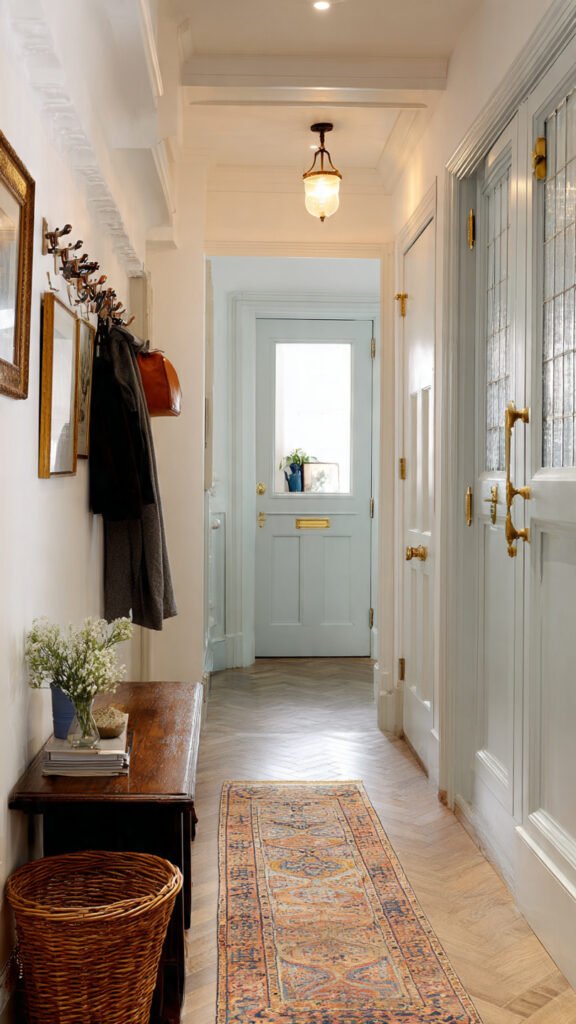
Resist the urge to start shopping before you’ve planned. Grab a tape measure and document your entryway’s exact dimensions, including ceiling height, door swing clearance, and any architectural interruptions. Sketch a simple floor plan, noting electrical outlets and light switch locations.
Next, define your priorities honestly. Do you need storage more than style? Is seating essential or merely nice to have? How many household members use this space daily? Answers to these questions shape every subsequent decision. A family of five with sports equipment and school bags has different needs than a couple in a minimalist apartment. Planning first—buying second—prevents expensive mistakes and returns.
4. The Best Furniture Scale for Narrow Entryways
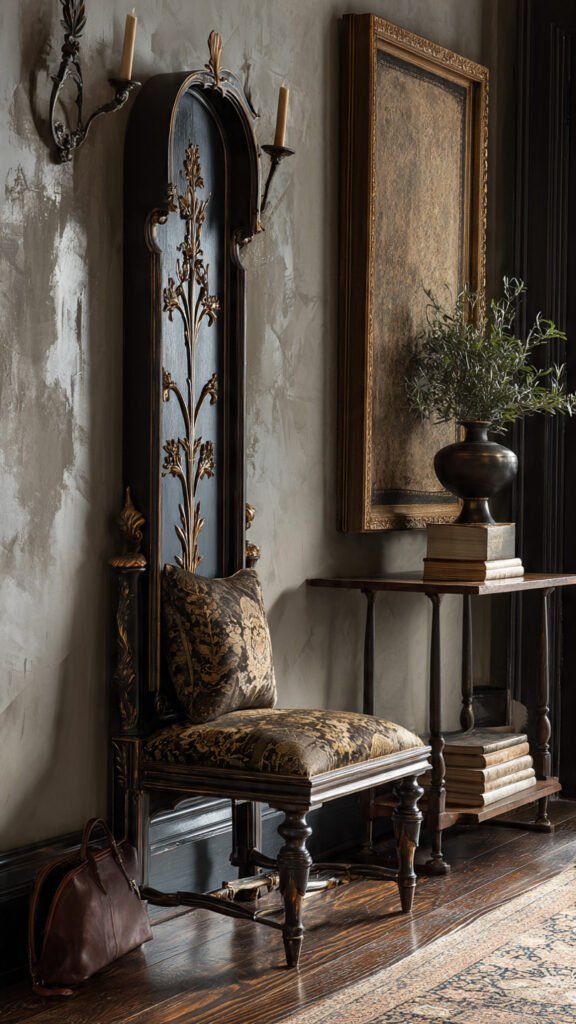
In tight spaces, scale trumps style every time. A gorgeous console table means nothing if guests must shimmy past it sideways. For narrow entryways, limit furniture depth to 12 inches maximum—and 8 to 10 inches works even better. This keeps walkways clear while still providing functional surfaces.
Proportions matter beyond depth. Tall, slender pieces draw the eye upward and occupy less visual floor space than short, wide alternatives. A narrow console with long legs creates airiness beneath it, making the floor appear to continue uninterrupted. When selecting any furniture piece, imagine it installed and ask yourself: can two people pass comfortably? If the answer wavers, size down.
5. Wall-Mounted vs. Freestanding Entryway Solutions
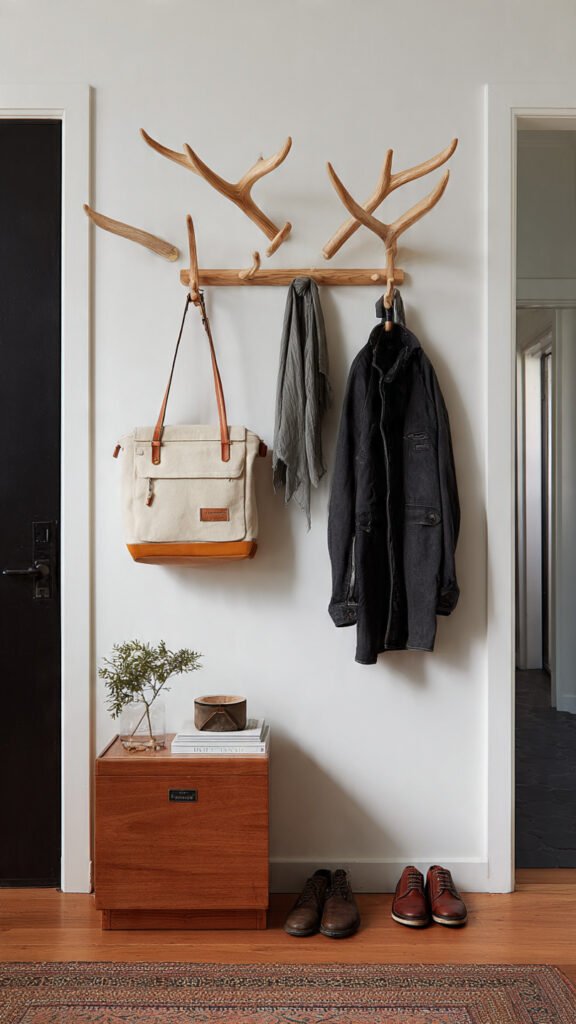
Wall-mounted furniture revolutionizes narrow entryways by eliminating floor footprint entirely. Floating shelves, mounted coat racks, and wall-hung consoles keep the floor clear for traffic while providing essential function. Installation requires finding studs or using appropriate anchors, but the spatial payoff justifies the effort.
Freestanding pieces offer flexibility—important for renters or those who frequently rearrange. However, they consume floor space that narrow entryways can’t spare. Built-ins represent the premium option: custom millwork designed precisely for your dimensions maximizes every inch but comes with corresponding costs. For most narrow entryways, wall-mounted solutions strike the optimal balance between function, flexibility, and spatial efficiency.
6. Vertical Storage Strategies That Don’t Overwhelm
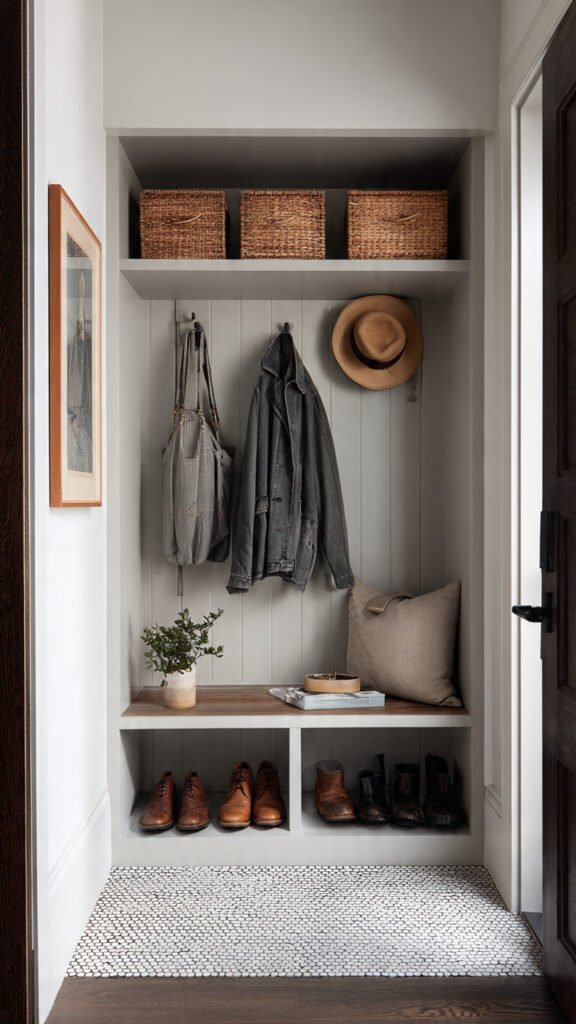
When floor space disappears, look up. Vertical storage extends usable space toward the ceiling without widening the footprint. Tall, narrow cabinets with multiple shelves concentrate storage in minimal floor area. Stacked hooks at varying heights accommodate different users and item types—higher for adult coats, lower for children’s backpacks.
The key is preventing vertical solutions from becoming visually oppressive. Break up tall storage with open sections that reveal the wall behind. Avoid filling every shelf to capacity; negative space prevents the overwhelmed feeling that defeats the purpose. Light colors and streamlined hardware keep vertical elements feeling integrated rather than imposing.
7. Hidden Storage Ideas for a Clutter-Free Entryway
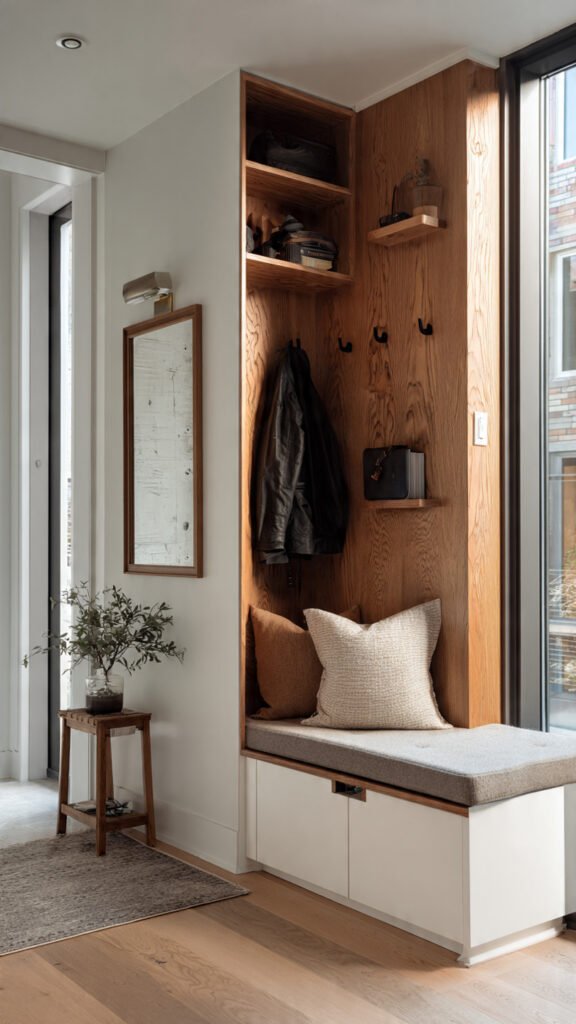
Visible clutter makes narrow spaces feel even more constricted. Hidden storage maintains clean sightlines while secretly accommodating daily necessities. Lift-top benches conceal gloves, hats, and seasonal accessories beneath seating surfaces. Consoles with drawers hide keys, mail, and miscellaneous items behind closed fronts.
Toe-kick drawers—installed in the base of cabinets or benches—capture otherwise wasted space for flat items like shoe brushes or pet leashes. Mirror cabinets serve dual purposes, reflecting light while concealing shallow storage behind. Even traditional furniture can be modified: hollow ottomans, storage cubes with lids, and baskets that slide beneath benches all contribute to the hidden storage arsenal.
8. Entryway Seating Ideas for Narrow Spaces
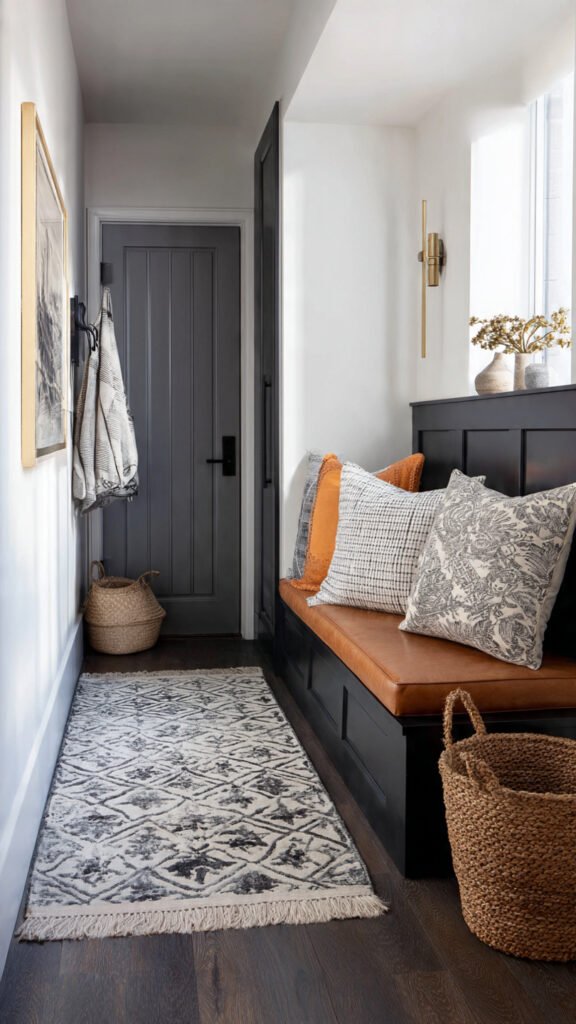
Seating transforms entryways from pass-through corridors into functional zones—but only when space permits. Slim benches, ideally 14 inches deep or less, provide shoe-changing convenience without obstructing traffic. Wall-mounted fold-down seats offer the ultimate space-saving solution: present when needed, invisible when not.
Corner perches capitalize on often-wasted diagonal space, tucking seating into spots too awkward for standard furniture. However, sometimes the honest answer is skipping seating entirely. If your entryway barely accommodates standing traffic, forcing a bench creates daily frustration. In those cases, relocate seating to an adjacent room and keep the entryway purely transitional.
9. Mirror Placement Techniques for Tight Entryways
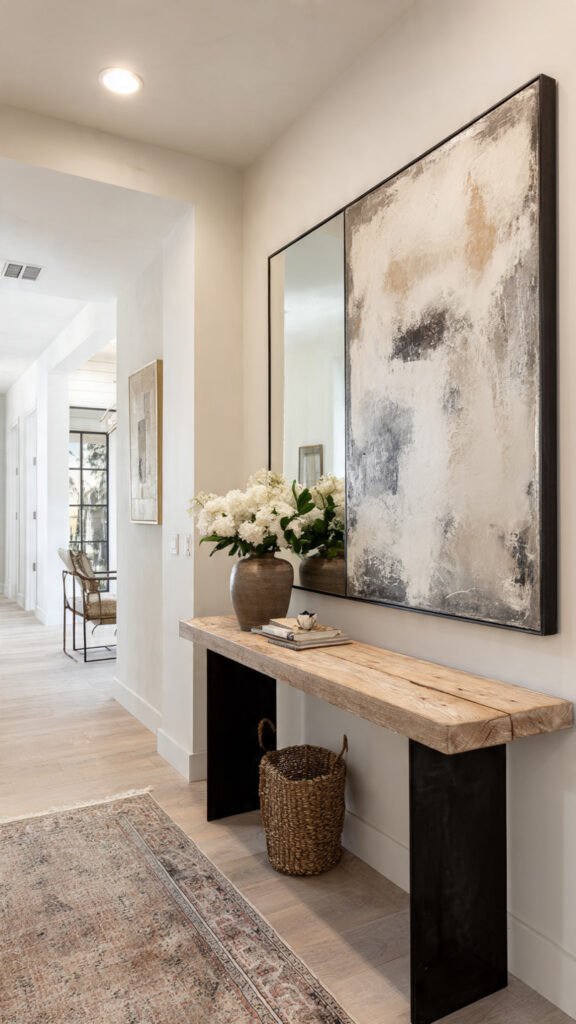
Mirrors remain the most effective tool for visually expanding narrow spaces. Position a large mirror opposite a light source—window or fixture—to bounce illumination throughout the space and create the illusion of doubled width. Full-length mirrors make practical sense in entryways anyway, allowing outfit checks before departing.
Beyond standard wall mirrors, consider mirrored closet doors, mirrored cabinet panels, or antiqued mirror tiles for subtle reflection without stark reflectivity. Layered reflections—placing mirrors to catch each other’s images—create unexpected depth. Panel mirrors arranged in a grid pattern add architectural interest while multiplying light. The strategic placement matters as much as the mirror itself.
10. Lighting Layers That Make Narrow Entryways Feel Open
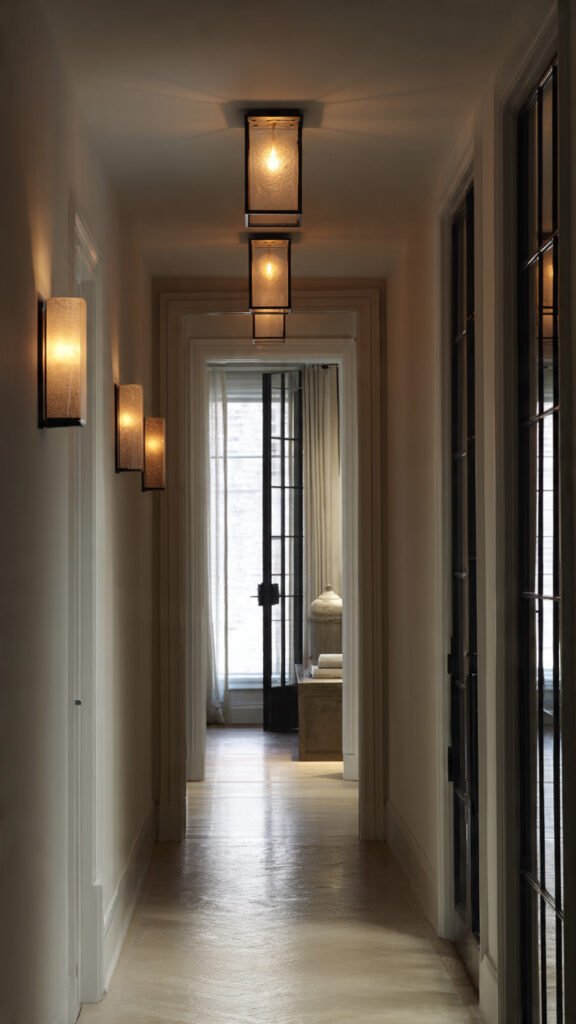
Single overhead fixtures flatten spaces and emphasize narrowness. Instead, layer lighting across three categories: ambient, task, and accent. Ambient lighting—the general illumination from flush-mount fixtures or recessed cans—establishes baseline brightness. Task lighting, such as a lamp on a console or illumination near a mirror, serves specific functions.
Accent lighting creates depth and drama, drawing attention to architectural features or artwork. Picture lights, LED strip lighting beneath floating shelves, or uplights in corners add dimension that single fixtures cannot achieve. This layered approach makes narrow entryways feel more complex and spacious than their footprint suggests.
11. Natural Light Hacks for Dark, Narrow Entryways
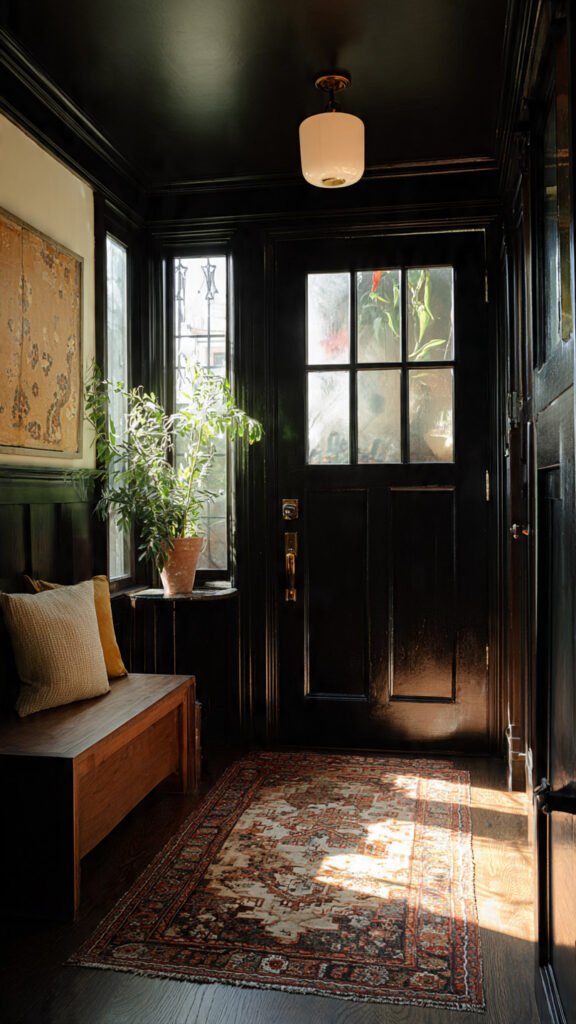
Many narrow entryways lack windows, creating cave-like atmospheres that no artificial lighting fully overcomes. Glass-paneled doors, sidelights flanking solid doors, or transom windows above doorframes invite natural light into interior corridors. Even frosted or textured glass maintains privacy while transmitting illumination.
Reflective surfaces amplify whatever natural light reaches the space. Glossy paint, polished hardware, glass vases, and metallic accents all bounce light around the room. Light-filtering window treatments—sheer panels or cellular shades—on nearby windows allow maximum daylight penetration while controlling glare. Every photon counts in naturally dark entryways.
12. Color and Finish Combinations That Expand Narrow Spaces

Light colors recede visually, making walls feel farther away than they are. Soft whites, pale grays, and muted warm tones create the most expansive feeling in narrow entryways. But the finish matters as much as the hue: satin and semi-gloss paints reflect more light than flat finishes, enhancing the brightness.
Painting ceilings the same color as walls—or even a shade lighter—eliminates the visual “lid” that distinct ceiling colors create. Alternatively, a ceiling painted a dramatically darker shade adds perceived height through contrast. High-reflective materials like lacquered furniture, polished stone, or glossy tiles amplify light throughout the space. Tonal layering—using varying shades of a single color family—adds sophistication without visual competition.
13. Using Texture Instead of Bulk for Visual Interest
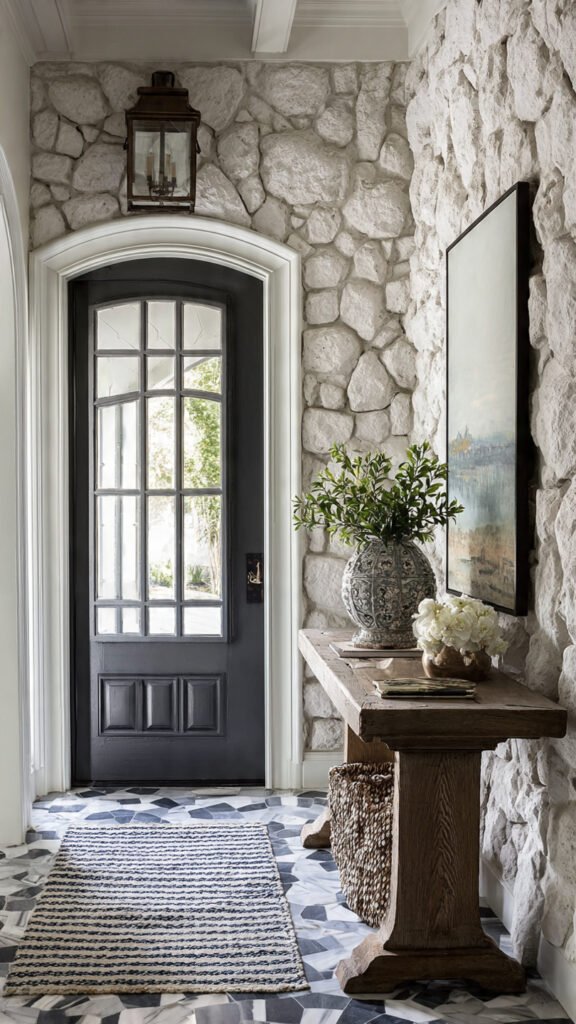
Narrow entryways can’t accommodate decorative bulk, but they desperately need visual interest. Texture delivers impact without consuming space. Wood slat accent walls create rhythm and depth while adding mere millimeters to the surface. Fluted panels—popular in modern design—introduce vertical lines that draw the eye upward.
Grasscloth wallpaper adds organic texture without dimensionality. Woven baskets, textured ceramics, and natural fiber rugs contribute tactile interest at functional scale. Even hardware choices—matte black hooks versus polished chrome, leather drawer pulls versus metal—layer subtle texture throughout the space. The cumulative effect reads as richness rather than clutter.
14. Entryway Rug and Runner Ideas for Narrow Hallways

Rugs anchor entryways visually while protecting flooring from daily abuse. For narrow spaces, runners elongate the visual path and guide traffic flow. Size matters: leave 3 to 4 inches of floor visible on either side to avoid wall-to-wall coverage that emphasizes narrowness.
Striped patterns running lengthwise create the illusion of extended depth. Solid colors work safely but miss opportunities for personality. Durability trumps delicacy in this high-traffic zone—opt for flat-weave rugs, indoor-outdoor materials, or washable options that withstand daily punishment. Secure runners with non-slip pads to prevent dangerous bunching.
15. Wall Decor Ideas That Stay Flat and Functional

Wall decor in narrow spaces must earn its place through function or restraint. Gallery walls work when frames sit flush against surfaces—skip dimensional art that protrudes into walkways. Clocks, decorative mirrors, and flat typography pieces add personality without spatial cost.
Functional wall decor multitasks brilliantly. Key rails with decorative backings, chalkboards for family messages, and magnetic boards for rotating displays combine utility with aesthetics. Slim floating shelves—2 to 3 inches deep—display small items without extending into traffic patterns. The principle remains consistent: if it sticks out, it doesn’t belong.
16. Minimalist Narrow Entryway Ideas for Apartments

Apartment entryways present unique challenges: landlord restrictions, smaller dimensions, and limited renovation options. Embrace minimalism not as aesthetic preference but as practical necessity. A single wall hook, one slim mirror, and a small tray for keys may constitute the entire scheme—and that’s perfectly appropriate.
Command hooks and removable adhesive products protect walls while providing function. Over-door organizers add storage without any installation. Renters should invest in quality portable pieces—a beautiful basket, an elegant tray—rather than built-in solutions they’ll leave behind.
17. Luxury Narrow Entryway Ideas That Feel Intentional

Narrow entryways become luxurious when they appear deliberately designed rather than spatially compromised. Custom millwork—built-in cabinetry, paneling, and trim precisely fitted to dimensions—signals intentionality. Statement lighting fixtures appropriate to scale create focal points that draw attention away from width constraints.
High-end materials in restrained applications—marble console tops, brass hardware, silk wallcovering—elevate narrow spaces without overwhelming them. The luxury approach embraces edited choices: fewer elements, higher quality, precise placement. Refined restraint communicates sophistication more effectively than abundance ever could.
18. Family-Friendly Narrow Entryway Solutions

Families stress-test entryways daily. Durability becomes non-negotiable: choose scratch-resistant finishes, washable surfaces, and sturdy hardware that withstands repeated use. Organization systems must accommodate multiple users—assign hooks or cubbies to each family member to prevent pile-ups.
Kid-height storage encourages independence: low hooks children can reach, labeled bins they can identify, and step-appropriate seating. Wipeable surfaces handle muddy hands and dirty shoes. Consider traffic patterns during morning rush and afternoon returns—the busiest times determine whether your narrow entryway functions or frustrates.
19. Pet-Friendly Entryway Ideas for Narrow Spaces

Pet ownership adds specific entryway requirements. Dedicated leash storage—a hook or small basket—prevents daily searches. For dogs, paw-cleaning stations near the door save interior flooring; a small mat, towel basket, and sealed treat container occupy minimal space while serving essential functions.
Durable materials matter: avoid delicate fabrics, choose scratch-resistant flooring, and position breakables above tail-wagging height. Feeding stations rarely work in narrow entryways, but if necessary, slim wall-mounted bowl holders keep dishes off the floor. Design for the reality of pet ownership rather than the idealized version.
20. Seasonal Styling Tips for Narrow Entryways

Seasonal refreshes inject personality without permanent commitment, but narrow spaces require restraint. Limit seasonal displays to one or two carefully chosen items: a small vase with seasonal flowers, a decorative tray swap, or updated textiles. Avoid the temptation to accumulate holiday decorations that consume precious space.
Rotate rather than add. When autumn decor arrives, summer items depart. This discipline maintains the breathable quality narrow entryways require while still allowing seasonal expression. A single statement piece—appropriate to scale—communicates seasonality more effectively than accumulated clutter ever could.
FAQs
What is the ideal width for a narrow entryway? Minimum 36 inches allows passage; 42 to 48 inches permits furniture along walls.
How can I make my narrow entryway look wider? Use horizontal stripes, mirrors, light colors, and minimal furniture depth.
Should I put a rug in a narrow entryway? Yes—runners elongate space while protecting floors. Leave floor visible at edges.
Conclusion
Narrow entryways challenge designers precisely because they demand discipline. Every element must justify its presence through function, beauty, or both—there’s no room for indecision or excess. Yet this constraint becomes liberating once embraced. The tight parameters force creativity, clarity, and intentional choices that broader spaces never require.
Approach your narrow entryway not as a problem to solve but as an opportunity to demonstrate design intelligence. Measure carefully, plan thoroughly, and select each element with purpose. When you’re finished, your slender entrance will deliver exactly what every great entryway should: a warm welcome, organized function, and a confident first impression that sets the stage for everything beyond.