11 Office False Ceiling Design Ideas That Enhance Productivity and Style
Most office ceilings are just there—white tiles or exposed ductwork that everyone ignores. But here’s what people don’t realize that your ceiling affects everything from acoustics to lighting to how professional your space feels. A well-designed false ceiling improves sound quality, integrates lighting seamlessly, and makes offices look way more polished than they actually are.
Office false ceiling design ideas balance aesthetics with function solving practical problems like noise control, poor lighting, and exposed mechanicals. The right ceiling treatment improves acoustics for better concentration, provides optimal lighting placement, and creates visual interest overhead. It’s designing the fifth wall instead of treating it as an afterthought.
We’re covering 11 office false ceiling design ideas that work for different budgets and office types. These approaches address real workplace issues while creating professional environments that employees actually want to work in. And honestly? Good ceiling design is one of those things people notice subconsciously even if they can’t articulate why a space feels better.
What Makes Office False Ceiling Design Work
- Acoustics Affect Productivity: Sound-absorbing ceiling materials reduce noise improving concentration and reducing stress. It’s creating environments where people can actually think. The acoustic treatment makes open offices tolerable instead of terrible.
- Lighting Integration Matters: Recessed lighting, LED panels, or suspended fixtures integrate seamlessly into ceiling design. It’s planning light placement from the beginning instead of adding it later. The coordinated approach delivers even illumination without harsh shadows.
- Concealment Solves Problems: Hiding HVAC ducts, wiring, and structural elements creates clean professional appearance. It’s making mechanicals invisible while maintaining access. The concealment elevates spaces from unfinished to polished.
- Height Perception Affects Mood: Lower ceilings feel intimate while higher ceilings feel expansive—design choices affect how spaces feel. It’s using height strategically creating desired atmosphere. The spatial manipulation influences employee wellbeing.
11 Office False Ceiling Design Ideas
Transform your workspace overhead with these office false ceiling design ideas that combine function with professional aesthetics.
Grid System Acoustic Tiles
Install traditional suspended grid with acoustic tiles providing maximum sound absorption. The modular system allows easy access to mechanicals above. It’s the office ceiling workhorse that handles noise effectively.
Use 2×2 or 2×4 tiles in white or off-white with high NRC ratings. Replace individual tiles easily when needed. This office false ceiling design costs $2-5 per square foot creating functional acoustic environments affordably.
Gypsum Board Smooth Finish
Create seamless smooth ceilings using gypsum board on metal framing providing clean modern appearance. The continuous surface eliminates grid lines. It’s contemporary sophistication for professional spaces.
Paint white or light colors reflecting maximum light. Integrate recessed lighting throughout. This office false ceiling design costs $4-8 per square foot delivering high-end residential appearance in commercial spaces.
Exposed Services With Painted Grid
Leave HVAC and electrical exposed but paint everything (including structure) matte black or dark gray creating industrial-modern aesthetic. The intentional exposure feels designed not unfinished. It’s embracing mechanicals as design elements.
Organize and secure all systems neatly. Paint comprehensively including ducts, pipes, and structural elements. This office false ceiling design costs $1-3 per square foot creating trendy industrial look economically.
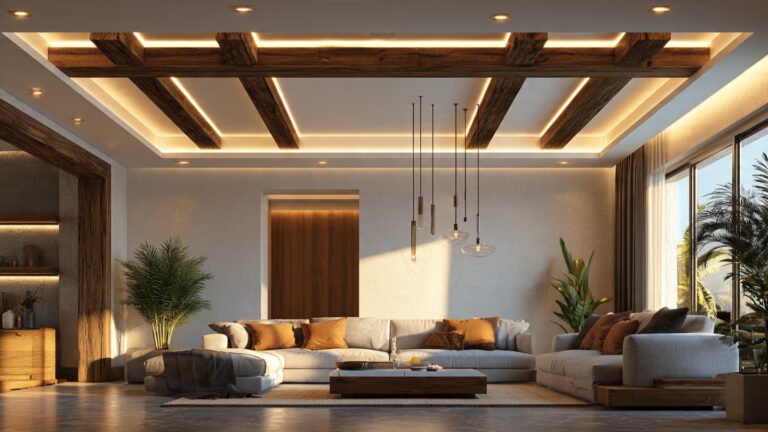
Wood Slat Ceiling
Install horizontal or vertical wood slats creating warm sophisticated appearance. The natural material adds organic warmth to corporate environments. It’s residential comfort in commercial settings.
Use acoustic backing behind slats improving sound absorption. Space slats allowing some visual depth. This office false ceiling design costs $8-15 per square foot creating premium warm environments.
Metal Panel System
Use aluminum or steel panels in various finishes creating modern high-tech appearance. The durable material suits high-traffic professional spaces. It’s commercial durability with contemporary style.
Choose perforated panels for acoustic benefits or solid panels with acoustic backing. Integrate lighting within panel system. This office false ceiling design costs $10-20 per square foot delivering long-lasting modern aesthetics.
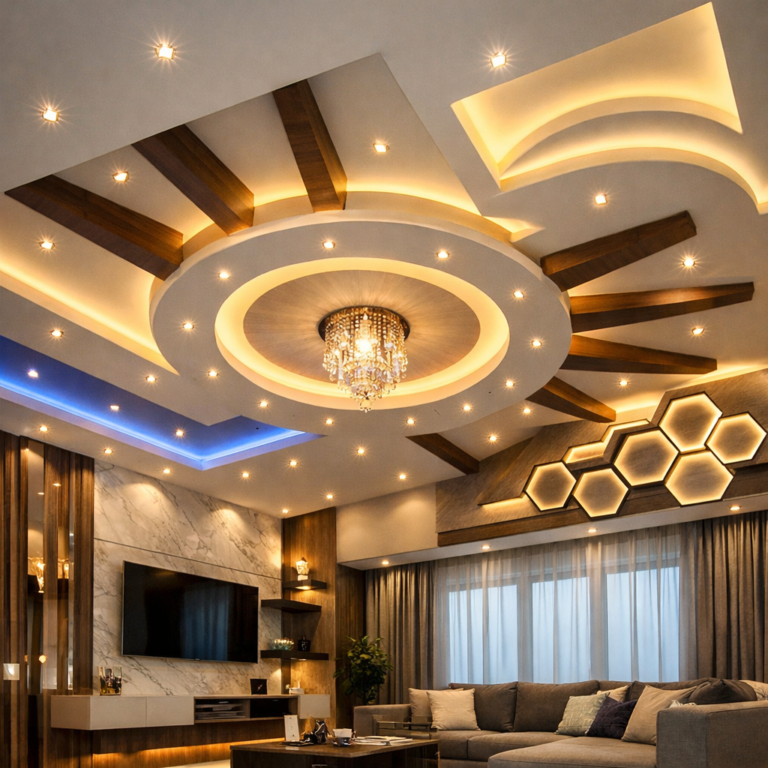
Coffered Ceiling Design
Create recessed panels or boxes adding architectural depth and visual interest. The dimensional treatment elevates standard offices into executive spaces. It’s adding architecture through ceiling design.
Use gypsum board or acoustic tiles within recessed sections. Integrate cove lighting emphasizing depth. This office false ceiling design costs $12-25 per square foot creating sophisticated dimensional interest.
LED Panel Integration
Install edge-lit LED panels flush with ceiling creating uniform illumination and modern appearance. The integrated lighting eliminates separate fixtures. It’s lighting and ceiling as one cohesive element.
Use panels in various sizes creating patterns or continuous coverage. Control with dimming systems. This office false ceiling design costs $15-30 per square foot including lighting creating high-tech environments with excellent illumination.
Linear Strip Ceiling
Install aluminum or steel strips running parallel creating clean contemporary lines. The linear pattern adds directional movement overhead. It’s modern geometry creating visual rhythm.
Space strips with gaps for ventilation and acoustic backing. Integrate linear LED lighting within the system. This office false ceiling design costs $12-20 per square foot delivering sleek modern commercial aesthetics.
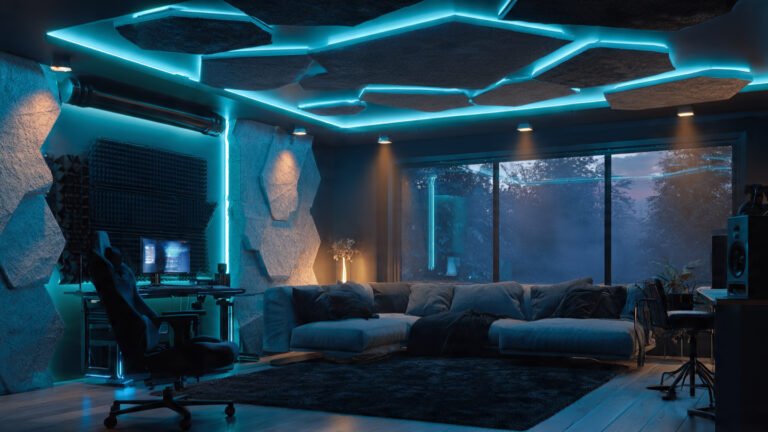
Cloud or Island Acoustic Panels
Suspend individual acoustic panels at varying heights creating floating sculptural elements. The three-dimensional approach adds visual interest while absorbing sound. It’s art that improves acoustics.
Use various sizes, shapes, and colors creating dynamic compositions. Position strategically over workstations or meeting areas. This office false ceiling design costs $8-18 per square foot creating statement ceilings with functional benefits.
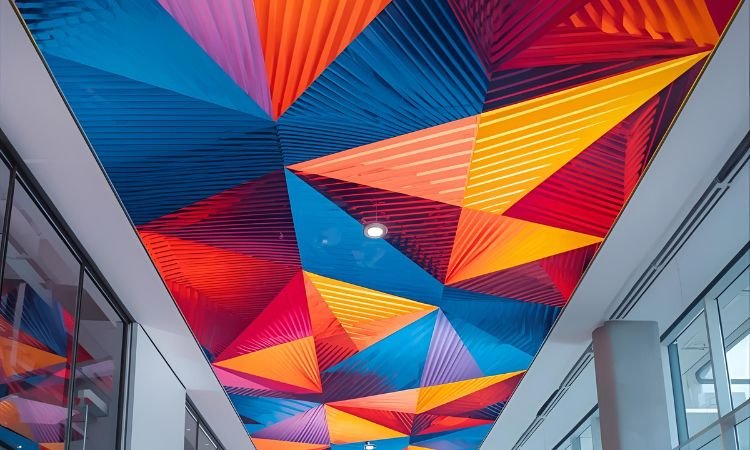
Stretch Fabric Ceiling
Install fabric stretched across perimeter tracks creating seamless translucent or opaque surfaces. The unique material allows custom graphics or solid colors. It’s contemporary European approach creating distinctive environments.
Backlight fabric creating glowing ceilings or use opaque materials with acoustic properties. Custom print corporate branding or artwork. This office false ceiling design costs $15-30 per square foot creating unique sophisticated spaces.
Combination Multi-Level Design
Create ceiling planes at different heights defining zones and adding visual interest. The varied levels separate functions spatially. It’s using vertical dimension organizing horizontal space.
Drop ceilings over workstations while raising over collaboration areas. Integrate different materials at different levels. This office false ceiling design costs $10-20 per square foot creating dynamic varied environments.
Making Office False Ceiling Design Work
- Prioritize Acoustics in Open Plans: Specify high NRC-rated materials in open offices reducing noise transmission. It’s making spaces where people can concentrate. The acoustic performance should drive material selection in noisy environments.
- Integrate Lighting From the Start: Plan ceiling design around lighting requirements ensuring even illumination without dark spots. It’s coordinating systems instead of forcing lighting into ceiling design later. The integrated approach delivers superior results.
- Maintain Adequate Clearance: Ensure sufficient height above ceiling for HVAC, sprinklers, and electrical allowing proper installation and maintenance access. It’s planning for mechanical reality. The adequate clearance prevents installation problems.
- Consider Fire and Building Codes: Use fire-rated materials meeting commercial building codes and providing proper sprinkler clearance. It’s ensuring safety compliance. The code-appropriate materials prevent expensive corrections.
Frequently Asked Questions About Office False Ceiling Design
What’s the Purpose of Office False Ceilings?
False ceilings hide mechanicals, improve acoustics, integrate lighting, control temperature, and create professional finished appearance. They transform raw commercial space into polished offices. The multi-functional approach justifies investment through numerous benefits.
Beyond aesthetics, false ceilings significantly improve work environment quality through acoustic and lighting improvements.
How Much Height Do You Lose?
Typical false ceilings drop 8-18 inches below structure depending on mechanical requirements and design complexity. Simple grid systems lose 6-8 inches while elaborate designs might drop 18-24 inches. The height loss must accommodate required clearances.
Ensure finished ceiling height meets building codes (typically 7.5-8 feet minimum). The remaining height after ceiling installation must maintain comfortable proportions.
What Materials Work Best?
Acoustic tiles excel for noise control. Gypsum board provides smooth upscale finish. Metal panels offer durability and modern aesthetics. Wood adds warmth. Choose based on priorities—acoustics, aesthetics, budget, or maintenance. The material selection balances multiple factors.
High-traffic offices benefit from durable easily-maintained materials. Creative offices might prioritize aesthetics over pure function.
How Do You Improve Office Acoustics?
Use acoustic ceiling tiles with high NRC ratings (0.70+). Add acoustic backing behind decorative materials. Include sound-absorbing panels strategically. Avoid hard reflective surfaces creating echo. The comprehensive acoustic approach makes open offices functional.
Ceiling treatments alone don’t solve all acoustic issues but contribute significantly to overall sound management. The multi-faceted approach addresses noise from multiple angles.
Can You DIY Office Ceiling Installation?
Simple grid systems are DIY-friendly for small spaces. Complex designs require professional installation ensuring proper framing, integration with mechanicals, and code compliance. The skilled installation prevents problems and ensures safety.
For commercial spaces, professional installation often required by insurance and building codes. The expert installation provides warranties and compliance documentation.
What About Maintenance and Access?
Grid systems allow easy tile removal for mechanical access. Gypsum board requires cutting access panels or creating removable sections. Plan access points during design. The maintenance consideration prevents future headaches.
Mark access panel locations clearly. Ensure common maintenance points remain accessible without extensive disassembly.
How Does This Affect Lighting?
False ceilings provide ideal locations for recessed lighting, LED panels, or suspended fixtures. Plan lighting layout coordinating with ceiling design. The integrated approach delivers even illumination without retrofitting complications.
Include adequate electrical rough-in supporting desired lighting density. The proper infrastructure supports flexible lighting arrangements.
What’s the Cost Range?
Basic acoustic grid systems cost $2-5 per square foot. Mid-range gypsum or metal systems run $8-15 per square foot. Premium designs with integrated lighting or custom materials cost $15-30+ per square foot. The range accommodates various budgets.
Installation labor typically equals or exceeds material costs. The total project cost includes both components plus any mechanical coordination needed.
Designing Your Office Overhead
Office false ceiling design ideas prove that thoughtful ceiling treatment significantly impacts office functionality, aesthetics, and employee wellbeing. The right ceiling design improves acoustics for better concentration, integrates lighting for optimal illumination, conceals mechanicals creating polished appearance, and adds visual interest to overlooked overhead spaces.
Start by identifying primary concerns—acoustics, lighting, aesthetics, or budget—prioritizing solutions addressing your specific needs. Coordinate ceiling design with mechanical and electrical systems ensuring seamless integration. Choose materials balancing performance requirements with aesthetic goals and maintenance realities. The comprehensive approach creates ceilings enhancing workspace quality rather than merely covering structure.
What’s your biggest office ceiling challenge—terrible acoustics or just making the space look professional? I’d love to hear what you’re hoping to solve!