Front Garden Fence Ideas That Add Curb Appeal and Boundaries

Front yard fences are one of those things that can either make your house look amazing or completely dated depending on what you choose. You need something that marks your property, maybe keeps dogs in or out, but also looks good from the street. And here’s the tricky part—it has to work with your house style and neighborhood vibe without looking like you’re trying too hard.
Front garden fence ideas balance function with aesthetics creating boundaries that enhance rather than detract from curb appeal. The right fence defines your space, adds character, and complements your home’s architecture while meeting practical needs. It’s choosing fencing that serves purpose while becoming an intentional design element.
We’re covering 11 front garden fence ideas that work across different home styles and budgets. These options range from traditional pickets to modern alternatives, but they all create welcoming boundaries rather than fortress walls. And honestly? The right front fence makes your entire property look more finished and intentional.
What Makes Front Garden Fences Work
- Height Matters for Function and Friendliness: Front fences typically stay 3-4 feet maintaining openness while defining boundaries. It’s marking territory without blocking views or feeling unwelcoming. The moderate height creates presence without barrier feelings.
- Style Matches Home Architecture: Fence design should complement your home—picket for traditional, horizontal slats for modern, wrought iron for formal. It’s architectural continuity from house to fence. The coordinated approach creates cohesive curb appeal.
- Materials Affect Maintenance and Longevity: Wood needs regular upkeep while vinyl and metal require minimal maintenance. It’s choosing based on your commitment to ongoing care. The material decision impacts both initial cost and long-term investment.
- Transparency Balances Privacy and Welcome: Solid fences feel fortress-like in front yards—choose designs allowing visibility through. It’s defining space while maintaining neighborly openness. The see-through approach keeps front yards feeling accessible.
11 Front Garden Fence Ideas
Define your property with style using these front garden fence ideas that balance boundaries with curb appeal.
Classic White Picket Fence
Install traditional white picket fencing creating timeless American charm. The iconic style works with cottages, Cape Cods, and traditional homes. It’s the fence that never goes out of style.
Use vinyl for low maintenance or wood painted white for authentic appearance. Keep height 3-4 feet with pointed or rounded tops. This front garden fence idea costs $15-30 per linear foot creating classic welcoming boundaries.
Horizontal Board Fence
Build modern horizontal slat fencing in natural wood or painted finishes creating contemporary clean lines. The sleek design suits modern and mid-century homes. It’s current style that feels sophisticated not trendy.
Space boards with gaps allowing airflow and visibility while maintaining definition. Use cedar, IPE, or composite materials. This front garden fence idea costs $20-40 per linear foot delivering modern aesthetic appeal.
Split Rail Fence
Install rustic split rail fencing defining boundaries without blocking views. The open design suits country, farmhouse, and rural homes. It’s casual boundary marking that feels natural and unobtrusive.
Use two or three horizontal rails with posts creating simple structure. Natural wood ages beautifully developing weathered patina. This front garden fence idea costs $10-20 per linear foot providing affordable rustic definition.
Wrought Iron Fencing
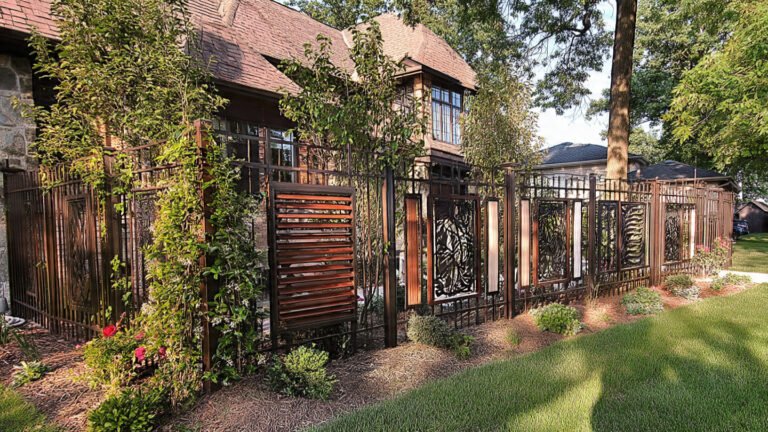
Choose ornamental wrought iron or aluminum fencing adding formal elegance. The decorative metalwork suits traditional, Victorian, and formal homes. It’s substantial presence that remains transparent.
Paint black for classic look or leave natural metal finishes. Add decorative finials and scrollwork for architectural interest. This front garden fence idea costs $25-50 per linear foot creating refined boundaries.
Living Hedge Fence
Plant formal hedges—boxwood, privet, or holly—creating green living boundaries. The natural fencing softens property lines while providing structure. It’s growing your fence instead of building it.
Maintain regular trimming keeping hedges neat and at desired height. Plant densely ensuring full coverage. This front garden fence idea costs $15-30 per linear foot initially plus ongoing maintenance creating organic boundaries.
Vinyl Picket Fence
Install vinyl picket fencing mimicking classic wood appearance without maintenance. The practical material never needs painting or sealing. It’s getting traditional looks with modern convenience.
Choose white, tan, or gray colors matching home exteriors. Quality vinyl resists fading and cracking. This front garden fence idea costs $20-35 per linear foot delivering low-maintenance classic style.
Stone or Brick Wall Base With Fencing
Build low stone or brick walls (18-24 inches) topped with wrought iron or wood fencing. The substantial base adds permanence while upper fencing provides height. It’s architectural detail creating impressive boundaries.
Match masonry to house materials creating cohesion. The hybrid approach combines durability with transparency. This front garden fence idea costs $40-80 per linear foot creating substantial elegant fencing.
Bamboo Screening Fence
Use bamboo panels creating natural Asian-inspired boundaries. The sustainable material provides texture and organic warmth. It’s eco-friendly fencing with distinct aesthetic.
Secure bamboo panels to wood or metal frames ensuring durability. Natural bamboo weathers to gray over time. This front garden fence idea costs $15-25 per linear foot adding natural character.
Aluminum Decorative Fencing
Choose aluminum fencing in decorative patterns offering wrought iron appearance without rust or weight. The lightweight material installs easily while looking substantial. It’s practical metal fencing with traditional appeal.
Available in black, bronze, or white powder-coated finishes. Requires virtually no maintenance. This front garden fence idea costs $20-40 per linear foot providing durable attractive boundaries.
Cedar Board and Batten
Build board and batten fencing in natural cedar creating cottage charm. The vertical boards with overlapping battens add dimension. It’s traditional style with rustic warmth.
Leave cedar natural to weather gray or stain in natural tones. The vertical orientation differs from typical horizontal fencing. This front garden fence idea costs $18-30 per linear foot creating cottage-appropriate boundaries.
Modern Cable Rail Fence
Install cable railing systems with metal posts creating minimal contemporary boundaries. The thin cables provide definition without visual weight. It’s modern transparency maintaining open feelings.
Use stainless steel cables with powder-coated posts in black or gray. Works beautifully for modern and coastal homes. This front garden fence idea costs $30-60 per linear foot creating sleek minimal boundaries.
Making Front Garden Fences Work
- Check Local Codes First: Many areas regulate front fence height, style, and placement—verify requirements before building. It’s avoiding expensive mistakes or required removal. The preliminary research prevents problems after installation.
- Consider Maintenance Requirements: Choose materials matching your willingness to maintain—wood needs regular care while vinyl and metal don’t. It’s being realistic about ongoing commitment. The honest assessment ensures your fence stays nice.
- Coordinate With Landscaping: Plan fence placement allowing garden beds and plantings softening the structure. It’s integrating fencing with landscape design. The coordinated approach creates cohesive front yard appearance.
- Think Long-Term: Fencing is significant investment—choose quality materials and timeless styles over trendy options. It’s making decisions lasting decades. The durable choices justify higher initial costs through longevity.
Frequently Asked Questions About Front Garden Fences
How High Should Front Fences Be?
Most front fences stay 3-4 feet tall maintaining openness and neighborly feeling. Higher fences (5-6 feet) work for busy streets needing privacy but check local codes limiting front fence heights. The moderate height defines space without creating barriers.
Very low fences (2 feet) mark boundaries decoratively while allowing completely open views. The appropriate height balances your needs with neighborhood character.
Do You Need Permits?
Many municipalities require permits for fence installation—check with your local building department before starting. Some neighborhoods have HOA rules restricting fence styles, heights, or colors. The regulatory research prevents complications.
Even if permits aren’t required, knowing property lines prevents building on neighbors’ property. The proper preparation avoids disputes and required changes.
What Material Lasts Longest?
Metal (wrought iron, aluminum) and vinyl last 25-50+ years with minimal maintenance. Cedar and redwood last 15-25 years with proper care. Pressure-treated pine lasts 10-15 years. The longevity varies significantly by material and maintenance.
Initial cost doesn’t always reflect long-term value—expensive materials lasting decades often cost less over time than cheap materials requiring frequent replacement.
Should Fences Match House Color?
Fences should relate to house color scheme without necessarily matching exactly. White fences work with most home colors. Natural wood complements most exteriors. Match fence color to trim, shutters, or architectural details creating cohesion.
Consider neighborhood character too—solid walls of matching color can feel monotonous. The coordinated-not-matched approach usually works best.
Can You Install Fences Yourself?
Basic wood picket or rail fences are DIY-able for handy homeowners. Metal fencing typically needs professional installation ensuring proper anchoring. Vinyl fences fall in between—possible DIY but easier with experience.
The time investment is significant—professional installation costs more but completes faster with guaranteed results. Weigh your skills and available time honestly.
How Much Does Front Fencing Cost?
Materials range from $10-80 per linear foot depending on type. Installation adds $5-15 per foot for professional work. A typical 100-foot front fence costs $1,500-9,500 installed depending on materials and complexity.
Get multiple quotes comparing materials and installation quality. The cheapest option isn’t always the best value considering longevity and appearance.
What About Corner Lots?
Corner properties have more “front” yard visible from streets—many codes treat both street-facing sides as front requiring low open fencing. The increased visibility area costs more but significantly impacts curb appeal on both streets.
Coordinate fencing style around entire corner property maintaining consistency. The unified approach creates cohesive appearance from all viewing angles.
How Do You Maintain Different Materials?
Wood requires annual cleaning, staining, or painting preventing rot and maintaining appearance. Vinyl needs occasional washing with soap and water. Metal needs rust checks and touch-up paint on any chips. Hedges need regular trimming.
Factor maintenance into material choice—low-maintenance options cost more initially but save time and money long-term. The honest assessment of your maintenance commitment matters.
Defining Your Front Yard
Front garden fence ideas prove that boundary marking doesn’t require sacrificing curb appeal or neighborhood friendliness. The strategic choice of appropriate style, height, and material creates fencing that defines your property while enhancing your home’s appearance and architectural character.
Start by assessing your needs—pet containment, child safety, privacy, or purely aesthetic boundary marking. Research local codes and HOA requirements before choosing materials. Select fencing complementing your home’s style and matching your maintenance commitment. The thoughtful approach creates front boundaries you’ll appreciate for decades while neighbors admire.
What’s driving your front fence decision—pure aesthetics or functional needs like keeping pets contained? I’d love to hear what you’re planning for your front yard!