11 French Farmhouse Exterior Ideas That Blend Rustic Charm and Refined Simplicity
Unlike American farmhouses with wide porches and symmetrical gables, the French farmhouse (or maison de campagne) favors asymmetry, natural materials, and understated elegance.
These homes often feature steeply pitched roofs (10:12 to 14:12), tall shuttered windows, and local stone or stucco walls—not painted wood siding. The look is weathered, not staged; timeless, not trendy.
Rooted in rural Normandy, Provence, or the Loire Valley, authentic French farmhouses use what’s nearby: limestone, clay tile, aged oak, and wrought iron.
These 11 ideas focus on regional authenticity, material honesty, and quiet detailing—so your home feels like it grew from the land, not a catalog.
Why This Style Stands Apart
Asymmetry over symmetry: Windows and doors are placed for function, not balance.
Texture over color: Walls are often left in natural stone, lime wash, or warm white—not bright paint.
Roof as crown: Tall, slate or clay-tile roofs dominate the silhouette, often with dormers or chimneys.
Shutters are functional: Wooden shutters close for storm protection or privacy—they’re not just decorative.
11 French Farmhouse Exterior Ideas That Blend Rustic Charm and Refined Simplicity
All concepts draw from real French countryside architecture and work on standard residential lots.
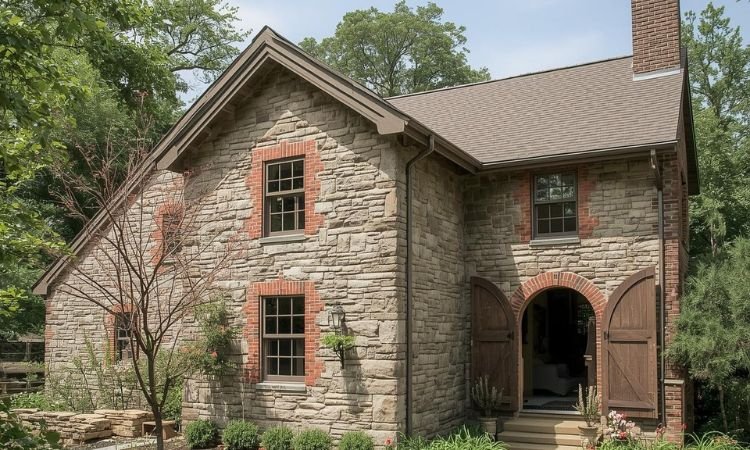
1. Limestone or Fieldstone Walls with Lime Wash
Use local stone or cultured stone veneer laid in irregular patterns, finished with a breathable lime wash in soft white or warm gray.
This traditional technique protects masonry while allowing moisture to escape, preventing cracking in freeze-thaw climates. The result is a softly textured, ageless facade that changes subtly with light.
2. Steep Clay Tile Roof with Exposed Rafters
Install a steeply pitched roof (12:12 minimum) with authentic or composite clay tiles in terracotta or charcoal.
Extend eaves to expose rough-sawn rafter tails, a hallmark of Provençal farmhouses. The dramatic roofline adds vertical interest and shelters walls from rain.
3. Tall Wooden Shutters in Weathered Green or Gray
Fit every window with operable wooden shutters in faded green, gray, or black—never vinyl.
Made from cedar or oak, they should close fully over the glass for storm protection. Iron hinges and latches add authenticity and patina over time.
4. Asymmetrical Facade with Off-Center Entry
Place the front door where it makes sense—not centered. Flank it with mismatched windows, a climbing rose, or a stone stoop.
French farmhouses were built for life, not curb appeal, so irregularity reads as honest, not messy.
5. Wrought Iron Balconies or Window Boxes
Add simple wrought iron railings to upper-level balconies or sturdy brackets for flower boxes below windows.
Fill with geraniums, lavender, or ivy—classic French plantings that soften hard lines without overwhelming the architecture.
6. Stone or Gravel Courtyard Instead of Lawn
Forego grass for a gravel, flagstone, or cobblestone courtyard (cour) leading to the entry.
Add a central urn, olive tree, or antique water trough. This low-maintenance approach reflects rural French practicality and enhances the home’s grounded feel.
7. Exposed Timber Beams on Gables or Porch
Incorporate reclaimed or new oak beams on gable ends, porch ceilings, or overhangs.
Leave them unfinished or lightly oiled—never painted. The wood adds warmth and ties the structure to its agricultural roots.
8. Arched Doorways or Window Tops
Introduce gentle arches over the main entry, garage, or select windows. Use stone lintels or brick for support, not drywall curves.
This subtle curve nods to centuries-old craftsmanship without feeling ornate.
9. Natural Wood Garage Doors with Iron Straps
Choose carriage-style garage doors in vertical tongue-and-groove cedar or oak, stained—not painted.
Add forged iron strap hinges and handles for rustic refinement. The wood weathers gracefully, blending with stone or stucco walls.
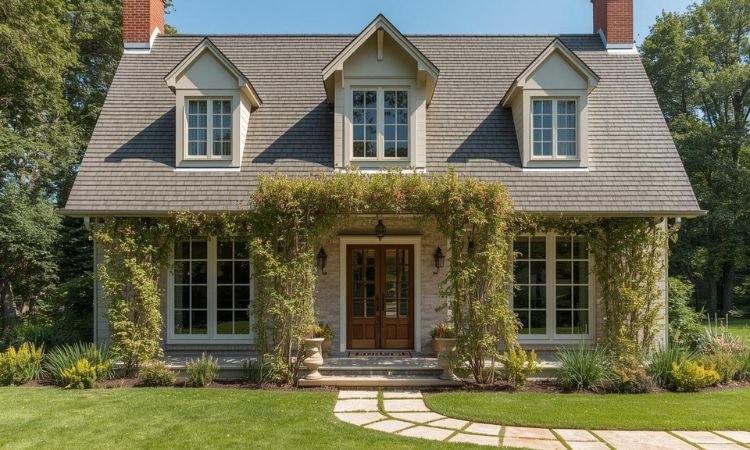
10. Climbing Vines on Stone or Stucco Walls
Train wisteria, clematis, or ivy up one wall or around the entry using discreet wires.
Let the vine grow naturally—no topiary or shaping. Over time, it softens edges and adds seasonal color while honoring the French love of integrated greenery.
11. Minimal Landscaping with Boxwood and Olive Trees
Plant low hedges of boxwood along paths and place potted olive trees or cypress near the entry.
Keep beds simple: lavender, rosemary, and santolina in gravel mulch. French country gardens prioritize fragrance and structure over floral abundance.
Common Mistakes and Fixes
- Using vinyl shutters or fake stone
Fix: Invest in real wood shutters and natural or high-quality cultured stone. Authenticity matters more than cost savings. - Painting walls bright white or pastel
Fix: Stick to warm whites, soft grays, or natural stone. French farmhouses avoid candy colors—they lean earthy and muted. - Adding a full front porch
Fix: French homes rarely have wrap-around porches. Opt for a small stoop, stone landing, or covered entry instead. - Over-landscaping with flowers
Fix: Focus on structure: gravel, hedges, and evergreens. Flowers are accents, not the main event. - Ignoring roof pitch
Fix: If building new, go steep (12:12+). A shallow roof instantly reads as “not French.”
Build Like It’s Been There Forever
A true French farmhouse doesn’t announce itself—it settles in. Skip the fake shutters, plastic vines, and perfect symmetry. Instead, choose honest materials, let asymmetry breathe, and let time add the character.
Have you incorporated French farmhouse elements into your home? Did you go for limestone walls, clay tile, or tall shutters?
Share your experience in the comments—we’d love to hear how you’ve brought a touch of the French countryside to your own plot of earth.