Car Parking False Ceiling Designs That Prioritize Durability, Lighting, and Low Maintenance
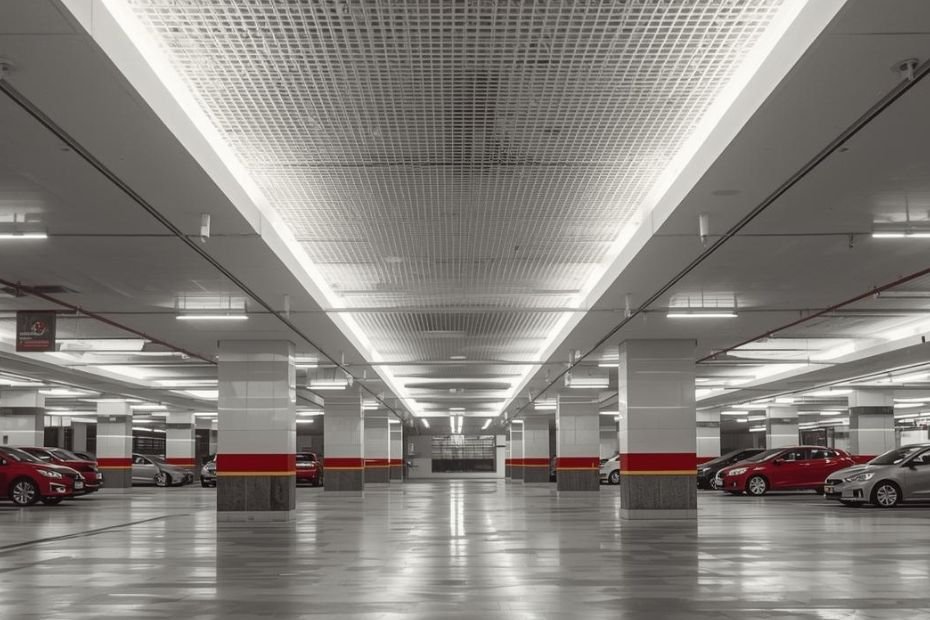
A false ceiling in a car parking area—whether attached garage, covered carport, or basement parking—must withstand temperature swings, moisture, exhaust fumes, and minimal upkeep.
Common residential garages range from 12’x20′ to 24’x30′, with ceiling heights of 8′ to 10′, so materials must be non-combustible, easy to clean, and compatible with overhead doors or ductwork.
These 10 designs focus on practicality: fire resistance, moisture tolerance, uniform lighting, and simple installation—without unnecessary decoration.
Why Parking Ceilings Are Different
Exposure to elements: Garages experience humidity, oil vapors, and temperature shifts—from freezing winters to 120°F+ summers.
Fire safety matters: Many codes require Class A fire-rated materials in attached garages.
Lighting must be even and bright: Shadows create safety hazards when maneuvering vehicles.
Low maintenance is essential: No one wants to repaint or clean a garage ceiling monthly.
10 Car Parking False Ceiling Designs That Prioritize Durability, Lighting, and Low Maintenance
All concepts assume standard residential garage dimensions and typical utility access.
1. Exposed Ceiling with Painted Joists
Leave rafters or joists exposed, but seal and paint all surfaces with garage-grade epoxy or mildew-resistant paint. Run electrical conduits neatly along beams.
Cost-effective and industrial. Provides full height for tall vehicles or storage. Use only if walls and floor are also finished.
2. PVC Snap-Together Ceiling Panels
Install interlocking white PVC panels (2’x4′ or 2’x2′) in a suspended grid. Moisture-proof, washable, and hides wiring or ducts. Reflects light to brighten the space.
Fire-rated options available. Ideal for basements or enclosed garages. Avoid in open carports—UV degrades PVC over time.
3. Galvanized Steel Ceiling Tiles
Use corrugated or flat galvanized steel panels screwed directly to joists. Rust-resistant, fireproof, and reflects light. Common in commercial settings but works residentially.
Lasts 30+ years. Pair with LED high-bays for maximum brightness. Best for detached garages or workshops.
4. Cement Board Ceiling System
Mount fiber cement boards (e.g., HardieBacker) painted with exterior-grade paint. Non-combustible, mold-resistant, and accepts paint well.
Requires professional cutting but lasts decades. Ideal for attached garages where fire separation from the house is required.
5. Suspended Mineral Fiber Tiles (Garage-Grade)
Use Type III or IV mineral fiber tiles rated for high humidity and temperature swings. Install in a 15/16″ T-bar grid. Choose bright white for light reflection.
Avoid standard office tiles—they sag in heat. Garage-grade versions resist oil and moisture. Good for finished basements with parking.
6. Perforated Metal Ceiling with Acoustic Backing
Install perforated aluminum or steel panels with sound-absorbing backing. Reduces echo from garage doors and tools while allowing airflow.
Modern industrial look. Use in multi-car garages where noise is a concern. Requires secure framing.
7. Seamless Drywall Ceiling (Painted)
Finish with taped, mudded, and painted drywall using mold-resistant, Type X (fire-rated) drywall. Paint with semi-gloss garage paint for easy cleaning.
Best for attached garages needing fire separation. Hide all utilities before closing up. Add access panels for future maintenance.
8. Corrugated Polycarbonate Roof-Ceiling (Carports)
In open carports, use translucent corrugated polycarbonate sheets as both roof and ceiling. Lets in natural light while shedding rain.
Not a true “false” ceiling, but eliminates the need for one. UV-stabilized grades last 10–15 years. Ideal for covered parking with no walls.
9. Spray-Applied Acoustic Coating
Apply a textured, fire-retardant acoustic coating directly to the deck above (common in underground parking). Hides structure, reduces noise, and requires zero maintenance.
Professional installation only. Used in condos and townhomes with shared parking decks.
10. Gridless Plywood Ceiling (Painted)
Attach ½” sanded plywood sheets directly to joists. Fill seams, sand smooth, and paint with exterior-grade enamel. More durable than drywall in humid climates.
Seal edges to prevent swelling. Best for detached garages in coastal or high-humidity areas.
Common Mistakes and Fixes
- Using standard drywall in humid garages
Fix: Always use mold-resistant or cement board in unconditioned spaces. - Skipping fire-rated materials in attached garages
Fix: Check local code—most require 1-hour fire separation between garage and living space, including ceiling. - Poor lighting layout
Fix: Install LED shop lights every 8–10 feet. Aim for 50+ foot-candles at floor level for safe navigation. - Ignoring access panels
Fix: Include at least one 2’x2′ removable panel near utilities for future repairs. - Choosing glossy finishes that show every flaw
Fix: Use matte or satin paint—hides imperfections better than semi-gloss.
Function First, Finish Second
A car parking ceiling isn’t about style—it’s about safety, durability, and light. Prioritize fire resistance, moisture tolerance, and easy cleaning over aesthetics.
The best design disappears into the background while making your garage safer and brighter.
Which of these 10 ideas fits your garage type and climate? Start with material safety and lighting—then add finish only if needed.