Colonial Farmhouse Exterior Ideas That Blend Tradition and Timeless Simplicity
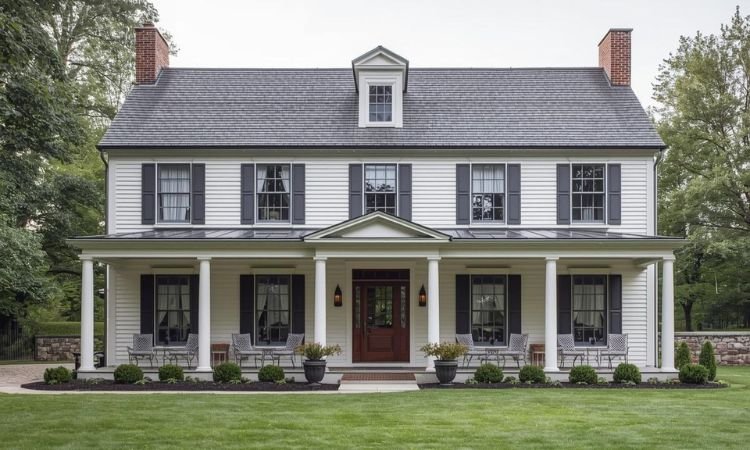
A colonial farmhouse merges early American symmetry with rustic farmhouse warmth—think centered doors, multi-pane windows, and honest materials.
Most range from 2,000 to 3,500 sq ft, with front porches 6’–8′ deep and roof pitches of 8:12 to 10:12. The key is balancing formal colonial lines with farmhouse texture—without veering into overly ornate or too-rustic territory.
These 11 ideas focus on authentic proportions, classic materials, and restrained detailing that honor both styles.
Why This Hybrid Style Works
Symmetry creates calm: Centered entries and balanced windows feel orderly without being stiff.
Natural materials add soul: Wood siding, stone foundations, and brick chimneys ground the formality.
Porches bridge eras: A full-width porch softens colonial rigidity and adds farmhouse function.
Neutral palettes endure: White, cream, gray, and black let architecture—not color—lead the design.
11 Colonial Farmhouse Exterior Ideas That Blend Tradition and Timeless Simplicity
All concepts assume standard clapboard, shingle, or board-and-batten siding and typical suburban or rural lots.
1. Classic White Clapboard with Black Shutters
Paint horizontal lap siding in crisp white (e.g., Sherwin-Williams Pure White). Add functional black louvered shutters and a black paneled front door. Roof: charcoal asphalt shingles. Porch: white columns, gray decking.
Timeless, clean, and low-maintenance. Works in any region.
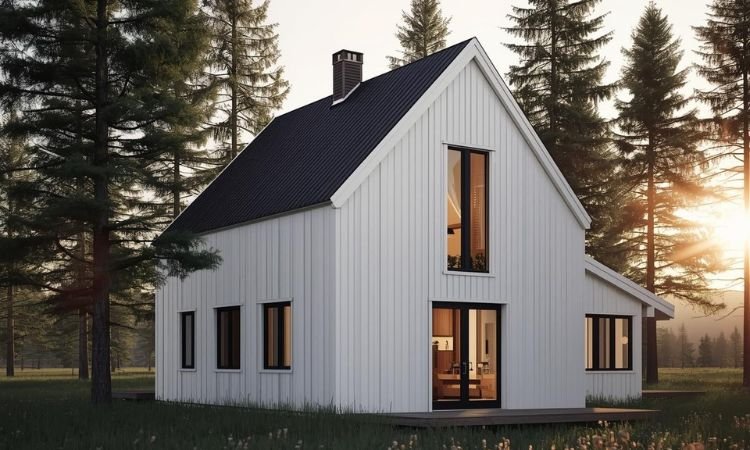
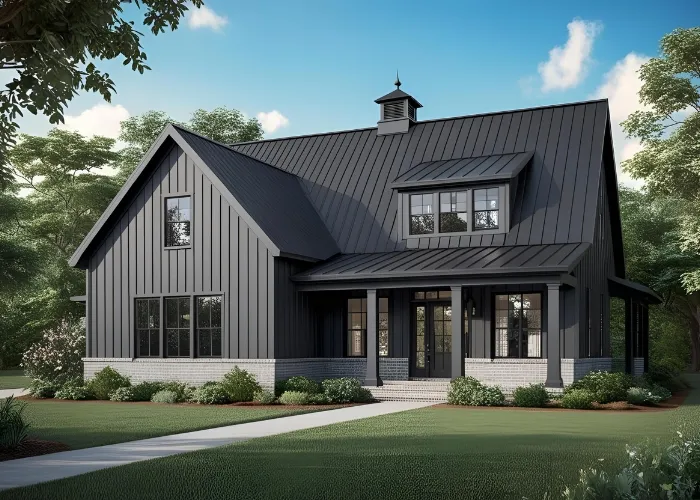
2. Board-and-Batten with Full-Width Porch
Use vertical board-and-batten siding in soft white or warm gray. Wrap the porch across the full facade with square wood columns and simple railings. Roof: standing-seam metal in dark gray.
Adds texture while keeping symmetry. Ideal for modern interpretations.
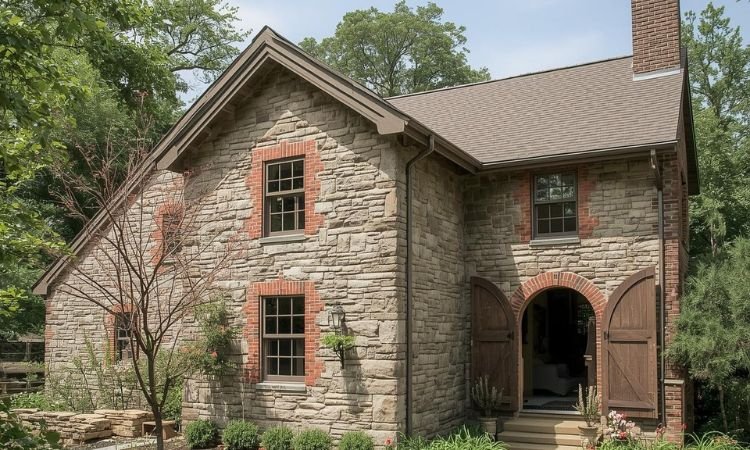
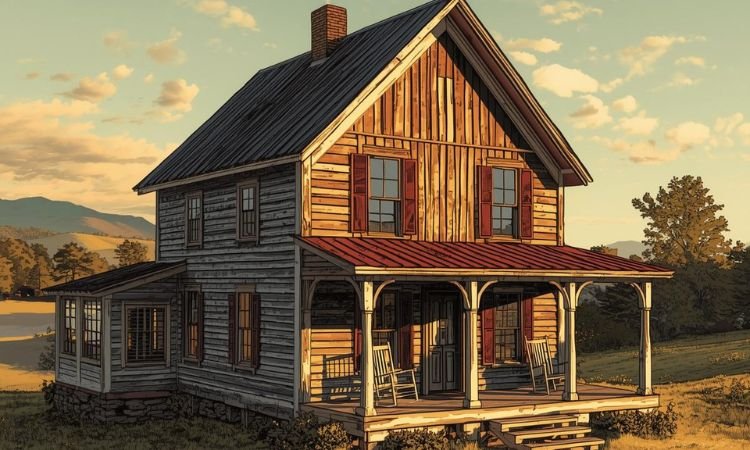
3. Stone Foundation + Brick Chimney Accent
Pair white or gray siding with a dry-stack stone foundation and a prominent brick chimney. Keep trim clean—no gingerbread or excessive molding.
Anchors the home to the land. Feels historic without being dated.
4. Symmetrical Facade with Center Gable
Maintain perfect symmetry: centered door, matching windows, and a pedimented gable above the entry. Siding: cedar shingles or clapboard. Trim: painted in same color as body for subtle contrast.
Elevates the farmhouse with colonial dignity. Best on 2-story homes.
5. Warm Gray Body with White Trim and Black Roof
Choose a muted gray like Sherwin-Williams Repose Gray or Benjamin Moore Revere Pewter. Pair with white trim, black shutters, and a black metal roof. Porch: stained wood floor, white railings.
Modern yet traditional. Hides dirt better than white in rural settings.
6. Double-Hung Windows with 6-over-6 Panes
Install true divided-light or simulated double-hung windows with 6-over-6 panes—a colonial hallmark. Keep all windows aligned vertically and horizontally.
Avoid large picture windows—they break symmetry. Authenticity matters more than view here.
7. Paneled Front Door with Transom and Sidelights
Use a raised-panel wood door with a rectangular transom and matching sidelights. Paint in black, navy, or forest green. Frame in white or matching trim.
Adds grandeur without bulk. Keeps entry light-filled and proportional.
8. Hipped Roof with Dormers
Opt for a hipped roof (slopes on all sides) with symmetrically placed gable dormers. Siding: smooth clapboard. Trim: minimal crown molding at eaves.
More formal than gable roofs, but softened by farmhouse materials.
9. Cream-Colored Shingle Siding with Dark Accents
Use cedar shingles stained or painted in warm cream (Benjamin Moore Manchester Tan). Pair with black windows, dark green door, and charcoal roof.
Weathers beautifully. Texture adds depth without visual noise.
10. Minimal Ornamentation, Maximum Craft
Skip corbels, brackets, and decorative trim. Focus on perfect paint lines, tight joints, and quality hardware (oil-rubbed bronze or matte black).
True colonial-farmhouse style is in the details—not the decorations.
11. Balanced Landscaping with Boxwood and Flagstone
Flank the walkway with boxwood hedges and flagstone path. Add two matching urns or lanterns beside the door. Keep plantings low and symmetrical.
Landscape should mirror the home’s order—no wildflower chaos.
Common Mistakes and Fixes
- Breaking symmetry with off-center garage
Fix: Place garage to the side or rear. If attached, use carriage-style doors and match siding to minimize visual weight. - Using vinyl “colonial” shutters that don’t function
Fix: Install real, operable louvered shutters—or skip them entirely. Fake shutters look cheap. - Over-trimming with excessive molding
Fix: Keep crown, corner boards, and aprons simple. Colonial elegance is restraint, not ornament. - Mismatched window styles
Fix: Use the same window type and grille pattern on all elevations. Consistency = cohesion. - Ignoring porch proportion
Fix: Porch depth should be at least 6′. Columns should be in scale—not too thin or ornate.
Honor Both Legacies!
A successful colonial farmhouse doesn’t pick a side—it blends order and warmth, formality and function.
Start with symmetry, choose honest materials, and edit ruthlessly. The best homes feel like they’ve always belonged.
Which of these 11 ideas fits your lot and lifestyle? Begin with window style and porch depth—then build outward.