20 Traditional Cottage Yard Planning Ideas for a Timeless, Romantic Garden
Traditional cottage yard planning is all about relaxed abundance, winding paths, and layered plantings that feel effortlessly romantic. These ideas show how to combine heirloom flowers, rustic materials, and practical layout choices into a yard that looks charming all season long.
Whether you are starting from bare ground or reworking an established plot, traditional cottage yard planning gives you a flexible framework. From picket fences and gravel walkways to cutting beds and cozy seating nooks, these twenty pins offer inspiration you can adapt to any size of garden.
What Makes Traditional Cottage Yard Planning So Enduring
Timeless principles that turn any plot into a storybook garden.
- Curving Lines: Gentle, meandering paths and beds feel more natural than rigid geometry.
- Layered Planting: Combine tall flowers, mid-height perennials, and low edging for fullness.
- Rustic Materials: Weathered wood, gravel, stone, and wattle bring authentic cottage character.
- Purposeful Abundance: Mix cutting flowers, herbs, and vegetables so the garden works as hard as it looks.
- Enclosure: A picket fence, low hedge, or gate gives the yard a sense of intimate shelter.
- Repetition: Repeating favorite flowers and colors creates rhythm across the whole plot.
- Focal Points: An arbor, bench, or birdbath draws the eye and anchors the layout.
- Seasonal Interest: Plan for spring bulbs, summer blooms, and autumn foliage in sequence.
1. Romantic Cottage Garden Paths for Traditional Cottage Yard Planning
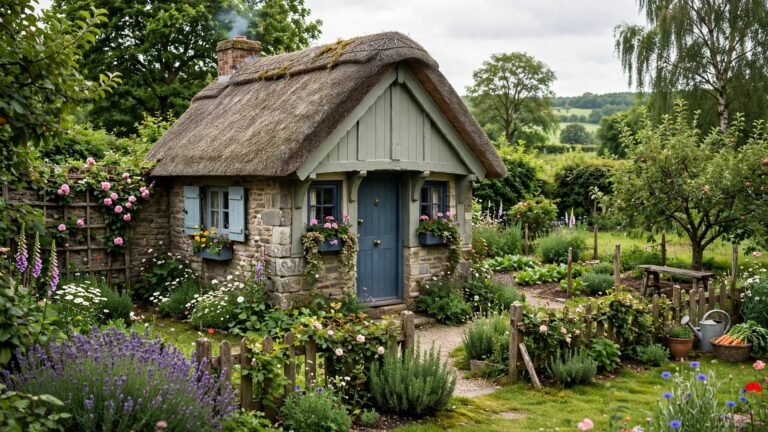
Imagine a winding gravel path edged with foxgloves and lavender, guiding visitors gently through the garden. Traditional cottage yard planning relies on these soft curves to make even a small plot feel larger and more inviting, while keeping every turn full of surprise and color.
Path materials like pea gravel, old brick, or stepping stones set the tone for the whole design. In traditional cottage yard planning, the walkway becomes the backbone that ties beds, borders, and seating areas together.
2. Picket Fences and Gates in Traditional Cottage Yard Planning
Picture a low white picket fence with climbing roses threading through the slats and a small wooden gate welcoming guests inside. Traditional cottage yard planning uses this kind of enclosure to create intimacy, define the boundary, and frame the garden as a cherished, lived-in space.
A weathered or freshly painted fence instantly signals cottage style. Within traditional cottage yard planning, the fence line also doubles as a planting opportunity for clematis, honeysuckle, and sweet peas.
3. Layered Flower Borders for Traditional Cottage Yard Planning
Discover the magic of deep, layered borders where tall hollyhocks rise behind mid-height daisies and low nepeta spills onto the path. Traditional cottage yard planning depends on this tiered approach, ensuring the garden looks full, generous, and alive with pollinators from spring through autumn.
Mixing heights and textures is central to traditional cottage yard planning. Repeating a few key plants keeps the abundant look from turning chaotic and gives the border a cohesive rhythm.
4. Cutting Gardens and Traditional Cottage Yard Planning
Consider dedicating a sunny patch to rows of zinnias, cosmos, and sweet peas grown specifically for bouquets. Traditional cottage yard planning has always blended beauty with usefulness, and a cutting bed lets you fill vases all summer while keeping the main borders looking tidy and full.
Position the cutting garden close to the kitchen door for easy harvesting. In traditional cottage yard planning, even productive beds are designed to look ornamental rather than strictly utilitarian.
5. Rustic Arbors and Trellises in Traditional Cottage Yard Planning
Anchor the garden with a rustic wooden arbor draped in climbing roses or wisteria, marking the entrance to a special area. Traditional cottage yard planning uses vertical structures like arbors and trellises to add height, divide spaces, and turn an ordinary walkway into a memorable garden moment.
Weathered timber and simple lattice suit the cottage aesthetic perfectly. Traditional cottage yard planning often places an arbor at a path junction so it frames the view beyond.
6. Herb and Kitchen Gardens in Traditional Cottage Yard Planning
Layer fragrant herbs like rosemary, thyme, sage, and lavender among the flowers so the whole yard becomes a sensory experience. Traditional cottage yard planning treats the herb garden as part of the ornamental scheme, tucking edible plants into borders and pots rather than hiding them away.
A small potager near the back door keeps kitchen herbs within reach. Traditional cottage yard planning pairs practicality with charm so the garden feels both beautiful and genuinely useful.
7. Cozy Seating Nooks for Traditional Cottage Yard Planning
Build a sheltered seating corner with a weathered bench, a small table, and climbing plants overhead. Traditional cottage yard planning always includes places to pause and enjoy the view, and a tucked-away nook surrounded by flowers makes the garden feel like an outdoor room.
Position seating where it catches morning sun or afternoon shade. Traditional cottage yard planning uses these resting spots as destinations that pull visitors through the garden.
8. Gravel Walkways and Stone Edging in Traditional Cottage Yard Planning
Bring texture and informality to the yard with gravel walkways softened by self-seeding flowers and stone edging. Traditional cottage yard planning favors these loose, permeable surfaces because they feel relaxed underfoot and allow plants to spill naturally over the edges for a lived-in look.
Choose gravel in warm tones to complement brick or stone. Traditional cottage yard planning uses simple edging to keep the path defined while letting the planting stay delightfully unruly.
9. Climbing Vines and Vertical Interest in Traditional Cottage Yard Planning
Transform bare walls and fences with climbing vines such as roses, clematis, jasmine, and ivy. Traditional cottage yard planning embraces vertical planting to soften hard surfaces, add fragrance, and make the most of every square foot, especially in smaller yards.
Pair early and late bloomers on the same support for a longer display. Traditional cottage yard planning relies on vertical layers to give the garden depth and year-round interest.
10. Cottage Container Displays for Traditional Cottage Yard Planning
Frame doorways and steps with clustered containers overflowing with geraniums, lobelia, and trailing ivy. Traditional cottage yard planning uses pots to extend planting onto patios and paths where soil is limited, adding color and charm at eye level and near entrances.
Group pots in odd numbers and vary their heights for visual interest. Traditional cottage yard planning treats containers as movable accents that refresh the garden throughout the season.
11. Wildflower Meadows in Traditional Cottage Yard Planning
Explore the relaxed beauty of a small wildflower meadow or a naturalized lawn dotted with daisies and buttercups. Traditional cottage yard planning often sets aside a patch for low-maintenance wildflowers, creating a soft, romantic contrast to more structured borders and supporting local pollinators.
Mow a simple path through the meadow to keep it accessible. Traditional cottage yard planning balances wildness with gentle structure so the garden never feels neglected.
12. Fragrant Planting Schemes in Traditional Cottage Yard Planning
Shape the sensory experience of the garden by choosing plants for scent as carefully as for color. Traditional cottage yard planning places lavender, roses, sweet peas, and stocks along paths and near seating so their fragrance greets you at every turn and lingers in the evening air.
Plant scented varieties where they will be brushed in passing. Traditional cottage yard planning uses fragrance to make the garden memorable long after the blooms fade.
13. Wattle Fences and Rustic Edging in Traditional Cottage Yard Planning
Define borders with woven wattle fencing, hazel hurdles, or simple woven edging for an authentic handmade feel. Traditional cottage yard planning celebrates natural materials, and these rustic boundaries add texture and warmth while gently separating beds and paths without looking formal.
Wattle panels also work as windbreaks and supports for climbers. Traditional cottage yard planning uses natural edging to reinforce the garden’s handmade, timeless character.
14. Orchard and Fruit Trees for Traditional Cottage Yard Planning
Introduce a small orchard of apple, pear, or plum trees to give the yard structure and seasonal harvests. Traditional cottage yard planning often includes fruit trees underplanted with bulbs and wildflowers, so the space blossoms in spring and offers shade and bounty later in the year.
Choose dwarf or espaliered varieties for compact plots. Traditional cottage yard planning pairs productive trees with informal planting so the orchard feels like part of the garden.
15. Garden Benches and Focal Points in Traditional Cottage Yard Planning
Suspend the eye at the end of a path with a weathered bench, a birdbath, or a simple urn. Traditional cottage yard planning uses focal points to draw visitors forward and give the garden a sense of destination, making even a modest plot feel thoughtfully composed and full of discovery.
Place focal points where paths bend or converge. Traditional cottage yard planning relies on these anchors to organize the layout and reward exploration.
16. Bulb Planting for Year-Round Interest in Traditional Cottage Yard Planning
Ground the garden in seasonal rhythm by planting bulbs in generous drifts through lawns and borders. Traditional cottage yard planning layers snowdrops, daffodils, tulips, and alliums so something is always emerging, keeping the yard lively from the first thaw well into summer.
Naturalize small bulbs in lawn edges for an informal look. Traditional cottage yard planning treats bulbs as reliable early color that carries the garden into its peak season.
17. Cottage Lawn Alternatives in Traditional Cottage Yard Planning
Position a small lawn or chamomile seat as a soft green pause between flower borders. Traditional cottage yard planning keeps grass areas modest so more room goes to planting, using the lawn as a quiet counterpoint rather than the dominant feature of the yard.
Allow clover and daisies to remain for a relaxed feel. Traditional cottage yard planning favors imperfect, living lawns that blend naturally into the surrounding borders.
18. Water Features and Birdbaths in Traditional Cottage Yard Planning
Fill a quiet corner with a stone birdbath, a small barrel pond, or a simple fountain to bring sound and wildlife into the garden. Traditional cottage yard planning uses water as a gentle focal point that attracts birds and adds a soothing, timeless quality to the landscape.
Keep water features simple and natural in style. Traditional cottage yard planning places them where their sound can be enjoyed from a nearby bench or path.
19. Seasonal Planting Combinations in Traditional Cottage Yard Planning
Place spring bulbs, summer perennials, and autumn foliage in succession so the garden never has a dull moment. Traditional cottage yard planning carefully sequences bloom times, ensuring each season brings fresh color and interest while the underlying structure of paths and hedges holds everything together.
Note bloom times when planning each border. Traditional cottage yard planning uses succession planting to keep the yard vibrant from early spring through late autumn.
20. Crafting a Complete Cottage Garden Plan with Traditional Cottage Yard Planning
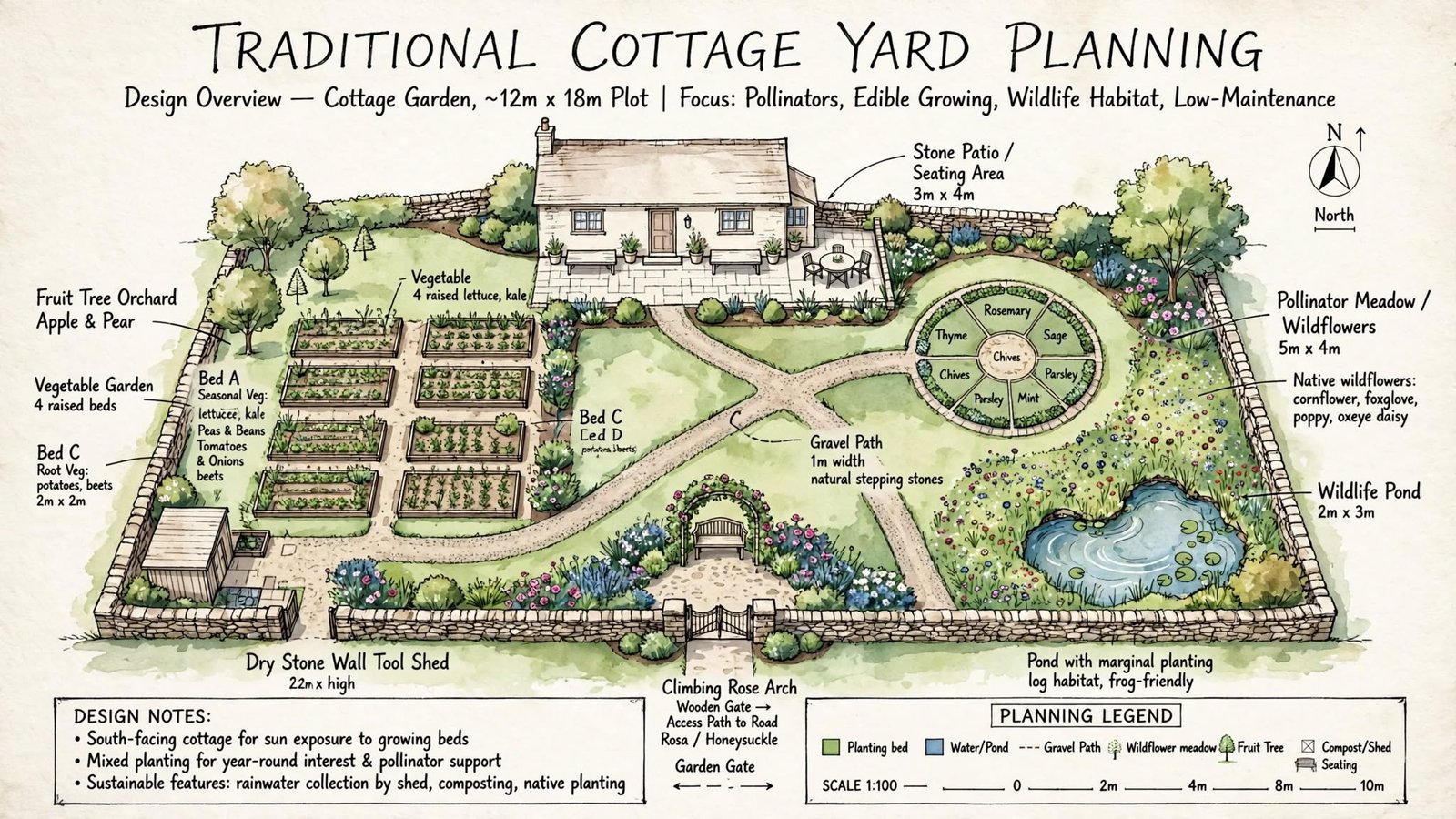
Craft a cohesive layout by sketching paths, beds, structures, and seating before you plant a single flower. Traditional cottage yard planning works best when the hardscape and planting zones are mapped first, giving the abundant, informal planting a clear framework to grow into over the years.
Review and refine the plan each season as plants mature. Traditional cottage yard planning is an evolving process that rewards patience with a garden that improves year after year.
Frequently Asked Questions
Q. How do I start traditional cottage yard planning in a small space?
Ans. Begin traditional cottage yard planning with a curved path, a low fence, and layered borders to make a small yard feel full and intimate.
Q. Which plants suit traditional cottage yard planning best?
Ans. Traditional cottage yard planning favors roses, foxgloves, lavender, hollyhocks, and herbs for their relaxed, romantic character.
Q. How much maintenance does traditional cottage yard planning require?
Ans. Traditional cottage yard planning needs regular tending, but choosing self-seeding flowers and simple materials keeps the workload manageable.
Conclusion
Traditional cottage yard planning is less about rigid rules and more about layering comfort, color, and character into every corner. By combining curving paths, rustic materials, and generous planting, you create a garden that feels personal and welcoming.
Start with the structure, then let the flowers fill in over time. With patience and these twenty ideas, traditional cottage yard planning can turn any yard into a timeless, romantic retreat.