17 Winter Container Plants That Keep Your Porch Alive All Season
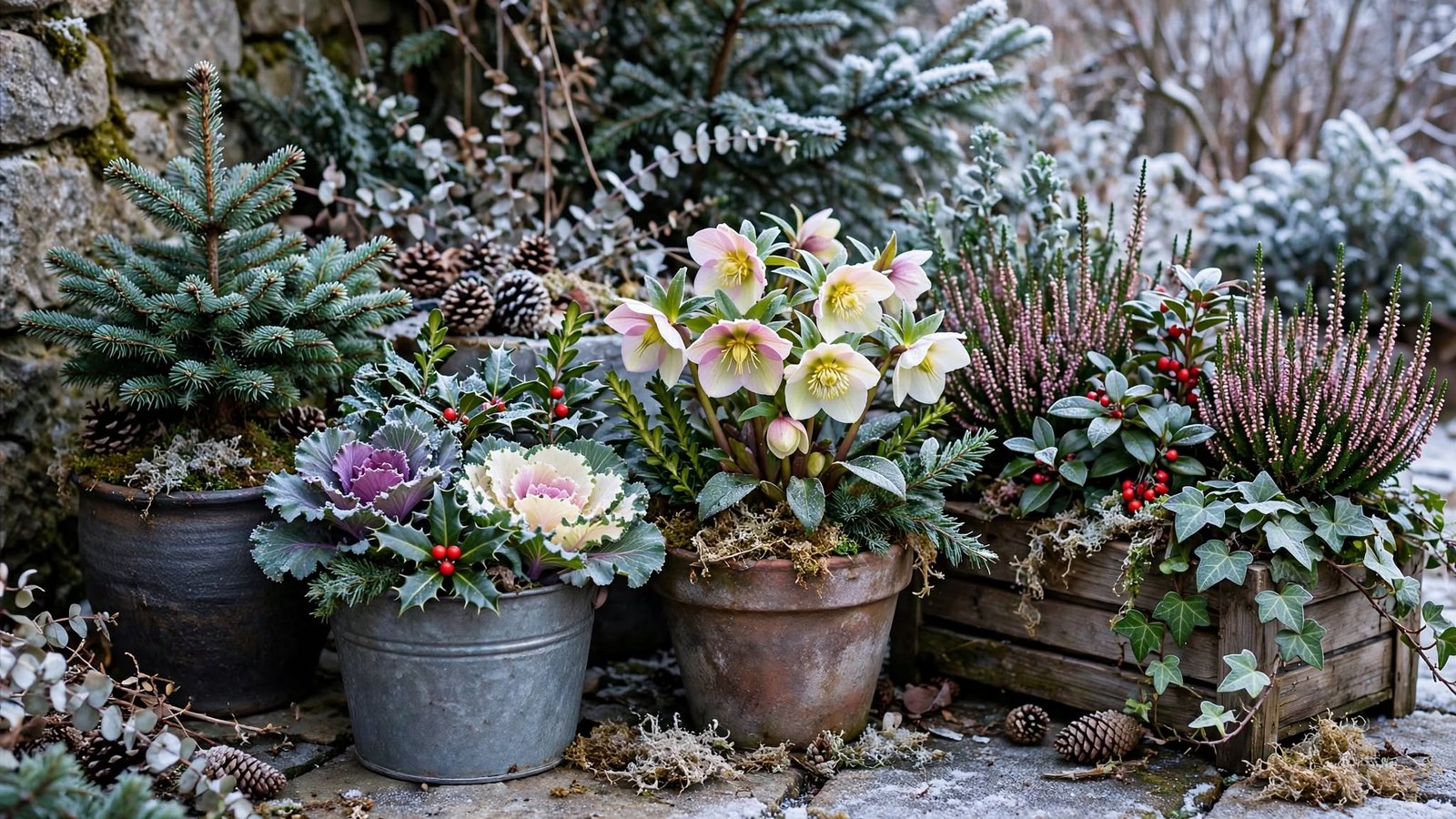
When the temperature drops, most gardens go quiet, but winter container plants keep the view from your window full of life. With the right mix of evergreens, berries, and textured foliage, you can create porch displays that stay beautiful through frost and snow.
Choosing winter container plants is easier than it seems once you know which varieties tolerate cold and hold their shape. From compact conifers to colorful heathers and ornamental cabbages, these picks deliver structure and color exactly when the landscape needs it most.
Smart Ideas for Styling Winter Container Plants
A few simple principles turn empty pots into cold-season showpieces.
- Start With Structure: Place a tall evergreen or berry-laden shrub at the center to anchor the arrangement.
- Mix Textures: Combine fine needles, broad leaves, and trailing ivy so winter container plants read well up close.
- Layer Heights: Use a thriller, filler, and spiller approach to give every pot a balanced silhouette.
- Add Berries and Branches: Red and orange berries or dogwood stems bring color when flowers are gone.
- Choose Frost-Proof Pots: Stone, concrete, and resin containers resist cracking better than thin ceramic.
- Mind the Drainage: Raise pots on feet and add gravel so roots never sit in freezing water.
- Refresh With Cuttings: Tuck in fresh cedar or pine sprigs to keep displays looking current.
- Water Sparingly: Evergreens still lose moisture in winter, so water on mild days when soil is dry.
1. Evergreen Spruce and Pine Winter Container Plants for a Classic Look
Imagine a pair of matching pots flanking your front door, each filled with a dwarf spruce and layered pine boughs. These winter container plants hold their deep green color through the harshest weather and create an instant, welcoming frame for your entryway all season long.
Pair the evergreens with a few birch logs or pinecones for texture. Simple, classic winter container plants like these never go out of style and need very little maintenance.
2. Berry-Laden Holly and Cotoneaster Winter Container Plants
Picture bright red berries glowing against dark green leaves on a frosty morning. Holly and cotoneaster make outstanding winter container plants because the fruit persists for months and feeds birds while decorating your patio. Their glossy foliage looks polished even under a dusting of snow.
Choose compact varieties suited to pots, and place them where you can enjoy the color from indoors. These winter container plants reward minimal care with maximum seasonal impact.
3. Ornamental Kale and Cabbage as Winter Container Plants
Discover how ornamental kale and cabbage deepen in color as temperatures fall, turning purple, pink, and cream. These winter container plants are frost-hardy and bring a rosette texture that contrasts beautifully with evergreens. They work as the star of a pot or as a colorful filler beneath taller shrubs.
Plant them in early autumn so roots establish before hard freezes. Few winter container plants offer such dramatic color with so little effort.
4. Heather and Winter Heath for Long-Lasting Color in Pots
Consider heather and winter heath when you want low, mounding color that shrugs off cold. These winter container plants bloom in shades of pink, white, and magenta right through the coldest months. Tuck them along the rim of a pot to soften the edge and add a carpet of seasonal interest.
Heather prefers acidic, well-drained soil, so use a suitable mix in your containers. These winter container plants pair perfectly with dwarf conifers and silvery foliage.
5. Anchor Your Porch With Dwarf Conifers as Winter Container Plants
Anchor tall arrangements with a dwarf conifer such as a miniature arborvitae, juniper, or false cypress. These winter container plants provide the vertical structure that makes a display feel intentional rather than thrown together. Their varied needle colors, from blue-green to gold, add depth to any grouping.
Keep dwarf conifers in pots for several seasons by repotting every few years. Reliable winter container plants like these form the backbone of cold-weather design.
6. Layer Textures With Ivy and Trailing Winter Container Plants
Layer trailing ivy, euonymus, or creeping jenny over the rim of your pots to soften hard edges. These spillers are essential winter container plants because they connect the arrangement to the ground and add movement. Even when growth slows, their foliage keeps a graceful cascade.
Combine trailing winter container plants with upright evergreens and berries for a full, three-dimensional look. The contrast between cascading and vertical forms keeps displays dynamic.
7. Build a Birch Log and Pinecone Centerpiece With Winter Container Plants
Build a rustic centerpiece by standing birch logs upright among low winter container plants like sedum and moss. The pale bark catches light and pairs beautifully with evergreen sprigs and pinecones. This approach proves that winter container plants can be as much about branches and texture as living greenery.
Secure logs with soil or floral foam and refresh the arrangement with fresh cuttings. Natural materials make winter container plants feel warm and organic.
8. Bring Fragrance to the Entry With Sweet Box and Winter Container Plants
Bring scent into the picture by including sweet box or winter honeysuckle among your winter container plants. Their subtle perfume greets guests at the door and lingers on still, cold air. Evergreen foliage keeps these shrubs looking tidy even when blooms are sparse.
Place fragrant winter container plants near walkways and seating areas where the scent can be enjoyed. A little fragrance transforms a visual display into a full sensory experience.
9. Transform Bare Pots With Red Twig Dogwood Winter Container Plants
Transform plain arrangements by adding red or yellow twig dogwood stems to your winter container plants. Their vivid bark glows against snow and provides the warm color that cold-weather pots often lack. Bundle several stems for a fountain-like effect that reads as sculpture.
Cut stems last for weeks in soil or foam, so refresh them as needed. Dogwood stems are among the most striking winter container plants for adding vertical drama.
10. Frame the Doorway With Symmetrical Winter Container Plants
Frame your front door with two matching pots of winter container plants for instant curb appeal. Symmetry signals welcome and makes even simple arrangements look polished. Use the same evergreen, berry, and accent materials in both pots to create a balanced, intentional entrance.
Scale the pots to your doorway so the display feels proportionate. Well-chosen winter container plants turn an ordinary entry into a seasonal statement.
11. Explore Silver and Blue Foliage in Winter Container Plants
Explore cool-toned foliage by choosing blue juniper, silver santolina, or dusty miller as winter container plants. These hues echo frosty skies and pair beautifully with white berries and pale bark. The contrast between silver and deep green creates a sophisticated palette for the season.
Silver foliage reflects low winter light and brightens shaded corners. Cool-toned winter container plants give arrangements an elegant, contemporary feel.
12. Shape a Low Bowl Garden of Winter Container Plants
Shape a shallow bowl planter into a miniature landscape using low winter container plants like sedum, moss, and small heaths. Wide bowls show off the arrangement from above and suit tabletops, steps, or balcony rails. Group several textures together for a dense, carpet-like effect.
Keep bowls elevated so drainage stays clear during wet weather. Compact winter container plants make these low displays easy to move and refresh.
13. Define Your Style With Modern Minimalist Winter Container Plants
Define a clean, modern look by limiting yourself to one or two winter container plants in a simple, oversized pot. A single sculptural evergreen or a cluster of tall grasses can carry an entire design. Minimal arrangements let form and texture take center stage without clutter.
Choose matte black, charcoal, or concrete containers for a contemporary edge. Restrained winter container plants prove that less really can be more.
14. Introduce Grasses and Seed Heads as Winter Container Plants
Introduce ornamental grasses and seed heads to catch the wind and add movement to still winter scenes. Varieties like carex and fescue are tough winter container plants that hold their shape and shimmer with frost. Their fine texture contrasts nicely with broad evergreen leaves.
Leave seed heads standing for birds and visual interest. Grasses make winter container plants feel airy and natural rather than heavy.
15. Suspend Interest With Hanging Baskets of Winter Container Plants
Suspend a hanging basket or wall planter filled with cold-hardy winter container plants to use vertical space. Ivy, small heathers, and trailing euonymus spill beautifully from elevated pots and stay visible from windows. Hanging displays keep plants above snow and slush.
Check moisture more often since elevated pots dry faster. Well-placed winter container plants can turn a bare wall into a seasonal feature.
16. Ground Your Design With Natural Materials and Winter Container Plants
Ground your arrangements with natural mulch, moss, or gravel topping around winter container plants. These finishes hide bare soil, insulate roots, and tie the display to the garden. A layer of pine needles or bark chips adds a finishing touch that feels intentional.
Natural materials also help retain moisture through dry spells. Thoughtful finishing makes winter container plants look professionally styled with minimal cost.
17. Position Winter Container Plants for Maximum Curb Appeal
Position pots where they will be seen from the street, the driveway, and your favorite window. Winter container plants deliver the most value when placed along sightlines you pass daily. Group pots in odd numbers and vary heights for a natural, inviting rhythm.
Keep arrangements away from downspouts and heavy snow drip. Smart placement ensures winter container plants stay attractive and healthy through the season.
Frequently Asked Questions
Q. Do winter container plants need watering during cold months?
Ans. Yes, evergreens in winter container plants still lose moisture, so water on mild days when the soil feels dry.
Q. Can winter container plants survive freezing temperatures in pots?
Ans. Many winter container plants do, as long as pots are frost-proof, drainage is good, and roots are insulated from hard freezes.
Q. When should I plant winter container plants for the best display?
Ans. Set winter container plants in early to mid-autumn so roots establish before the first hard frost arrives.
Conclusion
Winter container plants prove that a cold-season garden can still be full of color, texture, and life. By combining evergreens, berries, grasses, and fragrant shrubs, you can build displays that hold up beautifully from the first frost to early spring.
Start with a few reliable winter container plants, layer in natural accents, and place your pots where you will see them every day. With minimal care, these cold-hardy arrangements will reward you with a porch that feels alive all winter long.