11 Farmhouse Siding Exterior Ideas That Balance Texture, Tradition, and Durability
Farmhouse exteriors thrive on honest materials—wood, fiber cement, or engineered alternatives that age gracefully and handle weather without constant upkeep.
American homes range from 1,800 to 3,200 sq ft, with siding covering 1,500 to 2,500 sq ft of wall surface. The right choice blends visual warmth with real-world performance in your climate.
These 11 ideas focus on authentic textures, practical maintenance, and classic profiles that define farmhouse style—without leaning into fake distressing or short-lived trends.
Why Siding Choice Defines the Look
Texture creates character: Smooth vs. rough, vertical vs. horizontal—each profile changes the home’s feel.
Climate dictates longevity: Wood rots in wet zones; vinyl warps in extreme heat. Match material to your region.
Maintenance varies widely: Some sidings need painting every 5–7 years; others last decades untouched.
Authenticity matters: Real wood grain or clean fiber cement reads as timeless; plastic “barnwood” looks dated fast.
11 Farmhouse Siding Exterior Ideas That Balance Texture, Tradition, and Durability
All options work with standard framing and typical residential lots.
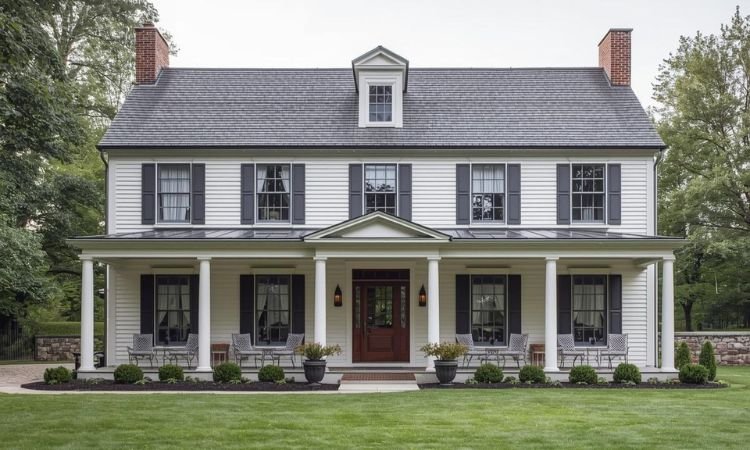
1. White Painted Clapboard (Horizontal Lap)
Classic horizontal lap siding in smooth cedar or fiber cement, painted crisp white. Clean lines, timeless appeal. Ideal for traditional or modern farmhouses.
Best in dry or moderate climates. Requires repainting every 7–10 years if wood; fiber cement lasts longer.
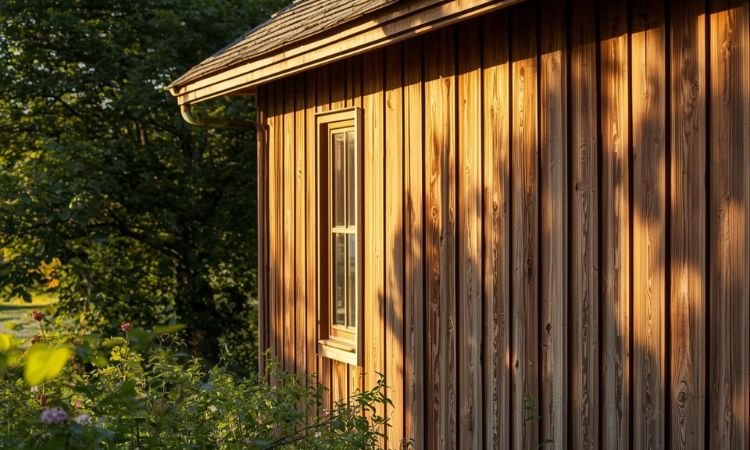
2. Vertical Board-and-Batten
Tall vertical boards (6″–8″ wide) with narrow battens (1″–2″) covering seams. Creates strong rhythm and shadow play. Use pine, cedar, or fiber cement.
Paint white, black, or warm gray. Excellent for gable ends or full-house coverage. Resists wind-driven rain better than horizontal siding.
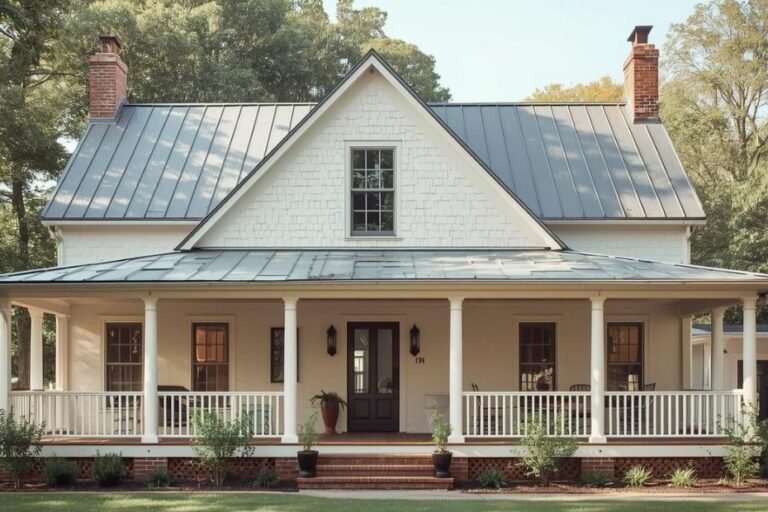
3. Natural Cedar Shingles (Stained or Unfinished)
Hand-split or machine-cut cedar shingles installed in staggered rows. Weathers to soft silver-gray over time. Adds organic texture and depth.
Use on upper stories or gables to contrast with board-and-batten below. Requires no paint—just occasional cleaning.
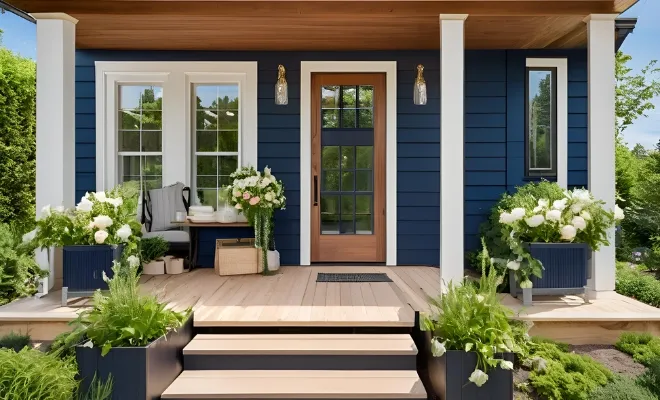
4. Charcoal Fiber Cement Panels
Large-format fiber cement panels (4’x8′) in matte charcoal or deep gray. Minimal seams, modern farmhouse look. Fire-resistant and rot-proof.
Ideal for low-maintenance homes. Pair with wood accents (porch columns, beams) to soften the look.
5. Cream-Colored Shiplap (Smooth Face)
Tongue-and-groove shiplap in pine or fiber cement, painted warm cream or oat. Tight seams create a seamless, refined look.
Popular for modern farmhouses. Avoid in high-humidity zones unless using primed fiber cement.
6. Two-Tone Siding: Board-and-Batten Lower, Shingle Upper
Combine vertical board-and-batten on the first floor with cedar shingles on the second. Adds visual interest and breaks up massing.
Anchor with stone foundation or brick chimney. Keeps the home grounded and layered.
7. Black-Stained Cedar (Vertical or Horizontal)
Cedar siding stained in opaque black or dark charcoal. Hides imperfections and ages beautifully. Use vertical for drama, horizontal for calm.
Best in dry or coastal climates. Re-stain every 5–7 years. Pairs well with brass or copper hardware.
8. Galvanized Metal Panels (Corrugated or Flat)
Standing-seam or corrugated galvanized steel panels. Industrial but warm when paired with wood trim. Rust-resistant and fireproof.
Use on accent walls, garages, or full exteriors in rural settings. Expands/contracts with temperature—must be installed correctly.
9. Warm Gray Fiber Cement Lap
Fiber cement lap siding in a muted gray like Sherwin-Williams Repose Gray. Mimics wood but lasts 30+ years with minimal care.
Paint once at install; no repainting needed for decades. Ideal for busy homeowners or humid regions.
10. Mixed Material: Stone Skirt + Wood Siding
Install a 2’–3′ tall dry-stack stone or cultured stone base, then wood or fiber cement above. Anchors the home visually and protects against splash-back.
Works with any siding style above. Adds texture and durability at ground level.
11. Reclaimed Barn Wood (Real, Not Faux)
Authentic reclaimed barn wood—sanded, sealed, and installed as accent walls or gable cladding. Shows nail holes, patina, and grain history.
Use sparingly: one gable or porch ceiling. Never use on full exterior—too inconsistent and high-maintenance. Seal against moisture.
Common Mistakes and Fixes
- Using vinyl “barnwood” planks
Fix: Skip faux woodgrain vinyl. It looks plastic in sunlight. Choose real wood or fiber cement with clean lines. - Ignoring climate compatibility
Fix: In wet zones, use fiber cement or metal. In dry zones, cedar shines. Avoid untreated pine in humid areas. - Skipping proper backing and drainage
Fix: Always install siding over house wrap and furring strips or rainscreen gap—especially with wood or shingles. - Over-mixing materials
Fix: Limit to two main siding types max (e.g., board-and-batten + shingles). Too many textures feel chaotic. - Neglecting corner and trim details
Fix: Use matching or complementary trim (e.g., white trim on gray siding). Corners should be clean—not wrapped in mismatched material.
Build to Last, Not Just to Photograph
Great farmhouse siding feels like it grew from the land—not like a catalog overlay.
Choose materials that age honestly, install them properly, and let time add the character. Start with climate and maintenance—then add beauty.
Which of these 11 ideas fits your region and lifestyle? Test samples on your actual wall—you’ll see how light and weather change the tone.