Narrow Hallway Paint Ideas That Make Spaces Feel Bigger
Your narrow hallway feels like a tunnel and plain white walls aren’t helping. You know paint could improve things but you’re worried about making it worse or darker. Choosing the wrong color in tight spaces creates claustrophobia instead of solving it.
Strategic paint choices transform narrow hallways from cramped passages into interesting spaces.
I’m covering 12 color and technique approaches from light neutrals and two-tone treatments to accent walls and ceiling tricks. You’ll see which colors actually expand tight spaces, what techniques add interest without bulk, and combinations preventing boring tunnels.
Why Paint Matters In Narrow Spaces
Color Affects Perception Dramatically: Paint changes how wide, tall, or bright spaces feel without physical alterations. Strategic color use optically expands or defines tight hallways.
Cheapest Transformation Available: Paint costs $50-150 per hallway delivering maximum impact for minimal investment. No other update provides comparable value and effect.
DIY-Friendly Weekend Project: Most people handle hallway painting themselves avoiding labor costs entirely. Accessible execution makes improvement achievable without professionals.
Easily Changed When Needed: Unlike permanent fixtures, paint changes simply when tastes evolve or trends shift. Flexibility allows experimentation without long-term commitment.
Narrow Hallway Paint Ideas That Make Spaces Feel Bigger
Expand tight passages with these narrow hallway paint ideas featuring space-enhancing strategies.
All White Clean Slate
Paint everything pure white—walls, trim, ceiling—creating maximum light reflection and openness. The monochromatic approach eliminates visual breaks making spaces feel continuous. It’s like blank canvases where simplicity expands.
Use bright white rather than off-whites for maximum effect. Semi-gloss finish reflects more light. This narrow hallway paint idea delivers ultimate spaciousness.
Soft Warm Gray
Use warm gray creating sophisticated neutral that feels larger than dark colors while less stark than white. The balanced tone provides subtle warmth without heaviness. It’s like clouds where gray stays light.
Choose grays with warm undertones avoiding cool blues. Pair with white trim. This narrow hallway paint idea adds contemporary sophistication.
Pale Blue Sky
Paint soft pale blue bringing airy openness reminiscent of sky and water. The cool receding color makes walls appear farther away. It’s like horizon where blue creates distance.
Use very light tints avoiding saturated blues. The ethereal quality expands perception. This narrow hallway paint idea brings calming spaciousness.
Cream And White Contrast
Combine warm cream walls with bright white trim and ceiling creating subtle definition. The gentle contrast adds interest while maintaining brightness. It’s like layering where tones create depth.
Use creamy beiges or soft taupes. White ceiling makes height feel greater. This narrow hallway paint idea balances warmth with openness.
Vertical Two-Tone
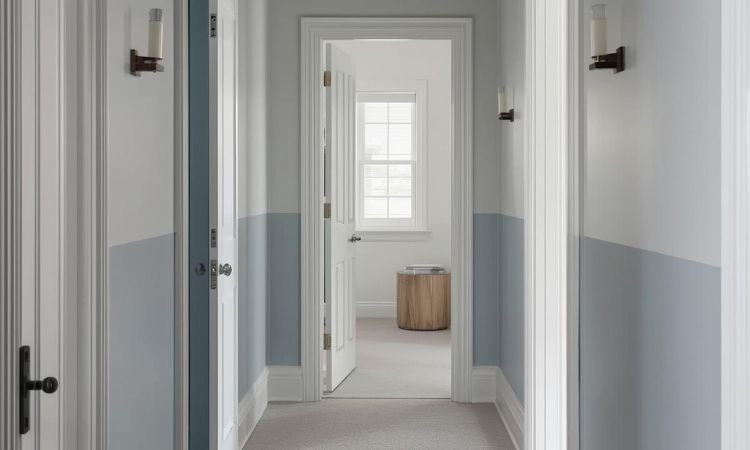
Paint lower half darker and upper half lighter creating horizontal division drawing eyes upward. The two-tone approach adds architectural interest while emphasizing height. It’s like wainscoting where color creates structure.
Divide at 32-40 inches using chair rail or tape line. Keep upper section very light. This narrow hallway paint idea adds dimension through division.
Accent Wall At End
Paint hallway end wall bold color creating focal point drawing eyes forward purposefully. The destination emphasis reduces tunnel feeling making length intentional. It’s like targets where endpoints provide direction.
Choose jewel tones or dramatic darks for end wall. Keep side walls light. This narrow hallway paint idea transforms length into feature.
Ombre Gradient Effect
Create subtle gradient from light at eye level to slightly darker at floor and ceiling. The graduated tone adds sophisticated visual interest. It’s like sunsets where transition creates beauty.
Blend colors seamlessly using sponge technique. Keep overall palette light. This narrow hallway paint idea adds artistry through technique.
Ceiling Color Pop
Paint ceiling unexpected color—soft blue, blush, or sage—drawing attention upward away from narrow walls. The surprising application shifts focus from width to height. It’s like fifth walls where ceilings become features.
Choose soft muted tones rather than intense colors. The overhead interest reduces tunnel perception. This narrow hallway paint idea adds creativity overhead.
Greige Neutral Modern
Use greige (gray-beige blend) creating contemporary neutral feeling both warm and cool. The versatile tone works with any decor style. It’s like chameleons where color adapts.
Choose lighter greige shades maintaining brightness. The popular neutral feels current. This narrow hallway paint idea delivers modern sophistication.
Horizontal Stripe Pattern
Paint subtle horizontal stripes making hallways appear wider through lateral lines. The pattern tricks eyes into perceiving more width. It’s like optical illusions where stripes expand.
Use tone-on-tone for subtlety or contrasting shades for impact. Keep stripes at eye level. This narrow hallway paint idea optically widens passages.
Pale Sage Green
Paint soft sage green bringing natural calming quality while receding visually. The muted earth tone feels organic and spacious. It’s like gardens where green refreshes.
Choose very pale tints avoiding saturated greens. The nature-inspired hue creates serenity. This narrow hallway paint idea adds peaceful atmosphere.
Consistent Color Throughout
Use exact same color in hallway and adjoining rooms eliminating visual breaks. The continuous color makes spaces feel connected and larger. It’s like flow where consistency expands.
Avoid abrupt color changes at doorways. The seamless approach unifies spaces. This narrow hallway paint idea creates cohesion throughout homes.
Common Hallway Painting Mistakes And Solutions
Choosing Too-Dark Colors
Dark dramatic colors make narrow hallways feel cave-like and oppressive reducing natural light reflection. Solution: Stick with paint chips three shades lighter than your first instinct maintaining brightness.
Painting Everything Same Finish
Using flat paint throughout shows every scuff while high-gloss everywhere looks cheap and harsh. Solution: Use eggshell or satin on walls, semi-gloss on trim creating subtle sheen variation.
Ignoring Undertones
Colors looking perfect in stores appear completely different in narrow dim hallways revealing wrong undertones. Solution: Test paint samples on actual walls observing in morning, afternoon, and evening light.
Stopping At Door Frames
Ending paint at doorways creates visual chop breaking flow between connected spaces. Solution: Carry hallway color slightly into adjoining rooms creating seamless transitions.
Skipping Proper Prep
Painting over damaged walls shows every imperfection especially in hallways with angled light exposure. Solution: Fill holes, sand smooth, and prime properly ensuring professional-looking finish.
Frequently Asked Questions About Narrow Hallway Paint
What’s The Best Paint Color For Narrow Hallways?
Soft whites and light warm grays work best reflecting maximum light while feeling sophisticated rather than stark. Very pale blues or greiges also expand spaces without coldness. Avoid dark colors making narrow passages feel more confined.
Choose colors with warm undertones in north-facing hallways and cooler tones in south-facing spaces balancing natural light temperatures.
Should You Paint Hallway Ceiling White?
Yes in most cases—white ceilings reflect light and feel higher making narrow hallways less tunnel-like. Exceptions include adding soft ceiling color as intentional design element drawing eyes upward. Very high ceilings might handle darker colors.
Stick with bright white rather than off-whites for maximum ceiling height perception and light reflection throughout space.
Does Paint Sheen Matter In Hallways?
Absolutely—hallways need durable washable finishes handling scuffs and marks from daily traffic. Eggshell or satin finishes provide cleanability while hiding minor wall imperfections. Semi-gloss works on trim but looks too shiny on walls.
Flat paint shows every touch and scuff requiring frequent repainting in high-traffic hallways making it impractical choice.
Transforming Your Hallway With Paint
Narrow hallway paint ideas prove that color strategy dramatically affects spatial perception.
Choose light colors with warm undertones expanding tight passages, use techniques like accent walls or two-tones adding interest, and select appropriate sheens for durability. Avoid dark colors or wrong undertones making narrow spaces feel smaller.
What paint color scares you most for narrow hallways? Share your color concerns below!